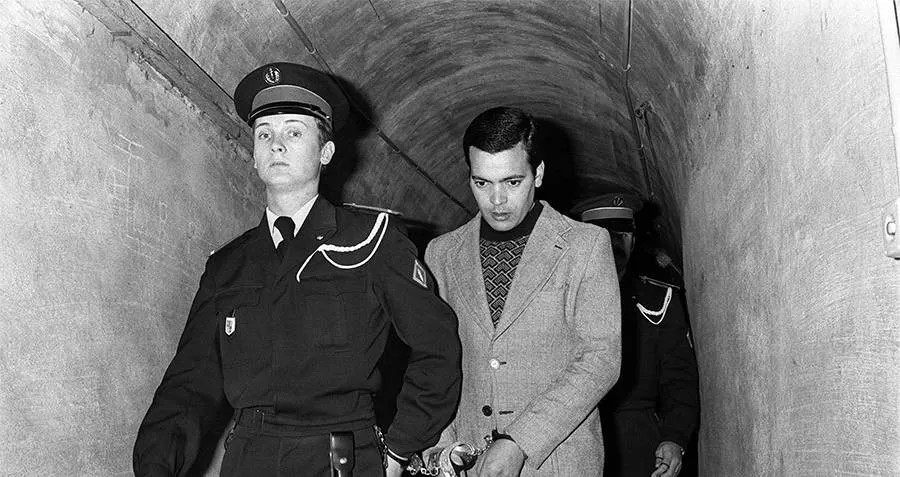
History is sometimes remembered through great battles, political revolutions and the rise and fall of empires. But sometimes a single moment quietly marks the end of an era.
On the morning of 10 September 1977, a 28-year-old Tunisian man named Hamida Djandoubi was led from his cell in Marseille’s Baumettes Prison. Just hours earlier, he had learned that President Valéry Giscard d’Estaing had rejected his final appeal for clemency. Before dawn, Djandoubi was executed by guillotine.
His death was not merely another line in the bloody ledger of French capital punishment; it became a historical dividing line. Djandoubi was the last person executed in France—and the last in Western Europe—to be put to death by the state. Four years later, France abolished the death penalty entirely.
A Crime That Shocked Marseille
Born in Tunisia, Djandoubi moved to France to work as a labourer. His life took a drastic turn following a severe workplace accident that left him with a prosthetic leg, after which he became involved in Marseille’s criminal underworld.
In July 1974, Djandoubi committed the crime that sealed his fate: the murder of Élisabeth Bousquet, a young woman with whom he had previously been involved.

The investigation revealed a horrifying pattern of sexual violence, torture, and physical abuse against women and girls. Given the extraordinary brutality of his actions, when Djandoubi faced the Assize Court of Bouches-du-Rhône in February 1977, prosecutors demanded the ultimate sentence.
The court convicted him, sentencing him to death. His defense team appealed, but the verdict stood.
A Nation Questioning Judicial Execution
The historical weight of Djandoubi’s case reaches far beyond the actions of a single criminal. In 1977, France was entrenched in a bitter national debate over whether the state held the moral authority to take a human life.
Introduced during the French Revolution as a supposedly humane and egalitarian tool, the guillotine had persisted into the late 20th century. By the 1970s, however, French intellectuals, jurists, and politicians increasingly viewed capital punishment as an outdated relic incompatible with a modern democracy.
Executions were already in steep decline. France had carried out 69 executions in the 1950s and 33 in the 1960s, but only six during the entire decade of the 1970s. Meanwhile, the abolitionist movement was gaining unprecedented momentum—led prominently by defense lawyer Robert Badinter.
Badinter, deeply traumatized by the 1972 execution of his client Roger Bontems, had dedicated himself to ending capital punishment. In 1977, he successfully spared his client Patrick Henry from the guillotine, turning the proceedings into a landmark debate on state execution. Yet despite the shifting cultural tide, France was not quite ready to abandon the blade.
The Final Morning
Djandoubi’s final hours remain one of the most haunting chapters in French judicial history.
Accounts preserved from Baumettes Prison detail the quiet tension of that morning. While waiting for the executioner, Djandoubi smoked cigarettes. After finishing two, he requested a third, but was refused—his time was up.
The execution proceeded in strict secrecy, far from the public spectacles of centuries past. Only official witnesses were present: prison personnel, lawyers, magistrates, a doctor, a chaplain, and the executioner. Among them was Monique Mabelly, a senior investigating magistrate in Marseille.
What she saw that morning would haunt her for the rest of her life.
The Witness Who Could Not Forget
Immediately after the execution, Mabelly wrote a detailed private account of what she had witnessed. Her testimony remained hidden for decades until 2013, when it was delivered to Robert Badinter and published in Le Monde.
Mabelly did not write as an activist; she wrote as a magistrate observing the cold machinery of state punishment. Her narrative captured the quiet desperation of the condemned man, his futile attempts to delay the inevitable, and the horrifying finality of the blade. She described her personal reaction as one of “cold revolt.”
Her testimony remains crucial because it reoriented the conversation. Djandoubi’s crimes were monstrous, and his victims deserved justice—but Mabelly’s account forced the public to look directly at the reality of state-sanctioned killing.
The End of the Guillotine
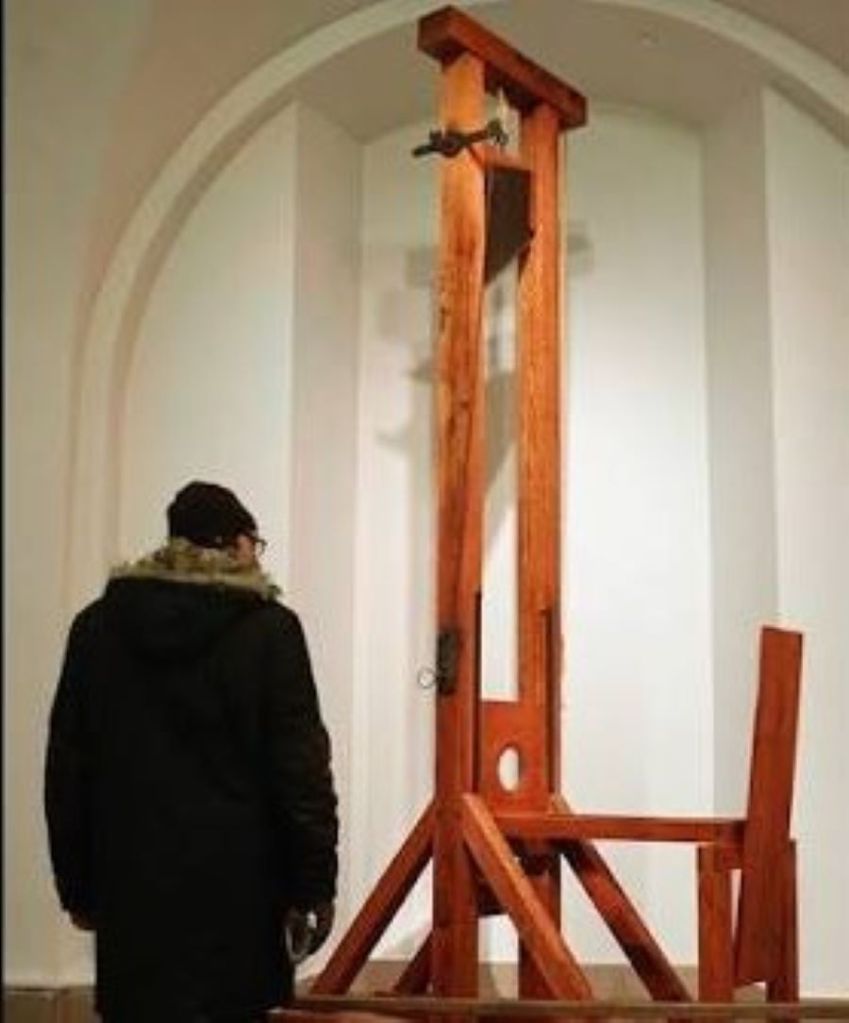
At approximately 4:40 AM on 10 September 1977, the blade fell. Hamida Djandoubi was 28 years old.
There was no official ceremony marking the moment, nor any public declaration that the guillotine had claimed its last victim. To those present, Djandoubi was simply another name added to the country’s penal record.
Though courts continued to hand down death sentences over the next four years, none were ever carried out. On 9 October 1981, under the leadership of newly appointed Justice Minister Robert Badinter, the French Parliament officially abolished the death penalty—a decision later codified in the nation’s constitution.
A Complex Legacy
Remembering Hamida Djandoubi presents a delicate moral challenge.
Opposing the death penalty does not require minimizing the horrific nature of his crimes, nor should the memory of Élisabeth Bousquet and his other victims be erased by his historical status. To treat Djandoubi solely as a constitutional symbol risks reducing real human suffering to a historical footnote.
His story encompasses every dimension of the legal process: victims whose lives were destroyed, a perpetrator of horrific violence, judges weighed down by sentencing decisions, lawyers battling over life and death, a president refusing clemency, and a magistrate bearing witness to the end.
The guillotine was conceived in the 18th century as an instrument of egalitarian justice—a machine where king and commoner met the same fate. By 1977, it had become the final relic of an era Western democracy was leaving behind.
Sources
https://www.bbc.com/audio/play/w3csv256
https://en.wikipedia.org/wiki/Hamida_Djandoubi
https://www.history.com/this-day-in-history/september-10/the-guillotine-falls-silent


Leave a Reply