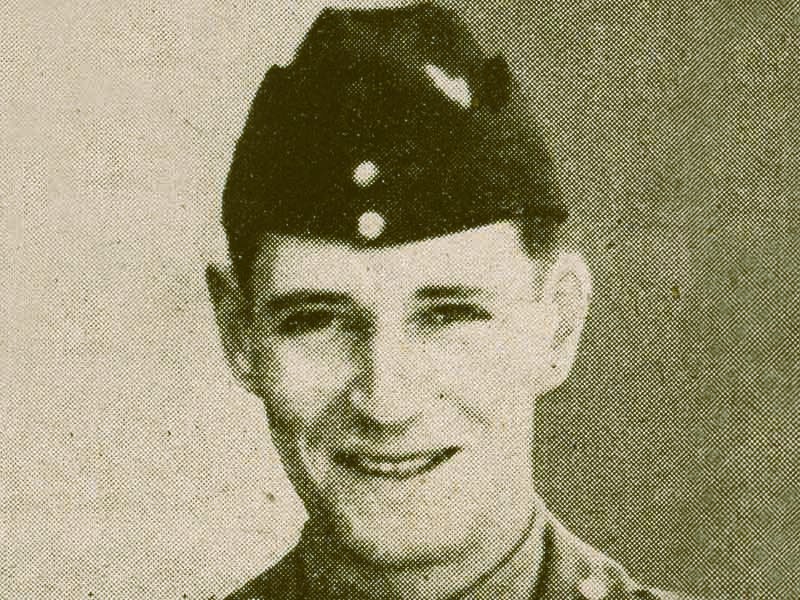
The history of military conflict is defined not only by sweeping strategic maneuvers, but by individual acts of supreme resolve under impossible circumstances. Lieutenant John Hollington Grayburn, VC, stands as one of the most remarkable examples of leadership and sacrifice in the Second World War. Serving with the 2nd Battalion, Parachute Regiment during the ill-fated Operation Market Garden in September 1944, Grayburn’s actions at the Arnhem road bridge earned him a posthumous Victoria Cross—the highest award for gallantry in the face of the enemy within the British and Commonwealth armed forces.
On the evening of 20 September 1944, amid the shattered streets of Arnhem, Lieutenant John Hollington Grayburn made the final decision of his life. German forces were closing in, his men were exhausted and wounded, and ammunition was running dangerously low. When an enemy tank approached their position, Grayburn stood up in full view of it and directed his men to withdraw toward the main defensive perimeter. He remained exposed until his soldiers had reached safety. Moments later, he was killed. He was twenty-six years old.
John Hollington Grayburn was born on 30 January 1918 on Manora Island, near Karachi, in British India. The son of Lionel Markham Grayburn and Gertrude Grayburn, he was educated in England at Sherborne School, where he became known as a capable sportsman, excelling at rugby and boxing. After leaving school he joined the Hong Kong and Shanghai Banking Corporation, but the outbreak of war changed the course of his life. In September 1940 he received an emergency commission as a second lieutenant in the Oxfordshire and Buckinghamshire Light Infantry. He later transferred to the Parachute Regiment and joined the 2nd Battalion, becoming a platoon commander. Those who knew him remembered him as quiet and unassuming, qualities that contrasted sharply with the extraordinary courage he would display in the Netherlands.
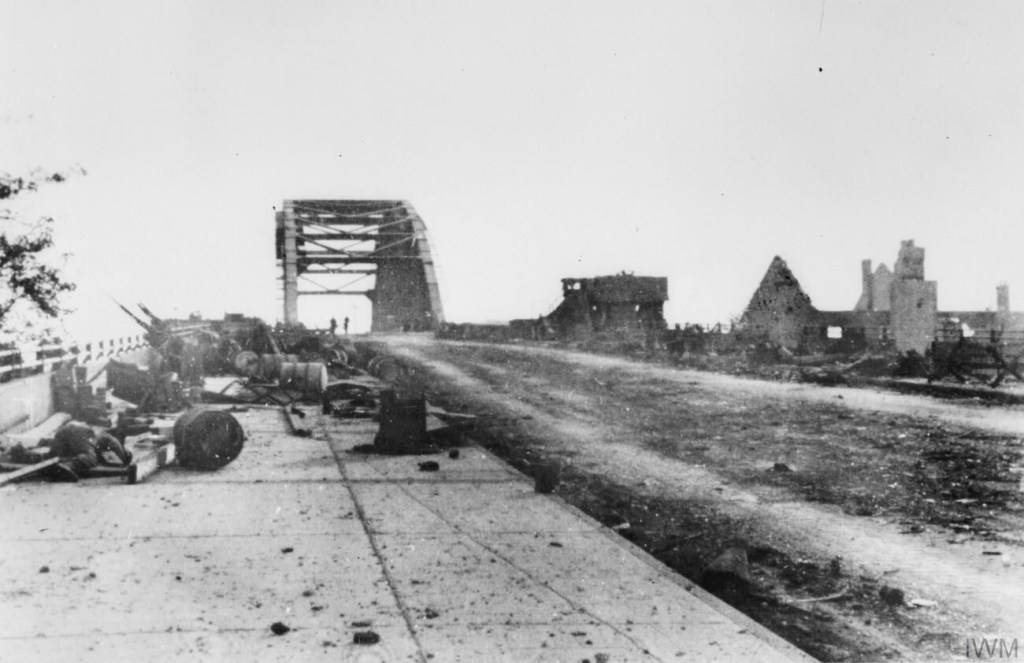
On 17 September 1944, the Allies launched Operation Market Garden, an ambitious attempt to seize a series of bridges across the Netherlands and open a route for the Allied armies toward the Rhine. The British 1st Airborne Division was given the crucial objective of Arnhem Bridge. Grayburn was among the paratroopers dropped into the Netherlands that day. British troops fought their way toward Arnhem, and a small force succeeded in establishing a precarious foothold at the northern end of the bridge. They had expected to hold it until Allied ground forces arrived, but German resistance quickly became far stronger than anticipated. The defenders soon found themselves surrounded by increasingly powerful German formations.
Grayburn’s platoon was ordered to attack toward the bridge, but the advance was met by devastating machine-gun and 20-mm cannon fire from German armoured vehicles. Grayburn was shot through the shoulder, yet refused to leave the fight. He continued directing his men and eventually supervised their withdrawal when the attack became impossible. He then helped organise the defensive positions around the bridge. For the next three days he remained at the centre of the fighting as German infantry, armour and artillery steadily tightened the pressure on the exhausted British defenders.
On 20 September, Grayburn organised fighting patrols to prevent German troops from occupying nearby buildings from which they could dominate the British positions. The Germans also attempted to destroy the bridge by placing demolition charges beneath it. Grayburn led a patrol against them, driving the Germans away and giving his men time to remove the fuses. During the action he was wounded again, this time in the back, but once more refused evacuation. By that evening, however, the British position had become virtually untenable. A German tank advanced dangerously close to Grayburn’s position, making withdrawal unavoidable. Grayburn stood up and directed his men toward the main defensive perimeter, deliberately exposing himself so that his soldiers could see where they were to go. He remained standing until they had withdrawn. The tank opened fire, and Grayburn was killed.
His courage was recognised with the posthumous award of the Victoria Cross, Britain’s highest decoration for gallantry in the face of the enemy. The citation praised his leadership and determination despite repeated wounds, exhaustion and overwhelming German pressure, crediting him with helping to maintain the defence of the bridge for as long as it was held. On 18 December 1945, his widow, Dorothy Constance Marcelle Grayburn, received the Victoria Cross from King George VI at Buckingham Palace.
Grayburn’s story is inseparable from the tragedy of Arnhem. Operation Market Garden ultimately failed to secure the Rhine crossing, and the surviving members of the 1st Airborne Division were eventually withdrawn across the river. Grayburn was initially buried close to where he fell, but his remains were recovered in 1948 and reburied at Arnhem Oosterbeek War Cemetery. His grave bears the simple inscription: “YET SHALL HE LIVE.”
Behind the Victoria Cross was not a mythical warrior but a young man who had been a schoolboy, sportsman, bank employee, husband and father. His son was only a year old when he went to Arnhem. Grayburn never returned to his family, never saw the liberation of the Netherlands and never knew that his name would become permanently associated with one of the most famous battles of the Second World War. His significance lies not merely in the medal he received, but in the responsibility he accepted for the men under his command. Wounded, exhausted and confronted by overwhelming forces, he continued to lead until there was nothing more he could do. In the end, his final act was not an attempt to save himself but to make sure his men knew where to go.
John Hollington Grayburn died at Arnhem on the night of 20 September 1944, aged just twenty-six. His Victoria Cross is preserved at the Airborne Assault Museum at Duxford, while his grave at Oosterbeek remains a place of remembrance. The battle ended in Allied defeat, but Grayburn’s story survived as one of its most enduring accounts of courage and leadership. In the chaos of Arnhem, where an ambitious military operation unravelled and thousands of men fought against impossible odds, one young officer chose to remain standing long enough for his soldiers to escape. That final image—Grayburn exposed beneath the German guns, directing his men to safety—is the image by which he is remembered.
Sources:
https://www.cwgc.org/stories/stories/lieutenant-john-jack-hollington-grayburn-vc
https://en.wikipedia.org/wiki/John_Grayburn
https://www.legerbattlefields.co.uk/history/jack-grayburn
https://paradata.org.uk/content/4640628-lieutenant-john-grayburn


Leave a Reply