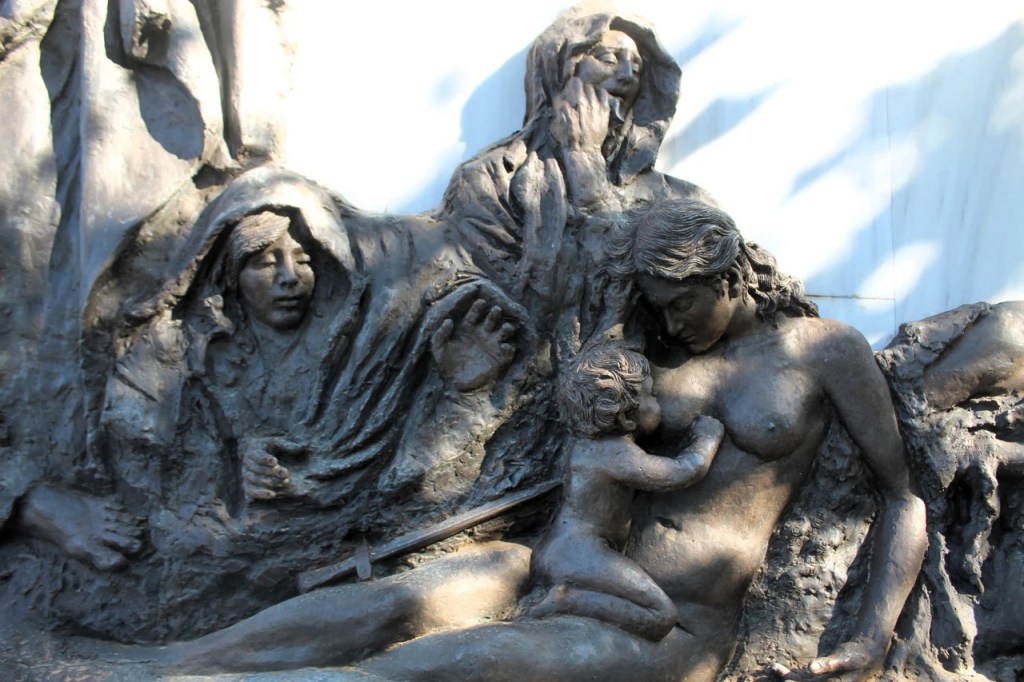
The Lingiades massacre (also spelled Ligiades or Lyngiades) was a brutal war crime committed by Nazi German troops against the civilian population of the mountain village of Lingiades in northwestern Greece. On Sunday, October 3, 1943, German soldiers entered the village and murdered its inhabitants, leaving behind a scene of devastation that would become one of the most harrowing episodes of the German occupation of Greece.
The massacre was carried out as an act of collective reprisal and terror, intended to punish the local population for resistance activity in the wider region. The victims were overwhelmingly civilians, including women, children, and elderly people. Lingiades was not simply attacked; its inhabitants were deliberately targeted as a means of intimidating the surrounding population and discouraging further resistance.
The killings reflected the brutal counterinsurgency methods employed by German occupation forces in Greece, where entire communities could be punished for the actions of resistance fighters. The concept of Sippenhaft—collective responsibility, or punishment extending beyond the individual considered responsible—formed part of a wider system of reprisals and exemplary violence.
On that October Sunday, the lives of an entire village were shattered in a matter of hours. Houses were searched and civilians were rounded up before being murdered. Only a small number of inhabitants survived, some of them children who were left among the dead.
Lingiades became another name on the long and terrible list of Greek villages marked by German occupation violence. For those who survived, the massacre was not an abstract military operation or a statistic in the history of the Second World War. It was the loss of parents, children, husbands, wives, neighbours and friends—the destruction of a community.
The village would carry the memory of that day long after the German troops had disappeared. October 3, 1943, was not merely the date of a massacre. It was the day Lingiades ceased to be the village it had been.
The Lingiades massacre (also spelled Ligiades or Lyngiades) was a catastrophic war crime perpetrated by Nazi German troops against the civilian population of the mountain village of Lingiades in northwestern Greece. Executed on Sunday, October 3, 1943, this tragedy remains one of the starkest examples of the Wehrmacht’s doctrine of “collective responsibility” (Sippenhaft) and “exemplary terror” during the Axis occupation of Greece.
Historical Context: Axis Occupation and the Epirus Region
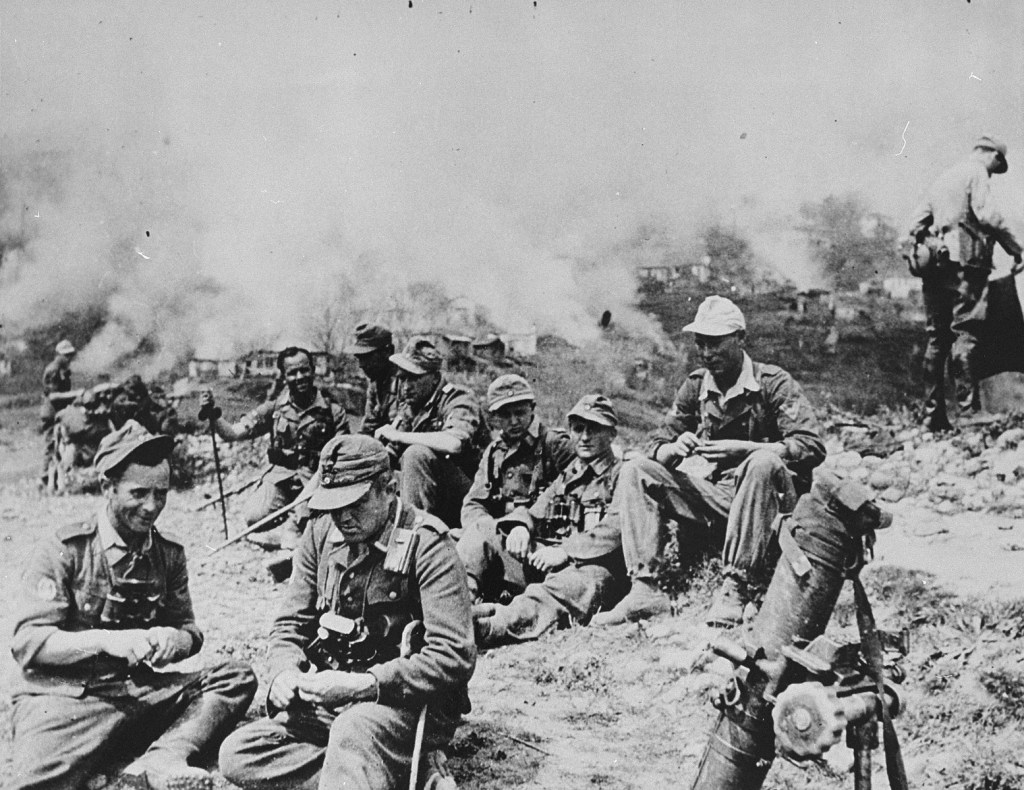
Following the Fall of Greece in April 1941, the country was partitioned into occupation zones controlled by Nazi Germany, Fascist Italy, and Bulgaria. The region of Epirus, anchored by the regional capital of Ioannina, was initially placed under Italian military administration.
Everything shifted radically in September 1943 with the Armistice of Cassibile, in which Italy surrendered to the Allied powers. Nazi forces immediately initiated Operation Achse to disarm their former Italian allies and take direct control over the occupied territories. To secure Northwestern Greece—a strategic corridor vulnerable to potential Allied landings—the German Wehrmacht deployed elite alpine infantry units, specifically the 1st Mountain Division (1. Gebirgs-Division) under General Hubert Lanz.
The 1st Mountain Division brought brutal tactics honed on the Eastern Front. Confronted by growing insurgency from Greek resistance groups (primarily EDES and ELAS), the German command enforced harsh anti-partisan orders: any attack on German personnel was to be met with immediate, indiscriminate retaliatory strikes against the nearest civilian settlements.
The Catalyst: The Death of Lt. Col. Josef Salminger
On October 1, 1943, Lieutenant Colonel Josef Salminger, commander of the 98th Mountain Regiment (Gebirgsjäger-Regiment 98), was ambushed and killed by Greek partisan fighters along the road between Ioannina and Paramythia. Salminger was an ardent Nazi and a high-profile officer known for his ruthless conduct in the Balkans.
His death triggered immediate demands for retaliation from the high command. Under General Hubert Lanz, orders were issued for a punitive sweep across the region. Though Lingiades had no direct connection to the ambush—and no active partisan presence was stationed within the village—its geographic position made it a target. Sitting high on the slopes of Mount Mitsikeli, directly overlooking Lake Pamvotis and Ioannina, Lingiades was labeled a “partisan harbor” by German intelligence.
The Execution of the Massacre: October 3, 1943
On the morning of Sunday, October 3, 1943, elements of the 98th Mountain Regiment arrived at Lingiades. The timing proved catastrophic: most of the adult men had left early that morning for the nearby mountain slopes to harvest walnuts. Consequently, the population remaining in the village consisted almost entirely of women, infants, children, and the elderly.
- Isolation & Looting: German troops encircled the village, cutting off escape routes before systematically entering houses, looting valuables, and herding the inhabitants.
- Mass Executions: Civilians were brought out to the central village square or crammed into the stone cellars and basements of larger homes. German soldiers then opened fire with automatic weapons and threw grenades into the confined spaces.
- Atrocities & Destruction: The soldiers went room to room to finish off survivors with bayonets and point-blank gunfire. Houses were doused in fuel and set ablaze, causing many wounded victims to be burned alive.
- Pursuit of Fleeing Villagers: Troops patrolled the outskirts, hunting down those attempting to hide in surrounding fields or wells.
The Human Toll
In total, 82 innocent civilians were murdered that day. The demographics underscore the indiscriminate nature of the action:
- 34 infants and children
- 37 women
- 11 elderly individuals
Only five people who were left for dead managed to survive the carnage beneath the bodies of their family members.
Aftermath and Historical Memory
When the surviving men returned to Lingiades after the departure of the German troops, they found their homes reduced to smoldering rubble and the streets strewn with charred bodies. Fearing the return of the Wehrmacht, the survivors buried their dead at night in mass graves.
The Struggle for Justice
Despite the scale of the atrocities committed by the 1st Mountain Division across Epirus and the Ionian Islands (including the massacre of thousands of Italian soldiers in Cephalonia), accountability was minimal. During the Hostages Trial at Nuremberg (1947–1948), General Hubert Lanz was tried and sentenced to 12 years in prison for war crimes in Greece and Yugoslavia. However, he was released in 1951 after serving just three years, later becoming a military advisor for West Germany’s Free Democratic Party. Individual soldiers who carried out the killings in Lingiades were never convicted.
Reconciliation and Recognition
Lingiades was officially designated a “Martyred Village” (Martyriko Chorio) by the Greek state, joining a network of towns (such as Kalavryta, Distomo, and Kommeno) that suffered catastrophic losses during the Axis occupation.
A major historical milestone occurred on March 7, 2014, when German President Joachim Gauck visited Lingiades alongside Greek President Karolos Papoulias. Gauck became the first official German representative to publicly apologize for the Wehrmacht’s atrocities at Lingiades, stating:
“With feelings of shame and sorrow, I ask the families of those murdered for forgiveness… I bow before the victims for these monstrous crimes.”
Today, a prominent memorial stands overlooking Lake Pamvotis in Lingiades, serving as a solemn monument to the 82 victims and a symbol of the enduring scars left by World War II across the Greek countryside.
Sources:
https://en.wikipedia.org/wiki/Lingiades_massacre
https://www.liberationroute.com/en/pois/3209/ligiades-massacre-memorial
http://timesofisrael.com/in-greece-visibly-moved-german-president-apologizes-for-nazi-massacre/
https://nextus.global/en/collection/la-massacre-de-linguiades-com-neixen-els-odis


Leave a Reply