By now, you have probably heard the claim that the US government is planning to livestream the execution of Nidal Hasan. The last public execution in the United States took place in 1936, nearly a century ago.
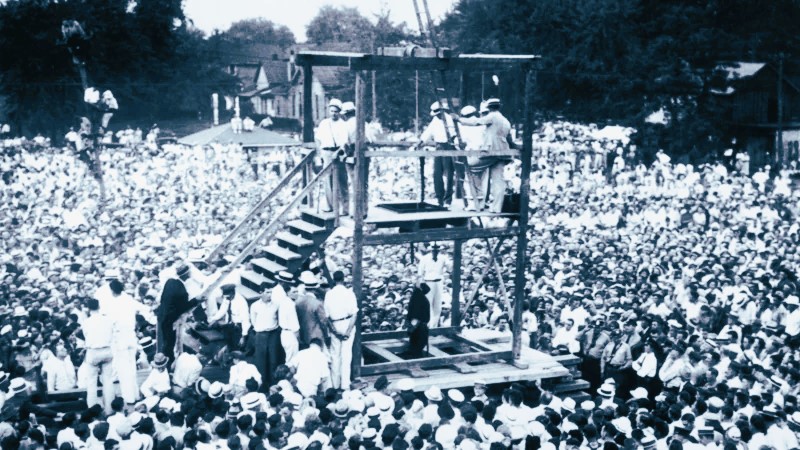
On the humid morning of August 14, 1936, in Owensboro, Kentucky, an estimated crowd of twenty thousand onlookers gathered in a grassy lot near the local county jail. They came by train, automobile, and on foot, drawn by carnival-like fanfare, street vendors selling hot dogs and popcorn, and the macabre spectacle of a human life coming to an end. The man at the center of this morbid gathering was Rainey Bethea, a twenty-four-year-old Black man convicted of the rape and murder of an elderly white woman, Lischia Edwards.
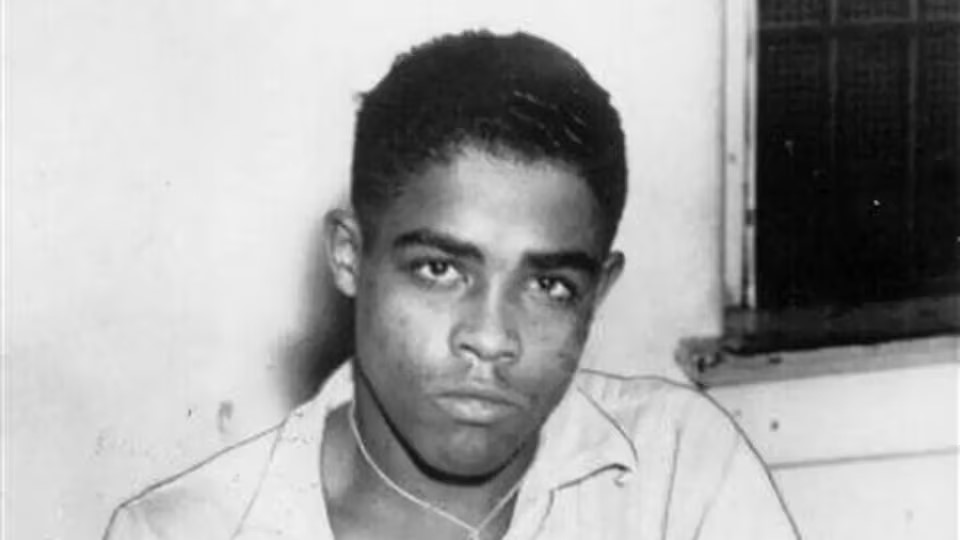
Bethea’s execution would mark a pivotal moment in American legal and cultural history: it was the last official public hanging conducted in the United States.
The circumstances leading to Bethea’s conviction were swift and fraught with the systemic racial biases of the Jim Crow-era South. Following the discovery of Lischia Edwards’ body in June 1936, suspicion quickly fell upon Bethea, who had previously worked as a laborer for the victim’s family. Arrested shortly thereafter, Bethea allegedly confessed to the crime while in custody. In a legal process characterized by extreme speed, Bethea was indicted, tried, and sentenced to death in a trial that lasted less than a day. His defense team offered little resistance, and the jury deliberated for a mere few minutes before returning a guilty verdict. Because Kentucky law mandated public hanging specifically for convictions of rape—while executions for murder were conducted privately via the electric chair—Bethea was condemned to hang in full view of the public.
What transformed Bethea’s execution from a localized legal proceeding into a national media spectacle was the involvement of Florence Thompson, the Sheriff of Daviess County. As sheriff, Thompson was legally obligated to perform the execution, making her potentially the first woman in American history to carry out a capital punishment sentence. The national press seized upon this novel element. Journalists and photographers from major newspapers and wire services flooded Owensboro, eager to sensationalize the narrative of a female law enforcement officer executing a convicted perpetrator. Though Sheriff Thompson ultimately assigned the physical task of pulling the trapdoor lever to Arthur L. Hash, a former police officer, the intense media spotlight illuminated the chaotic and spectacle-driven nature of public executions.
The atmosphere on the morning of August 14 was chaotic, sensational, and deeply unsettling. As the sun rose, the surging crowd breached police barriers to get closer to the gallows. When Bethea was brought onto the scaffold, the crowd watched in eager silence; upon the springing of the trapdoor, the scene dissolved into morbid frenzy. Spectators rushed forward after the execution, tearing away pieces of the gallows black cloth and even tearing scraps from Bethea’s clothing as gruesome souvenirs.
The immediate aftermath brought widespread outrage across the nation. Out-of-town reporters condemned the carnival atmosphere, portraying the event not as a solemn administration of justice, but as a barbaric throwback to an earlier era. Photos and sensationalized news reports highlighted the cruelty and sensationalism inherent in public capital punishment, sparking intense debates among lawmakers, ethicists, and the public regarding the propriety of public executions.
The spectacle at Owensboro proved to be the tipping point for public hanging in the United States. Embarrassed by the national condemnation and negative publicity, the Kentucky General Assembly moved swiftly to reform its penal code. In 1938, Kentucky officially repealed the statute requiring public execution for rape convictions, mandating that all future executions take place behind prison walls using the electric chair. Other states followed suit, closing the curtain on an era where public death was treated as public entertainment.
Rainey Bethea’s execution stands as a grim benchmark in American legal history. While his death did not end the death penalty or dismantle the deeply entrenched racial inequities of the justice system, it exposed the profound vulgarity of state-sanctioned violence as public entertainment. The spectacle in Owensboro served as a sobering catalyst, forcing modern society to move capital punishment behind closed walls and permanently ending the tradition of public hangings in America.
Sources:
https://www.bbc.com/news/articles/c6kgq7rqdql7o
Donation
Your readership is what makes my site a success, and I am truly passionate about providing you with valuable content. I have been doing this at no cost and will continue to do so. Your voluntary donation of $2 or more, if you are able, would be a significant contribution to the continuation of my work. However, I fully understand if you’re not in a position to do so. Your support, in any form, is greatly appreciated. Thank you. To donate, click on the credit/debit card icon of the card you will use. If you want to donate more than $2, just add a higher number in the box left from the PayPal link. Your generosity is greatly appreciated. Many thanks.
$2.00


Leave a Reply