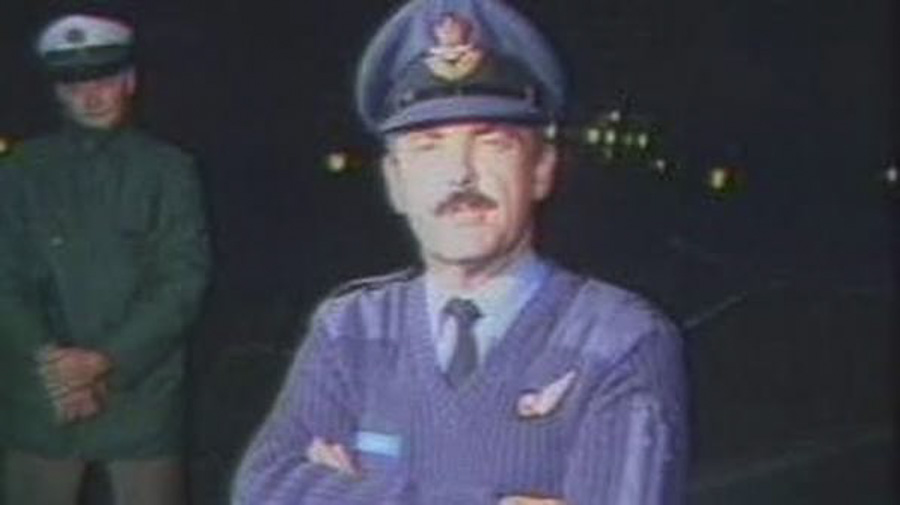
On the evening of October 26, 1989, an act of shocking violence shattered the routine of a British military installation in West Germany. At RAF Wildenrath, located near the Dutch border, Provisional IRA gunmen carried out an ambush that claimed the lives of RAF Corporal Maheshkumar Islania and his six-month-old daughter, Nivruti. While the Troubles are most commonly associated with the streets of Northern Ireland and mainland Great Britain, the attack at Wildenrath remains one of the most poignant and devastating episodes of the IRA’s lesser-known campaign in continental Europe.
The Strategic Backdrop: The IRA’s European Campaign
During the height of the Cold War, West Germany hosted tens of thousands of British service members assigned to the British Army of the Rhine (BAOR) and Royal Air Force (RAF) Germany. Bases such as Wildenrath, Bruggen, and the joint headquarters at Rheindahlen were vital nodes of NATO’s defense posture. However, by the mid-1980s, these installations also became prime targets for the Provisional IRA.
Faced with heavily fortified security measures in Northern Ireland and mainland Britain, the IRA sought to exploit the relatively porous borders and open society of Western Europe. Beginning around 1987, an active service unit (ASU) deployed to continental Europe, targeting British military personnel, their families, and infrastructure. A series of bombings and shootings—including a massive car bomb at the Rheindahlen headquarters in March 1987 and attacks in the Netherlands and Belgium—demonstrated that British forces were vulnerable even thousands of miles away from the front lines of the domestic conflict.
Anatomy of the Attack: October 26, 1989
RAF Wildenrath was primarily an aviation support and transport station, housing personnel who lived alongside their families in a tightly knit military community.
On that Thursday evening, at approximately 6:55 PM, 34-year-old RAF Corporal Maheshkumar Islania—who worked as a supervisor in the base communications center—had stopped his car near a petrol station and snack bar on or immediately adjacent to the base. In the vehicle with him were his wife, Smita, and their infant daughter, Nivruti.
As Corporal Islania returned to his vehicle, two IRA gunmen armed with automatic weapons approached and opened fire. Realizing the danger, Islania attempted to drive away, but the assailants pursued the vehicle, riddling it with bullets. Corporal Islania was struck multiple times and killed instantly. Tragically, six-month-old Nivruti was hit by a single bullet through the head, while her mother, Smita, survived the onslaught, though she suffered profound physical and psychological shock.
The gunmen quickly fled the scene, reportedly utilizing a getaway vehicle to cross back toward urban centers or slip across nearby borders before local law enforcement could mobilize a blockade.
Investigation and Security Fallout
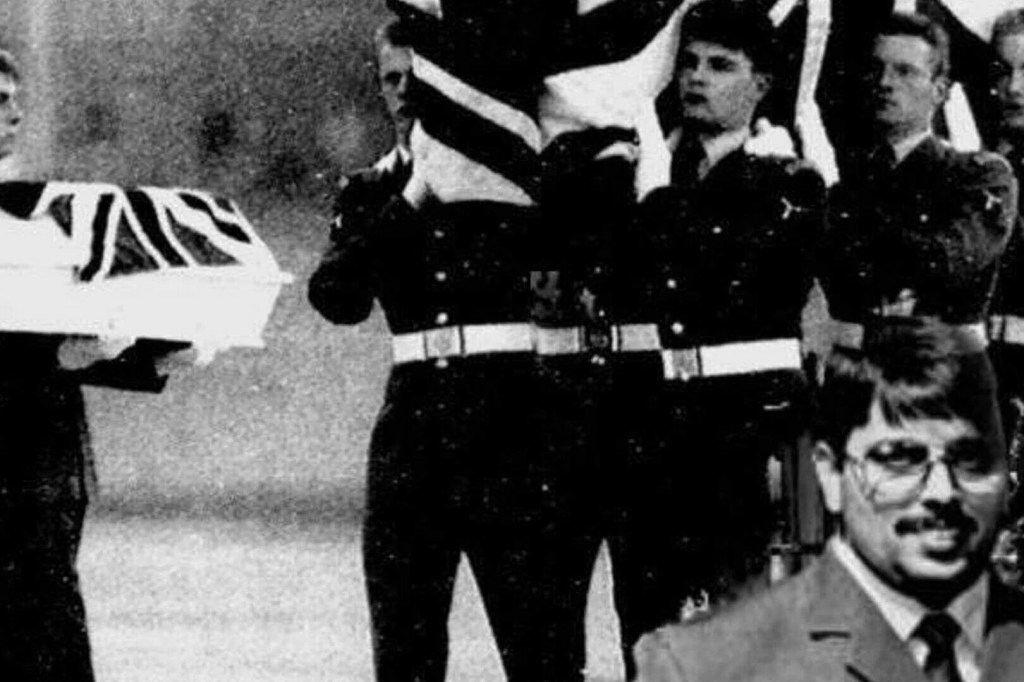
The murder of an infant and a non-combatant communications technician provoked international outrage. West German Chancellor Helmut Kohl expressed deep indignation, and local German police launched a massive manhunt alongside British military intelligence. Investigators quickly linked the shooting to the specialized continental IRA cell responsible for a string of previous attacks.
West German authorities subsequently sought several suspects associated with the cell, including prominent republican paramilitary figures such as Desmond “Dessie” Grew (who was later shot and killed by the Special Air Service [SAS] in County Armagh in 1990). The attack underscored the immense difficulty of protecting soft targets—such as families running errands or service members off-duty—amid the sprawling footprint of NATO bases in West Germany.
In response, security protocols across all British bases in Europe were drastically tightened. Routine patrols were intensified, vehicle checks became mandatory, and intelligence-sharing between British military police and West German counter-terrorism units was heightened.
Human Cost and Historical Legacy
The tragedy at Wildenrath left an indelible scar on the British military community in Germany and intensified the grief felt by victims’ families across the sectarian divide. Nivruti Islania became one of the youngest fatalities of the entire Northern Ireland conflict, serving as a stark reminder of how the violence crossed international borders and consumed innocent lives far removed from tactical engagements.
While the IRA’s European campaign continued into the early 1990s—culminating in further high-profile casualties before winding down ahead of the Northern Ireland peace process—the events of October 26, 1989, remain a sobering milestone. The attack exposed the expansive reach of paramilitary violence during the Cold War era and cemented a dark chapter in the shared history of British forces stationed in Germany.
No apologies were ever given by Sinn Fein, the political arm of the IRA.
Sources:
https://www.rte.ie/archives/collections/news/21366382-ira-killings-in-wildenrath


Leave a Reply