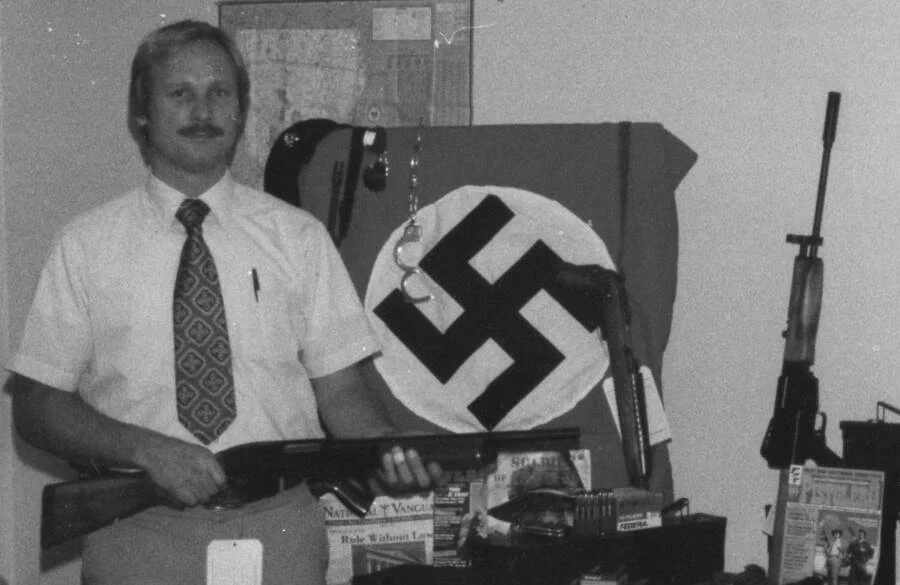
In the spring of 1981, an unlikely alliance of American Ku Klux Klan leaders, Canadian neo-Nazis, soldier-of-fortune mercenaries, and a deposed Caribbean prime minister attempted to execute one of the most bizarre geopolitical conspiracies of the late twentieth century. Codenamed Operation Red Dog by its architects and quickly derided as the “Bayou of Pigs” by the international press, the plot aimed to overthrow the democratically elected government of Dominica, a small, mountainous island nation in the Lesser Antilles. While its operational incompetence turned it into an immediate media punchline, the conspiracy revealed a troubling intersection between transnational white supremacist networks, Cold War mercenary culture, and post-colonial political fragility—and served as an incubator for figures who would shape far-right extremism for decades to come.
A Fragile Island State
To understand how a handful of North American extremists came to believe they could conquer a sovereign nation, one must look at the volatile political landscape of Dominica in the years immediately following its independence from Great Britain on November 3, 1978. Home to roughly 75,000 people and lacking the large-scale tourist infrastructure of neighboring islands, Dominica entered independence facing severe economic vulnerability.
The island’s first prime minister, Patrick John, rapidly alienated both the public and his own cabinet through allegations of corruption, authoritarian crackdowns on labor unions, and controversial schemes to sell Dominican land and diplomatic passports to foreign financiers.
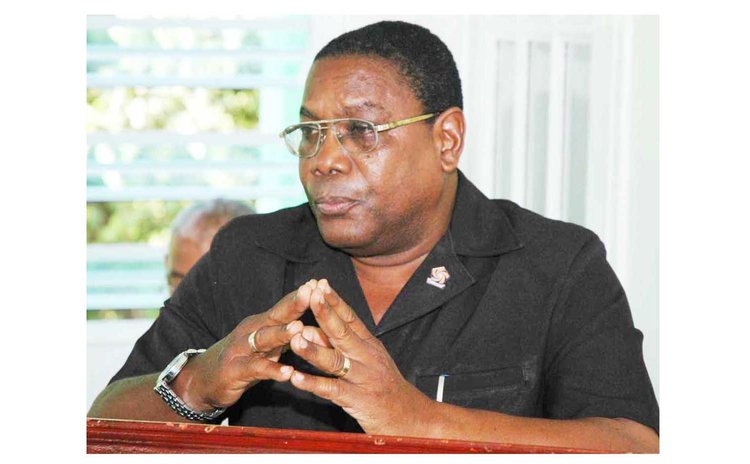
In May 1979, soldiers of the Dominica Defence Force (DDF) opened fire on demonstrators outside government headquarters in Roseau, killing two people and triggering a constitutional crisis. A general strike paralyzed the island, forcing John from office. Months later, Hurricane David devastated Dominica, destroying much of its agricultural economy and housing stock.
In July 1980, voters elected Eugenia Charles, a sharp-tongued lawyer and leader of the Dominica Freedom Party, making her the first female prime minister in the Caribbean. Charles immediately moved to curb the politicized DDF, disarming the force and investigating its links to her predecessor. Desperate to reclaim power and evade accountability, Patrick John began looking abroad for armed backing—and found an eager partner in the American white supremacist underground.
The Architecture of Operation Red Dog
The mastermind behind the mercenary recruitment was Mike Perdue, a former U.S. Marine, Texas Ku Klux Klan organizer, and self-styled soldier of fortune who had previously explored schemes to overthrow the government of Grenada. Through intermediary financiers and Caribbean contacts, Perdue connected with Patrick John’s inner circle in late 1980 and negotiated an audacious quid pro quo.
Perdue promised to assemble an armed strike force to sail to Dominica, link up with disgruntled DDF loyalists, storm the police headquarters, radio station, and parliament in Roseau, and reinstall John as prime minister. In return, John agreed to grant the mercenaries and their backers unprecedented autonomy over a designated territory on the island.
For the white supremacists Perdue recruited, Dominica was envisioned as far more than a financial windfall. The conspirators planned to establish a sovereign enclave free from U.S. and Canadian law enforcement—a Caribbean haven featuring tax-free offshore banks, casinos, brothels, narcotics-refining laboratories, arms-smuggling routes, and a secure paramilitary training base for white nationalists.
To staff the invasion, Perdue drew directly from transnational Klan and neo-Nazi networks:
- Don Black: A former Grand Wizard of the Knights of the Ku Klux Klan from Alabama, Black brought organizational discipline and ideological commitment to the mission, viewing the island project as a territorial foothold for white separatism.
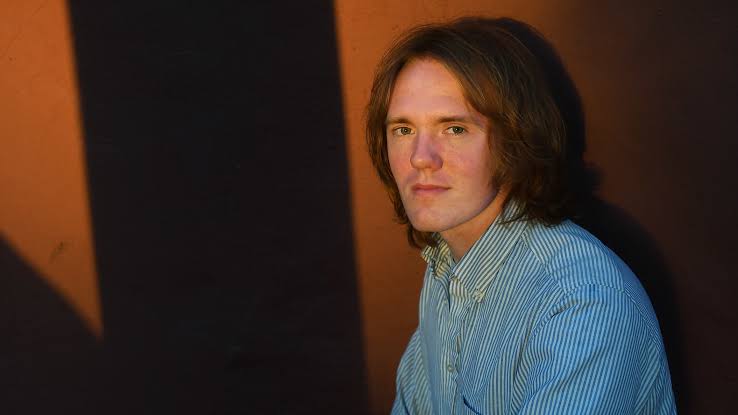
- Wolfgang Droege: A German-born Canadian neo-Nazi and leader of the Canadian Knights of the Ku Klux Klan, Droege recruited militants from Toronto and acted as Perdue’s operational lieutenant.
- Mercenary Adventurers: The remaining recruits included survivalists, arms enthusiasts, and fringe militiamen from Texas, Mississippi, Georgia, and Ontario, united by fantasies of anti-communist crusade, racial separatism, and illicit wealth.
Amateurism and the New Orleans Sting
Despite grand ambitions, Operation Red Dog suffered from catastrophic operational security from its inception. The conspirators discussed their plans openly in diners and motel rooms, struggled to secure financing, and repeatedly failed to find reliable maritime transport.
In early 1981, after their original boat arrangement collapsed, Perdue approached Michael S. Howell, a Vietnam War veteran and charter boat captain operating out of New Orleans. Attempting to project official authority, Perdue spun an elaborate cover story, claiming he was working on behalf of the Central Intelligence Agency to mount a covert operation in the Caribbean.
Howell immediately saw through the fabrication and contacted the U.S. Bureau of Alcohol, Tobacco and Firearms (ATF). Recognizing the threat of an armed Neutrality Act violation, federal agents launched an undercover sting. ATF operatives posed as Howell’s boat crew, participating in planning sessions, secretly recording conversations, and documenting the conspirators’ arms acquisitions.
Meanwhile, intelligence shared between Washington and Roseau enabled Prime Minister Eugenia Charles to act preemptively. On April 25, 1981, Dominican authorities arrested Patrick John, DDF commander Frederick Newton, and several local accomplices, neutralizing the internal half of the coup before the mercenaries had even boarded a vessel.
Two days later, on the night of April 27, 1981, Perdue, Black, Droege, and seven co-conspirators arrived at a marina in Slidell, Louisiana, near Lake Pontchartrain. As they unloaded a cache of automatic rifles, shotguns, ammunition, dynamite, camouflage gear, and Nazi flags from rented vans toward the waiting boat, heavily armed ATF agents and federal marshals surrounded the dock and arrested all ten men without firing a shot.
Trials, Aftermath, and Historical Legacy
The subsequent federal trials in New Orleans exposed the sheer absurdity of the plot to the public. Prosecutors presented audio recordings of the defendants boasting about carving up Dominica’s economy and fighting off imaginary Cuban forces. Most of the conspirators pleaded guilty or were convicted of violating the U.S. Neutrality Act, receiving three-year prison sentences. Back in Dominica, Patrick John was eventually convicted of conspiracy to overthrow the government and sentenced to twelve years in prison, while Eugenia Charles solidified her international reputation as the “Iron Lady of the Caribbean.”
Yet dismissing Operation Red Dog solely as a farcical misadventure overlooks its long-term significance in the evolution of modern extremism. Rather than breaking the movement, federal incarceration served as a networking and educational crucible for its key participants.
During his three years in federal prison, Don Black taught himself computer programming—a skill he later used in 1995 to launch Stormfront.org, the internet’s first major white supremacist hate site, shifting far-right organizing from isolated paramilitary plots to global digital radicalization. Wolfgang Droege, after serving time in the United States and being deported to Canada, went on to co-found the Heritage Front in Toronto, uniting Canadian skinhead and neo-Nazi factions throughout the early 1990s before drifting into organized crime and dying in a 2005 drug-related shooting.
Ultimately, Operation Red Dog stands as a pivotal transitional episode in the history of the modern far right. It represented the twilight of the 1970s and early 1980s “soldier-of-fortune” era—when extremists believed they could seize physical territory by boat and rifle—and inadvertently planted the seeds for the decentralized, digital hate networks that would define white nationalism in the twenty-first century.
Sources
https://allthatsinteresting.com/operation-red-dog
https://sundominica.com/articles/the-rise-fall-of-patrick-john-6277


Leave a Reply