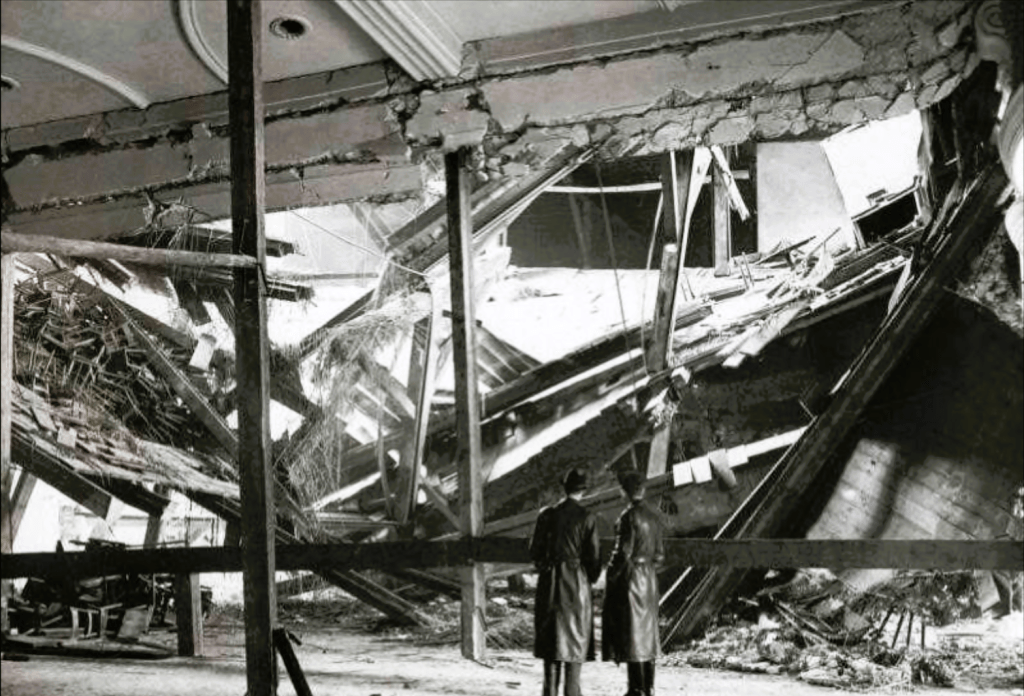
On November 8, 1939, Adolf Hitler narrowly escaped an assassination attempt in Munich. The attempt took place in the Bürgerbräukeller, a popular beer hall where he annually commemorated the anniversary of the 1923 Beer Hall Putsch, an early failed coup that Hitler had led in an attempt to seize power in Germany.
The bomb was planted by Georg Elser, a German carpenter and anti-Nazi who was acting alone. He had spent weeks preparing the bomb and hiding it within a pillar behind the speaker’s platform. Elser timed it to go off while Hitler would be delivering his speech. However, Hitler unexpectedly cut his speech short and left the hall earlier than usual, just minutes before the bomb detonated. The blast killed eight people and injured dozens, but Hitler was unharmed.
The failed assassination attempt in 1939 is significant as it showed that even within Germany, there was opposition to Hitler’s rule, and Elser’s actions are now widely recognized as one of the earliest and most determined attempts to eliminate Hitler and prevent the coming devastation of World War II.
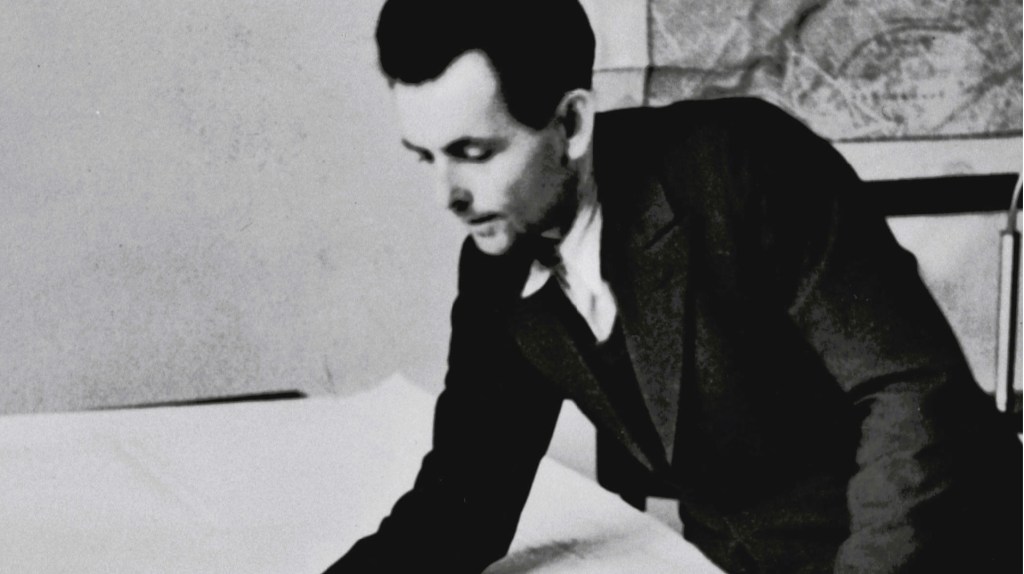
Background and Motivations
Georg Elser was born in 1903 in the small village of Hermaringen in Württemberg, Germany. From a young age, he was known for his skilled craftsmanship and strong work ethic, and he became a respected carpenter and cabinet maker. However, Elser also harbored a deep sense of justice and social responsibility. He had witnessed the growing militarization and repression under Hitler’s rule and was deeply troubled by the economic hardship and political repression Germany was experiencing. Though not formally involved with political opposition groups, Elser opposed the Nazi regime and was particularly disturbed by the prospect of a war that would bring more suffering to ordinary people in Germany and across Europe.
Elser’s motivations were grounded in a desire to prevent further bloodshed and suffering. He believed that if Hitler were removed from power, the German war machine could be halted, possibly sparing millions of lives. Unlike the later July 20, 1944 plot led by high-ranking military officials, Elser’s plot was that of a single, resolute individual. He was not supported by any formal organization, yet his determination led him to plan one of the most ambitious assassination attempts on Hitler.
The Plot and Preparation
Elser’s target was the annual Nazi commemoration of the Beer Hall Putsch of 1923, an event held at the Bürgerbräukeller in Munich, where Hitler and other Nazi leaders gathered every year to celebrate the failed coup that had launched Hitler into the national spotlight. Hitler was known for delivering a speech on this day, making it an ideal time for an assassination attempt.
In the months leading up to the attack, Elser visited the beer hall repeatedly to understand its layout and to devise a detailed plan. Using his skills as a carpenter, he constructed a time bomb and hid it within a column directly behind the speaker’s podium, a process that required great precision and courage. Over a period of weeks, he painstakingly hollowed out a section of the pillar, carefully concealing his activities to avoid detection. The bomb itself was sophisticated, featuring a delayed-action timer that would detonate during Hitler’s speech, ensuring that Elser could safely escape.

Execution of the Plot
On November 8, 1939, Elser’s plan was set in motion. He had calculated that Hitler’s speech would last for at least an hour, providing ample time for the bomb to go off. However, in an unexpected turn of events, Hitler cut his speech short and left the beer hall earlier than anticipated. Just 13 minutes after Hitler’s departure, the bomb exploded, killing eight people and injuring dozens but missing its primary target.
The timing was nothing short of tragic irony; Elser’s meticulous preparation was foiled by a simple change in schedule. Had Hitler remained to speak longer, as he typically did, Elser’s plan would likely have succeeded, potentially altering the course of history and sparing countless lives. The blast, though devastating, became a haunting example of how close Hitler came to being stopped before launching his full-scale campaigns across Europe.

Arrest and Interrogation
Elser’s escape plan was thwarted when he was stopped at the Swiss border and arrested by German authorities. At first, he was treated as a common suspect, but after a detailed investigation revealed his bomb-making skills, he was turned over to the Gestapo, the Nazi secret police. Under brutal interrogation, Elser confessed to the plot, detailing how he had acted alone. The Nazis, however, struggled to believe that a single individual could have orchestrated such a sophisticated attack. They initially suspected British intelligence involvement, though no such connection was ever found.
Elser’s capture and confession were followed by years of imprisonment. He was held as a “special prisoner” in the Sachsenhausen concentration camp and later transferred to Dachau. Despite the harsh conditions, he reportedly held to his principles and refused to show remorse for his actions, firmly believing that his attempt to stop Hitler was justified.
Legacy and Impact
Georg Elser was executed on April 9, 1945, only weeks before the end of the war, on direct orders from Heinrich Himmler, one of Hitler’s top lieutenants. His bravery went largely unacknowledged during his lifetime, as the Nazi regime portrayed him as a traitor. However, after the war, Elser’s story began to emerge as a testament to individual resistance within Nazi Germany.
Elser’s assassination attempt is historically significant because it highlighted a few crucial aspects of Nazi-era Germany. First, it demonstrated that opposition to Hitler existed even among ordinary citizens without ties to formal resistance groups. Unlike other assassination plots, which involved high-ranking officers and officials, Elser’s was a solitary act of defiance, motivated by personal conviction rather than political ambition or military strategy.
Secondly, Elser’s story complicates the common perception that Germans uniformly supported Hitler’s regime. His resistance suggests that even in the face of strict propaganda and harsh repercussions, individual dissent could and did exist. He exemplified the moral courage to stand up against an oppressive regime at a time when such resistance was almost certainly a death sentence.
Finally, Elser’s attempt showed the vulnerability of authoritarian regimes to opposition from within. Although his plot ultimately failed, it was one of the closest and most effective attempts on Hitler’s life and a chilling reminder to the Nazi leadership of the inherent dangers of absolute rule.
Sources
https://www.ehemalige-synagoge-rexingen.de/en/latest/events/elser-ausstellung-eng
https://www.bbc.com/news/magazine-32160816
Donation
Your readership is what makes my site a success, and I am truly passionate about providing you with valuable content. I have been doing this at no cost and will continue to do so. Your voluntary donation of $2 or more, if you are able, would be a significant contribution to the continuation of my work. However, I fully understand if you’re not in a position to do so. Your support, in any form, is greatly appreciated. Thank you. To donate, click on the credit/debit card icon of the card you will use. If you want to donate more than $2, just add a higher number in the box left from the PayPal link. Your generosity is greatly appreciated. Many thanks.
$2.00

 History of Sorts
Leave a comment