
Bashar al-Assad has been the President of Syria since 2000, inheriting power from his father, Hafez al-Assad. His presidency has been marked by widespread human rights abuses, war crimes, and violations of international law, particularly during the Syrian Civil War that began in 2011. As the leader of the Syrian government, Assad’s policies and military campaigns have led to the deaths of hundreds of thousands of civilians and the displacement of millions. His regime’s use of violence, chemical weapons, and systematic brutality has solidified his role as one of the most controversial figures in modern geopolitical history. This essay examines the key events and crimes committed by Bashar al-Assad’s regime over the years.
The Early Years (Pre-2011)
Bashar al-Assad ascended to the presidency in 2000 following the death of his father, Hafez al-Assad, who had ruled Syria with an iron grip since 1971. Early in his presidency, Bashar continued his father’s policies of political suppression, curbing dissent, and maintaining tight control over Syria. The regime cracked down on political opposition, used surveillance, and resorted to arbitrary detentions against activists and dissidents, creating an environment of fear and control.
Although relatively quiet during his first years in power, early signs of authoritarian control and human rights abuses were evident in the regime’s response to peaceful political dissent and opposition movements. These acts would later escalate into more systematic and brutal violations as political instability grew in the region.
The Beginning of the Syrian Civil War (2011)
The Arab Spring in 2011, a wave of protests and revolutions across the Middle East and North Africa, sparked unrest in Syria as well. Syrians began peaceful demonstrations calling for reforms, political freedoms, and the release of political prisoners. However, Bashar al-Assad’s regime chose a violent response, deploying security forces to suppress these movements. This marked the beginning of the Syrian Civil War.
Assad’s brutal crackdowns on protests involved arbitrary arrests, torture, and extrajudicial killings. Peaceful demonstrators were met with live ammunition, and entire communities faced military retaliation. Reports of torture, forced disappearances, and arbitrary detention became widespread as the regime escalated its response. The violent suppression of these protests marked a turning point in Syria’s history and set the stage for a prolonged civil war.
Chemical Weapons Use and International Condemnation (2013–2017)
One of the most notorious elements of Bashar al-Assad’s regime during the Syrian conflict has been the repeated use of chemical weapons against civilian populations. These acts of chemical warfare have been condemned globally, yet Assad has largely avoided accountability.
- 2013 Ghouta Chemical Attack: On August 21, 2013, the regime used sarin gas to attack the Damascus suburb of Eastern Ghouta. Over 1,400 civilians, including women and children, were killed in this atrocity. Investigations by the United Nations confirmed the regime’s involvement, and the attack cemented Assad’s willingness to use chemical weapons to maintain military control.
- 2017 Khan Shaykhun Chemical Attack: On April 4, 2017, a sarin gas attack killed over 100 civilians in the town of Khan Shaykhun. The United States responded to this attack with missile strikes against the Shayrat Airbase in Syria. Despite international outrage, Assad’s regime continued its chemical weapons use.
These attacks highlight not only Assad’s willingness to commit war crimes but also the international community’s struggle to respond effectively to such actions.
Sieges and the Destruction of Aleppo (2016)
During the Syrian Civil War, one of the most devastating tactics employed by Assad’s forces was the use of sieges. The siege of Eastern Ghouta and other opposition-held regions became methods of war aimed at starving civilian populations into submission. These sieges deprived civilians of access to food, medical supplies, and humanitarian aid, resulting in thousands of deaths.
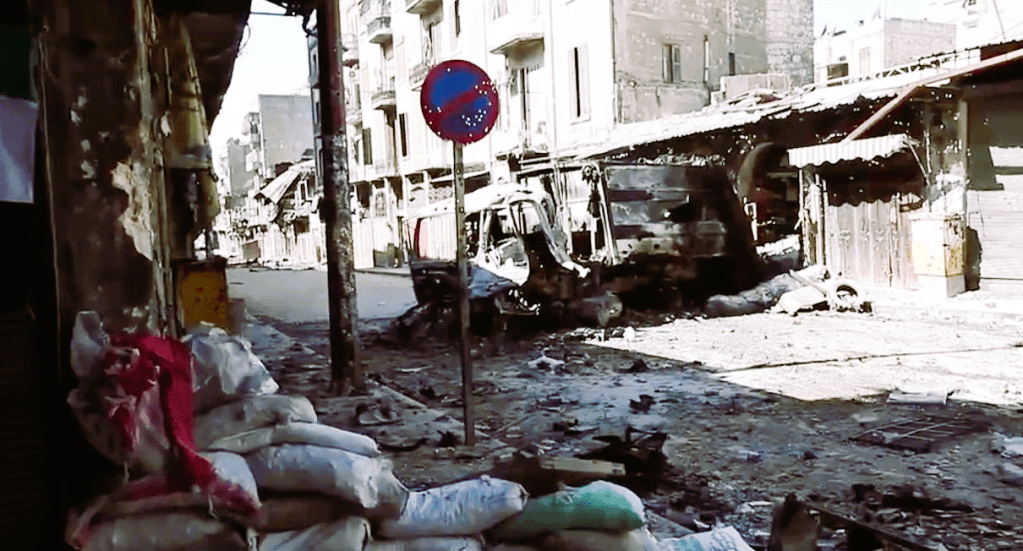
The Battle of Aleppo (2016) exemplifies the brutal tactics of the Assad regime. Aleppo, Syria’s largest city, was subjected to months of heavy bombardment, which led to the destruction of hospitals, schools, and other vital infrastructure. This campaign effectively turned civilian areas into target zones. The use of indiscriminate bombing and deliberate targeting of essential services left tens of thousands of civilians dead or displaced.
The destruction of Aleppo further solidified Assad’s regime’s use of war crimes as part of its military strategy, using starvation and civilian suffering as a form of coercion.
The Douma Chemical Weapons Attack and Escalation (2018)
On April 7, 2018, another devastating chemical weapons attack occurred in Douma, a town near Damascus. This attack, which targeted civilians, killed dozens and left hundreds injured. The attack was widely attributed to the Assad regime, prompting an international response. The United States, the United Kingdom, and France carried out airstrikes targeting military infrastructure in Syria as a response to this atrocity.
Despite international condemnation and military responses, the regime’s use of violence continued, with no accountability or legal repercussions for these crimes.
The Idlib Campaign and Continued Humanitarian Destruction (2019–2020)
In 2019 and 2020, the Assad regime intensified its military campaigns to retake the last remaining opposition-controlled regions, particularly in Idlib province. This campaign, supported by Russian military power, involved intense bombardment, forced displacement, and the destruction of civilian infrastructure.
The humanitarian toll was catastrophic. Hundreds of thousands of civilians fled their homes as the regime’s airstrikes and military operations destroyed towns and cities. Reports from humanitarian organizations highlighted the systematic targeting of civilian areas, infrastructure, and humanitarian aid routes.
War Crimes, Displacement, and the Refugee Crisis
Bashar al-Assad’s policies and military campaigns have not only devastated opposition forces but also displaced millions of Syrians. The regime’s tactics of siege warfare, forced displacement, and indiscriminate bombing have contributed to one of the worst refugee crises in modern history, with over 6 million Syrians internally displaced and another 6 million forced to seek refuge in other countries.
The use of starvation as a weapon, destruction of medical facilities, and denial of aid have only exacerbated suffering. The international response to these humanitarian crises has been slow, leaving many victims without access to aid or justice.
Conclusion: Accountability and the Future of Syria
Throughout his presidency, Bashar al-Assad has overseen a regime responsible for widespread human suffering, war crimes, and violations of international law. His use of chemical weapons, sieges, forced displacements, and indiscriminate bombardments has resulted in the deaths of hundreds of thousands of civilians and the displacement of millions more. Despite clear evidence of these crimes, Assad has remained in power, primarily supported by Russia and Iran.
The international community has struggled to hold Assad accountable, and the International Criminal Court (ICC) has yet to prosecute him for these crimes. As Syria continues to struggle with ongoing violence and humanitarian crises, the legacy of Assad’s regime will remain a dark chapter in the history of modern warfare and human rights violations. Until accountability is achieved, Bashar al-Assad’s actions will remain a stark reminder of the consequences of unchecked authoritarian power.
Obama’s Red Line
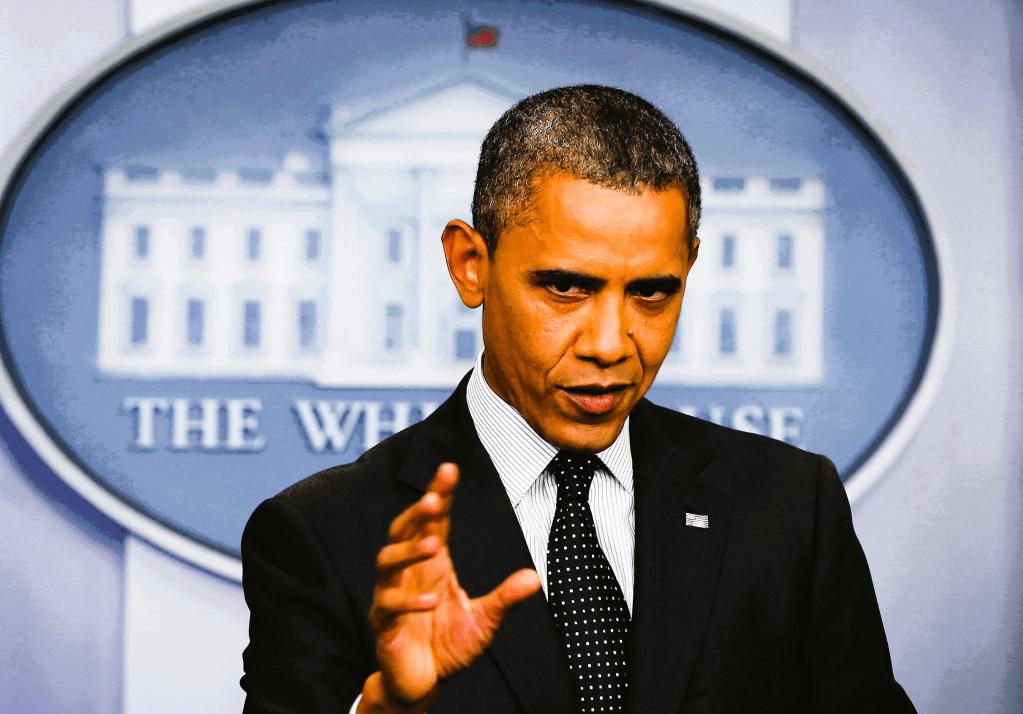
President Barack Obama’s “red line” speech* regarding chemical weapons in Syria* was delivered on August 20, 2012, during a press conference. This speech is notable because it set a warning to the Syrian regime under Bashar al-Assad about the use of chemical weapons, while signaling the United States’ willingness to act if such weapons were deployed.
Key Points of the Speech:
- Definition of the “Red Line”:
Obama stated that the use of chemical weapons by the Syrian government would cross a “red line” and would result in a strong response from the United States. He emphasized that such a violation would not be tolerated because it posed a direct risk to human life and international norms. Quote from the speech:
“We have been very clear to the Assad regime and other players on the ground: A red line for us is we start seeing a lot of movement on the chemical weapons front or the use of chemical weapons. That would be a serious, serious problem.”
- Context and Motivation:
The context of the speech was the civil war in Syria, which had already grown into a complex and deadly conflict. Reports of the Syrian government potentially preparing or using chemical weapons sparked concerns among Western allies. Obama’s statement was intended to deter Syria from further escalation. - International Implications:
The “red line” speech sought to align the United States’ commitment to international laws prohibiting the use of chemical weapons. It also served as a diplomatic warning to other international players to hold the Assad regime accountable. - Challenges in Following Through:
Despite this stern warning, Obama later struggled with the decision to act militarily in Syria when evidence surfaced of the use of chemical weapons in 2013. Ultimately, diplomatic efforts—specifically an agreement brokered with Russia—led to the dismantling of Syria’s chemical weapons stockpile rather than a direct military response.
Aftermath of the Speech:
In August 2013, a devastating chemical attack in Eastern Ghouta, Damascus, killed hundreds of civilians. This led to intense debate in the U.S. about how to respond. Obama initially sought congressional approval for military action but later shifted toward a diplomatic solution, working with Russia to reach a deal with Syria to dismantle its chemical weapons program. This was seen as a way to avoid direct military conflict while still addressing the threat posed by chemical weapons.
While the “red line” speech became an iconic statement in the Obama administration’s foreign policy, it remains a subject of debate among policymakers and historians due to the mixed response and the challenges in enforcing U.S. threats and red lines without direct military intervention.
sources
https://www.bbc.com/news/articles/cqx89reeevgo
https://en.wikipedia.org/wiki/Bashar_al-Assad
Donations
Your readership is what makes my site a success, and I am truly passionate about providing you with valuable content. I have been doing this at no cost and will continue to do so. Your voluntary donation of $2 or more, if you are able, would be a significant contribution to the continuation of my work. However, I fully understand if you’re not in a position to do so. Your support, in any form, is greatly appreciated. Thank you. To donate, click on the credit/debit card icon of the card you will use. If you want to donate more than $2, just add a higher number in the box left from the PayPal link. Your generosity is greatly appreciated. Many thanks.
$2.00


 History of Sorts
Leave a comment