
Amon Göeth was sentenced to death and was hanged on 13 September 1946 at the Montelupich Prison in Kraków, not far from the site of the Płaszów camp, the camp he had been in charge of until two years, to the date, prior to his execution.
On 13 September 1944, he was relieved of his post and charged by the SS with theft of Jewish property (which belonged to the state, according to Nazi regulations), failure to provide adequate food to the prisoners under his charge, violation of concentration camp regulations regarding the treatment and punishment of prisoners, and allowing unauthorised access to camp personnel records by prisoners and non-commissioned officers.
In February 1943, he became the third SS officer to hold the position of Commandant of the Plaszow Labour Camp. Here is where he committed his most heinous crimes
In addition to his role as commandant of the Płaszów Camp, Amon Goeth was tasked with closing the nearby ghettos of Kraków and Tarnów, during which the seeds of his barbarism and corruption began to take root. According to the testimony of several witnesses, as recorded in his 1946 indictment for war crimes, Göeth personally shot between 30 and 90 women and children during the liquidation of the Tarnów ghetto.
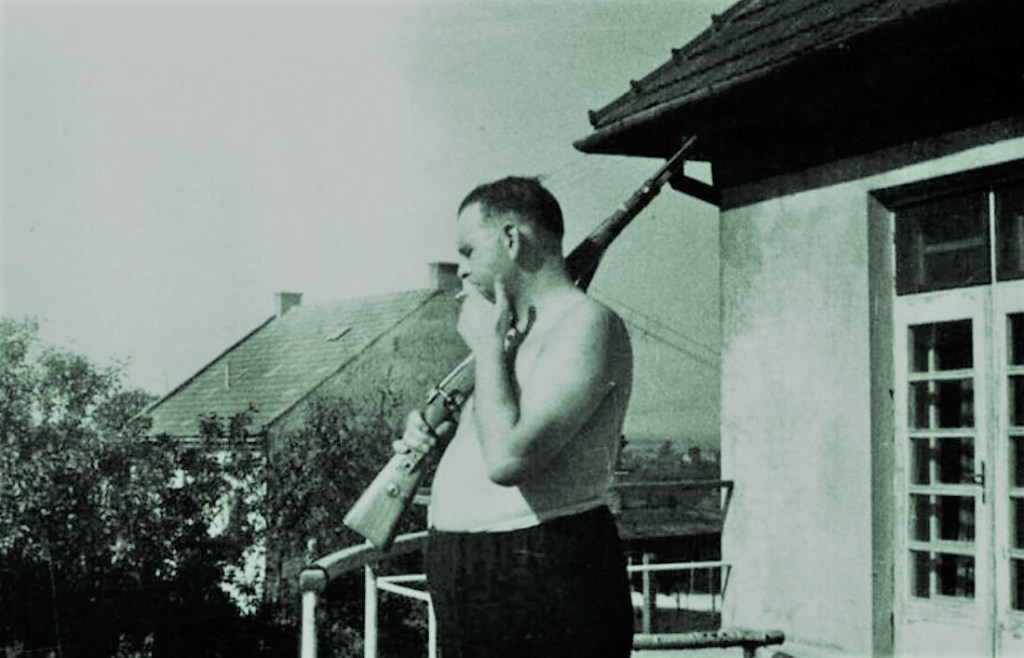
He murdered often and without hesitation or provocation.
Joseph Bau, a former prisoner, recalled.
“A hideous and terrible monster, [Amon Göeth] who reached a height of more than two meters. He set the fear of death in people, terrified masses, and accounted for much [of the] chattering of teeth. He ran the camp through extremes of cruelty that are beyond the comprehension of a compassionate mind—employing tortures, which dispatched his victims to hell.
For even the slightest infraction of the rules, he would rain blow after blow upon the face of the helpless offender and would observe with satisfaction born of sadism how the cheek of his victim would swell and turn blue, how the teeth would fall out, and the eyes would fill with tears.
Anyone being whipped by him was forced to count in a loud voice with each stroke of the whip, and if he made a mistake, [he] was forced to start counting over again. During interrogations—which were conducted in his office—he would set his dog on the accused, who was strung by his legs from a specially placed hook in the ceiling.
In the event of an escape from the camp, he [Amon Göeth] would order the entire group from which the escapee had come—to form a row, would give the order to count ten, and would personally kill every tenth person.
At one morning parade, in the presence of all the prisoners, he shot a Jew because, as he complained, the man was too tall. Then, as the man lay dying, he urinated on him.
Once, he caught a boy who was sick with diarrhoea and unable to restrain himself. Goeth forced him to eat all the excrement and then shot him.”
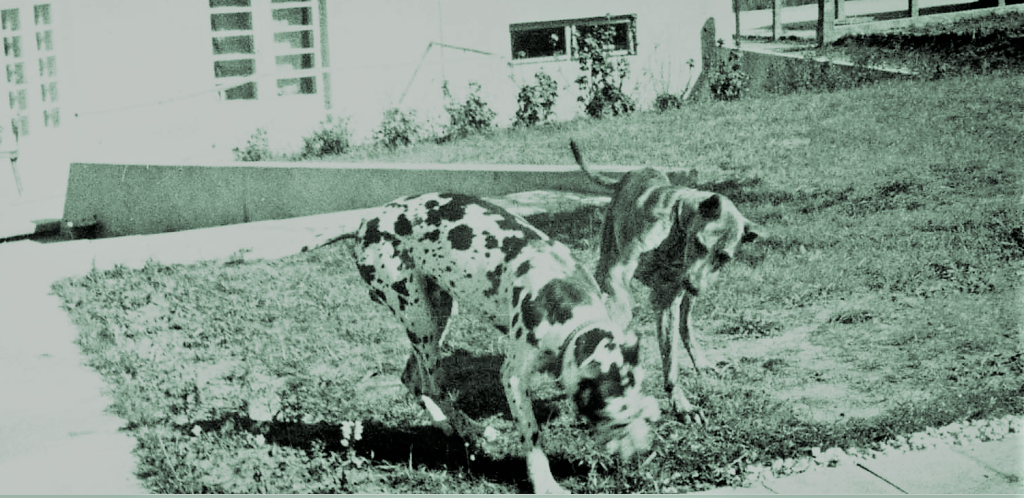
His two dogs, Rolf and Ralf, were trained to tear apart inmates to death. He shot people from his office window if they appeared to be moving too slowly or resting in the yard.
Helen Jonas-Rosenzweig, another survivor, recalled:
“He told me if a Jewish girl is smart enough to clean a window on a sunny day, then she is smart enough to work for me and began serving as a maid in his villa at the camp. As a survivor, I can tell you that we were all traumatized [people]. Never would I, never, believe that any human being would be capable of such horror, of such atrocities. When we saw him from a distance, everybody was hiding, in latrines, wherever they could hide. I can’t tell you how people feared him. Physically he was a very large man. He decided who would live and who would die. There was a slap, a kick, a push—but I guess my time wasn’t up. When he had guests I had to look pleasant or the beatings were limitless.
An incident that occurred when she began working in the villa first revealed her Goeth’s nature. He told her to iron his shirt when it became clear she did not know how he slapped her across the face.
He [Göeth] said she recalled, “Girls in Vienna can iron shirts, why can’t you?” When she began to cry, he slapped her again. It was then, she said, that she realized she was not a child anymore and it was time to grow up.”

After the war, Göeth was extradited to Poland, where he was tried by the Supreme National Tribunal of Poland in Kraków between 27 August and 5 September 1946.
Göeth was found guilty of membership in the Nazi Party and personally ordered the imprisonment, torture, and extermination of individuals and groups of people. He was also convicted of homicide, the first such conviction at a war crimes trial, for “personally killing, maiming and torturing a substantial, albeit unidentified number of people.”
Amon Goeth’s main defence was that any death sentence that was carried out was done so with the knowledge and authorisation of his superiors. Nevertheless, Goeth was found guilty on all counts because there was no justification under the law of war for the liquidation of defenceless civilians.
He was sentenced to death and was hanged on 13 September 1946.
Göeth was played by Ralph Fiennes in Steven Spielberg’s Schindler’s List.
In addition to his two marriages, Göeth had a two-year relationship with Ruth Irene Kalder, a beautician and aspiring actress. Kalder first met Göeth in 1942 or early 1943 when she worked as a secretary at Oskar Schindler’s enamelware factory. The two had an ostentatious camp affair, which Göeth’s Austrian wife knew nothing about. They partied, played tennis and rode horseback together. Ruth saw him hunting humans (in fact, he killed hundreds) while in a 1983 interview with the BBC, she attempted to defend him nevertheless. During this interview, she was shown the transcripts from his war crimes trial. She was dying of emphysema and committed suicide a day later. Kalder had a baby girl by Göeth, Monika Hertwig, also known as Monika Christiane Knauss. Monika Hertwig was 10 months old when her father was hanged in 1946. She discovered the truth about him only as a young adult because her mother told her in childhood that he was a good man and a war hero.
Monika’s story was told in two documentaries, Hitler’s Children and Inheritance.
In Inheritance, Monika is on a journey to accept the truth about her father. As part of Monika’s search for information, she reached out to Helen Jonas-Rosenzweig.

Sources
https://www.imdb.com/title/tt0827507/?ref_=nmbio_mbio
https://njjewishnews.timesofisrael.com/schindler-survivor-tells-story-of-enslavement/
https://allthatsinteresting.com/amon-goeth
Donation
Your readership is what makes my site a success, and I am truly passionate about providing you with valuable content. I have been doing this at no cost and will continue to do so. Your voluntary donation of $2 or more, if you are able, would be a significant contribution to the continuation of my work. However, I fully understand if you’re not in a position to do so. Your support, in any form, is greatly appreciated. Thank you. To donate, click on the credit/debit card icon of the card you will use. If you want to donate more than $2, just add a higher number in the box left from the PayPal link. Your generosity is greatly appreciated. Many thanks.
$2.00
 History of Sorts
Leave a comment