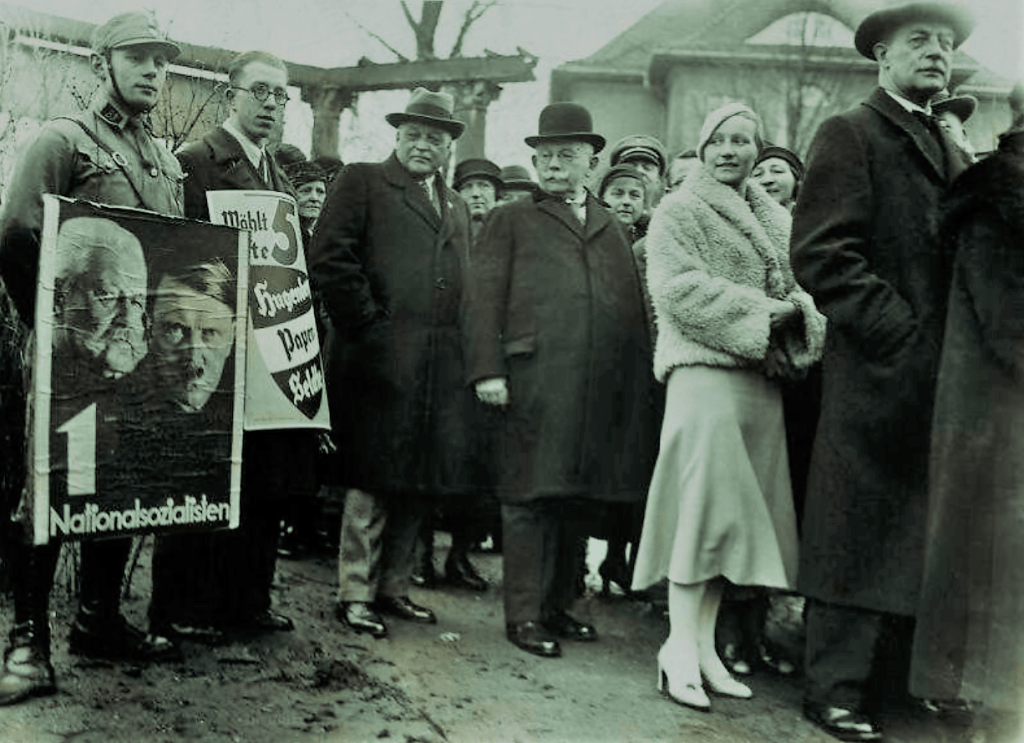
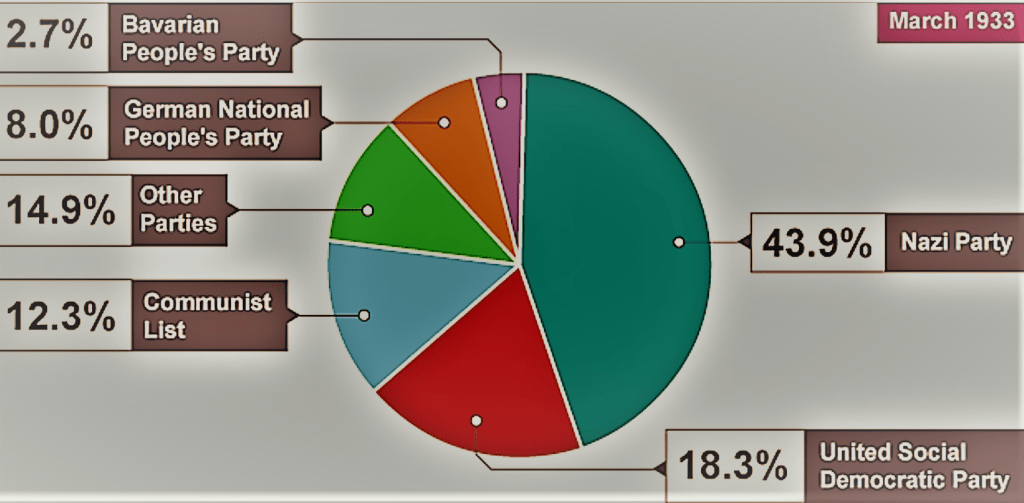
On 5 March 1933, the Nazi Party won nearly 44 per cent of the vote, which gave them 288 seats in the Reichstag. Hitler formed a coalition with the National Party (8 per cent). The Communist Party won 81 seats.
There were 44,685.764 entitled to vote. The voter turnout was 88.74%. The Invalid votes were 0.79%. The total valid votes was 39,343.331. Of those votes, 43.9% went to the NSDAP, the Nazi party. It means that 19,617.022 voted for the Nazis.
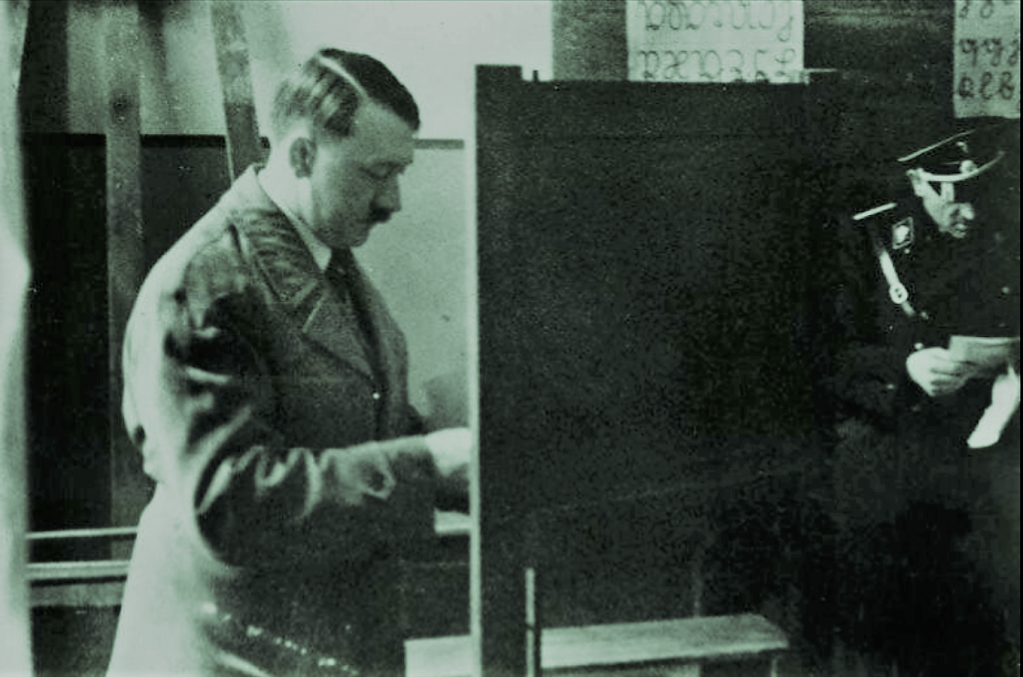
The 1933 election followed the previous year’s two elections (July and November) and Hitler’s appointment as Chancellor. In the months before the 1933 election, SA and SS displayed terror, repression and propaganda across Germany; 339 Nazi organisations “monitored” the voting process. In Prussia, 50,000 SS, SA and Der Stahlhelm members were ordered to monitor the votes by acting Interior Minister Hermann Göring as auxiliary police.
Despite the reign of terror and the first wave of arrests of Communists, Social Democrats and trade unionists, in the Reichstag elections of 5 March 1933, the Communist Party of Germany (KPD) obtained 12.3% of the vote, and the Social Democratic Party of Germany (SPD) 18.3%, while the moderate centre-right parties, namely the Centre Party and the Bavarian People’s Party (BVP), polled 13.9%.
The Nazis did not receive enough votes to form a government, so it needed the support of a coalition partner, the German National People’s Party (DNVP), which received 8% of the votes.
It would be the last contested election held in Germany until after World War II. Despite now having a bare working majority in the Reichstag, Hitler wanted more. Two weeks after the election, he was able to pass an Enabling Act on 23 March with the support of all non-left-wing parties, which effectively gave Hitler dictatorial powers. Within months, the Nazis banned all other parties and turned the Reichstag into a rubberstamp legislature comprising only Nazis and pro-Nazi supporters.
Although there was violence around the elections, the Nazis were elected legally. Just think about that for a minute.
Very soon, on 31 March 1933, the Government adopted, without parliamentary involvement, the Act Establishing the Identity of the Länder(countries) with the Reich (Gesetz über die Gleichschaltung der Länder mit dem Reich), which abolished the autonomous rights of the Länder, replacing them with a stringent centralized rule. Ten months later, the Reich Restructuring Act (Gesetz über den Neuaufbau des Reichs) dissolved the parliaments of the Länder. It was followed on 14 February 1934 by the dissolution of the Reichsrat, the national representative assembly of the Länder. In the summer of 1934, another crucial step was taken towards the establishment of the ‘Führer state’ with the Night of the Long Knives at the end of June and the beginning of July, when Hitler had troublesome rivals removed from the political scene or murdered. Following Hindenburg’s death on 2 August 1934, a law amalgamating the offices of President and Chancellor – likewise adopted without parliamentary approval – enabled Hitler to assume the title of ‘Leader and Chancellor of the Reich’ (Führer und Reichskanzler). He also became commander-in-chief of the Wehrmacht, whose members henceforth swore an oath of allegiance to him personally and no longer to the Weimar Constitution.
After adopting the Enabling Act, the Reichstag only met on 19 occasions. It adopted seven laws, compared with 986 enacted by the Government. By the time of the Reichstag election of 12 November 1933, voters were presented with a single list of candidates whom they could approve or reject en bloc. Through the withdrawal of the mandates of Communist and Social Democrat members and the defection of representatives of the middle-class parties to the NSDAP, the Reichstag ultimately developed into a one-party parliament whose members had to swear allegiance to the Führer. The Parliament’s insignificance contrasted with the prestige of its seats, which provided financial security—long-serving and distinguished officials of the NSDAP were rewarded with these positions. The status of Parliament under the National Socialists was evident in that the Reichstag building was never restored for its intended use as a venue for plenary sessions. Instead, Parliament convened at the Kroll Opera House, which had hosted its final performance in 1931.
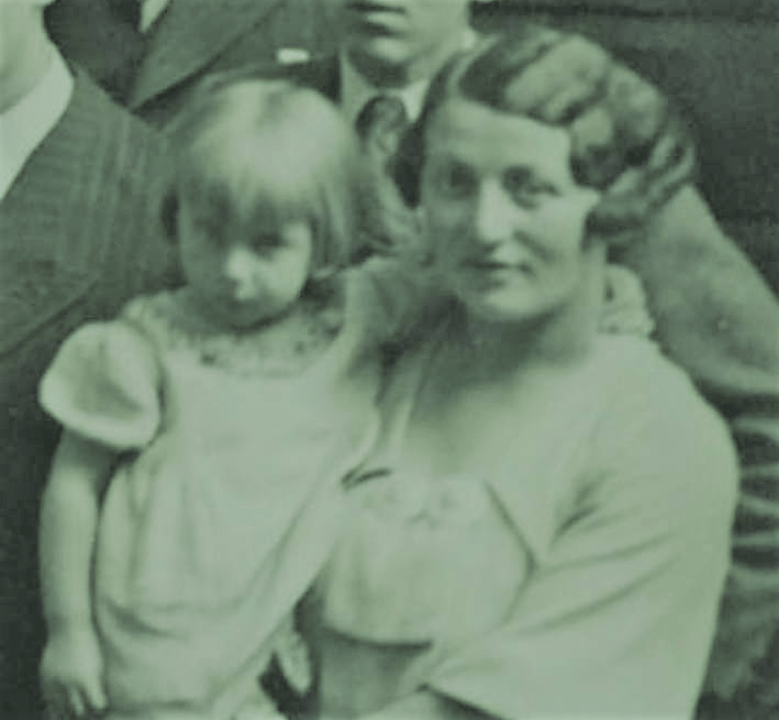
On that same day, 5 March 1933, Catharina Aldewereld was born in Amsterdam. About 9.5 years later, on 5 October 1942, Catharina was murdered in Auschwitz by that regime that was put in power in Germany by 19.6 million of its citizens.
Sources
https://www.joodsmonument.nl/en/page/168482/catharina-aldewereld
https://www.bundestag.de/en/parliament/history/parliamentarism/third_reich/third_reich-200358
https://www.bbc.co.uk/bitesize/guides/z3kqrwx/revision/3
http://www.gonschior.de/weimar/Deutschland/RT8.html
Donation
Your readership is what makes my site a success, and I am truly passionate about providing you with valuable content. I have been doing this at no cost and will continue to do so. Your voluntary donation of $2 or more, if you are able, would be a significant contribution to the continuation of my work. However, I fully understand if you’re not in a position to do so. Your support, in any form, is greatly appreciated. Thank you. To donate, click on the credit/debit card icon of the card you will use. If you want to donate more than $2, just add a higher number in the box left from the PayPal link. Your generosity is greatly appreciated. Many thanks.
$2.00
 History of Sorts
Leave a comment