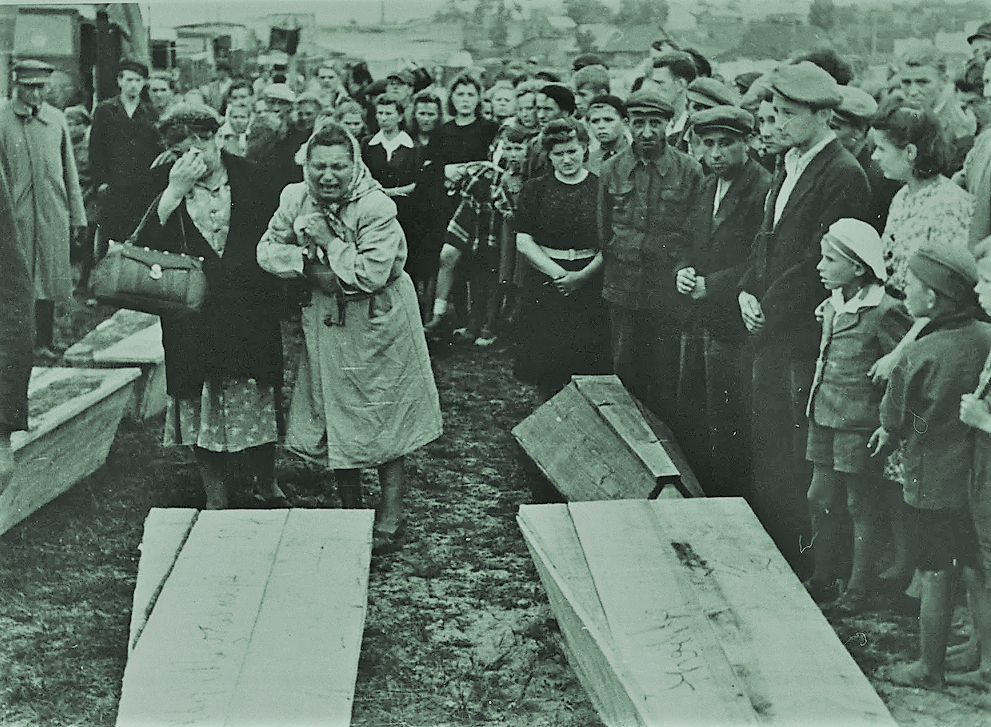
I know some Polish people will vehemently deny that this ever happened, but it did. It is a shame some people still insist on whitewashing history because it serves no one, and the truth always comes out. We can only stop these crimes from happening again when we learn from the past. It is not a judgment, but education.
On Thursday, July 4, 1946, a group of Kielce residents, with the participation of militiamen and soldiers, massacred several Jews who survived the Holocaust and were living in the building at 7/9 Planty Street. The spark that initiated the outbreak of violence was a rumour about the ritual murder of Christian children.
A few days earlier, on July 1, a 9-year-old Polish boy named Henryk Błaszczyk had gone missing from his home in Kielce, Poland, a city of 50,000 in Southeastern Poland. Henryk Blaszczyk left his home in Kielce without informing his parents. When he returned on July 3, the boy told his parents and the police, to avoid punishment for wandering off, that he had been kidnapped and hidden by a man in the basement of the local Jewish Committee building at 7 Planty Street.
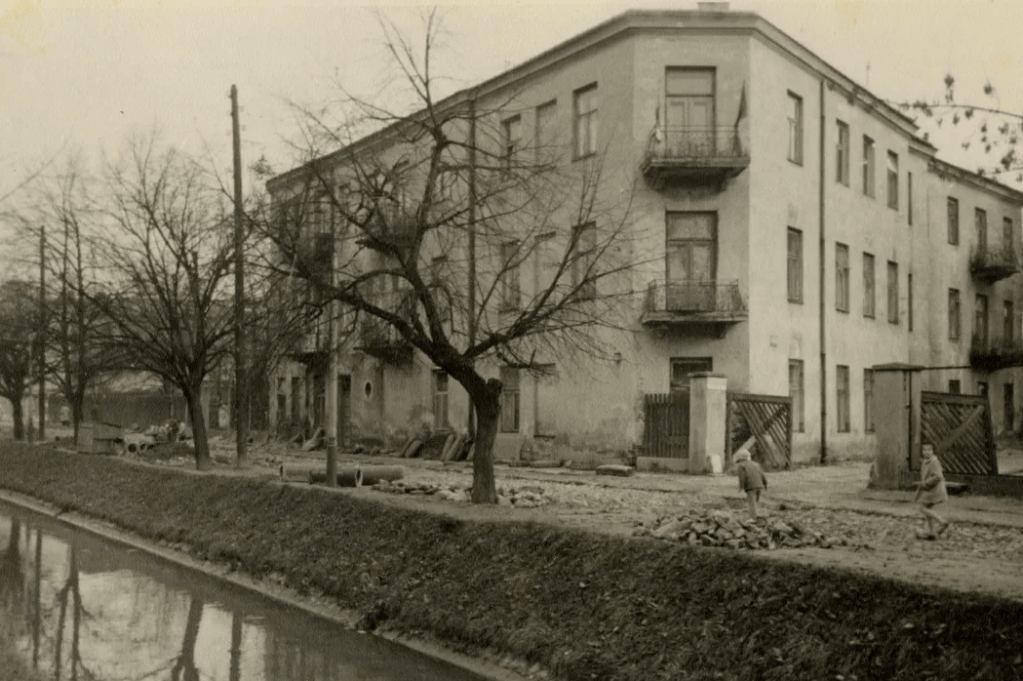
The building belonged to the Jewish Committee, which housed numerous Jewish institutions and was home to up to 180 Jewish individuals. It did not have a basement. Most of the residents were refugees, having survived the horrors of the death camps that decimated more than 90 per cent of the Polish Jewish population. After the war, refugees returned to their homeland with the desire they leave the past behind them. They had no idea they were about to become (again) the target of anti-Semitic aggression—this time from the Polish neighbours they lived alongside.
The Civic Militia and soldiers then forcibly broke into the building, only to discover that there were no abducted children as claimed. The inhabitants of the house, who had proper permits to bear arms for self-defence, were ordered to surrender their weaponry and give up valuables. Someone (the identity of whom is unclear) started firing a weapon. The Civic Militia and the KBW opened fire, killing and wounding some people in the building. In response, shots were fired from the Jewish side, killing two or three non-Jewish Poles, including a Civic Militia officer. The head of the local Jewish Committee, Dr Seweryn Kahane, was fatally wounded while telephoning the Kielce Office of Public Security for help. Several local priests attempted to enter the building but were not allowed entry by militia officers, who vowed to control the situation.
Ewa Szuchman, a resident of the house on Planty Street, said, “After the police took away the weapons, the crowd broke into the Kibbutz (on the second floor), and policemen started shooting at the Jews first. They killed one and wounded several others.”
Albert Grynbaum, another inhabitant of the Jewish house who was on the first floor, said, “The soldiers went up to the second floor. Several minutes later, two Jews came to me and told me that the soldiers were killing Jews and looting their property. It was then that I heard shots. After the shooting on the second floor, shots were heard from the street and inside the building.”
That day, Jewish men and women were stoned, robbed, beaten with rifles, stabbed with bayonets, and hurled into a river (that flowed nearby). Yet, while other Kielce residents walked by, no one did a thing to stop it until noon. That was when a second group of soldiers went to break up the crowd and evacuate the wounded and dead. In the afternoon, a group of metal workers ran toward the building, armed with iron bars and other weapons. The residents of 7 Planty were relieved; they thought these men had come to help. Instead, the metal workers began brutally attacking and killing those still alive inside the building.
By day’s end, civilians, soldiers, and police had killed 42 Jews and injured 40 others. Two non-Jewish Poles died as well, killed either by Jewish residents inside the building or fellow non-Jewish Poles for offering aid to the Jewish victims.
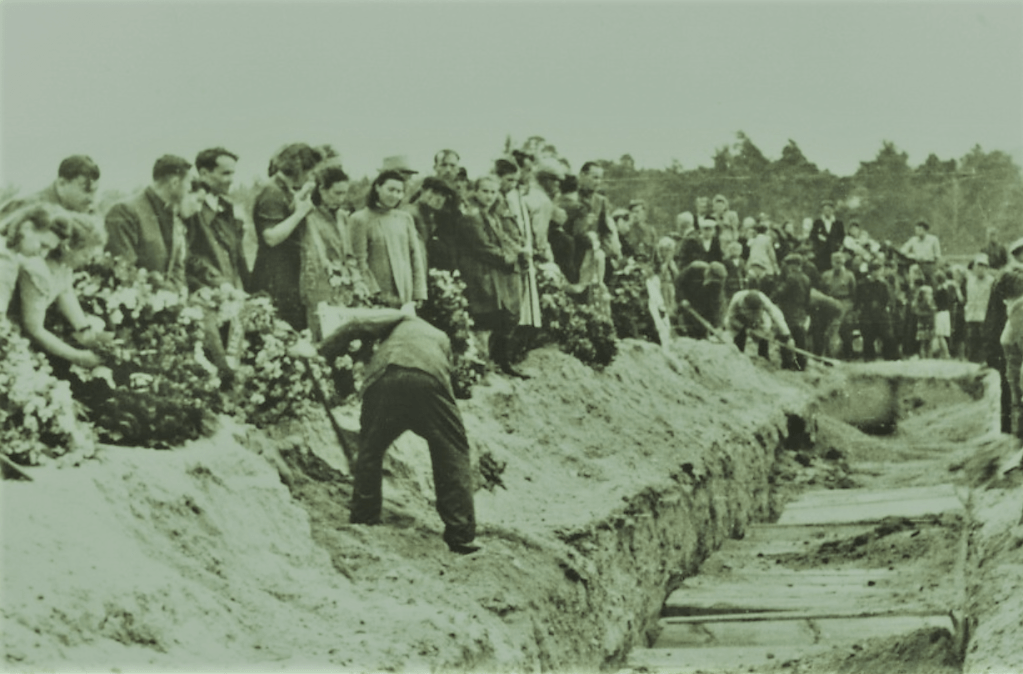
Three days after the pogrom, surviving Jews and residents buried the victims in a mass grave in the Jewish cemetery. Government authorities ordered military units and residents to attend the funeral to respect the victims. Although the government executed nine attackers on 14 July, following a hasty judicial investigation, the Kielce Pogrom sparked intense fear in the already traumatized postwar Polish Jewish community.
Most of these people, if not all, had survived the Holocaust, just to be murdered by their neighbours because of a lie of a boy.
In the years that followed, the Kielce pogrom, like many atrocities committed or abetted by Poles during the war, was taboo.
This pogrom happened 14 months after the war in Europe, and there was no involvement by Nazi Germany. I have heard excuses that the Polish people did not commit the crime, but by the communists, as if they were not considered Polish. I address these issues not to judge, because all European countries have dark pages in their history. However, if we ignore them, it will happen again and again.
Sources
https://polin.pl/pl/rocznica-pogromu-zydow-w-kielcach
https://www.jewishvirtuallibrary.org/the-kielce-pogrom
https://encyclopedia.ushmm.org/content/en/timeline-event/holocaust/after-1945/kielce-pogrom
 History of Sorts
Leave a comment