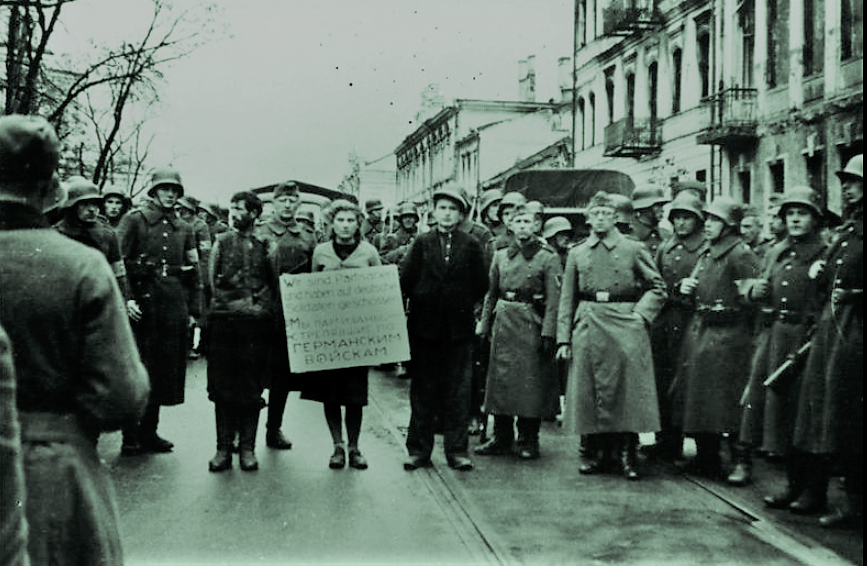
This post will contain some thoughts and testimonies of people who lived through the Holocaust, journalists and politicians of the time. Starting with a speech from Winston Churchill.
Winston Churchill on Hitler declared Führer (1934)
“After all my friends, only a few hours away by air there dwells a nation of nearly 70 million of the most educated, industrious, scientific, disciplined people in the world who are being taught from childhood to think of war as a glorious exercise and death in battle as the noblest fate for man.
There is a nation which has abandoned all its liberties in order to augment its collective strength. There is a nation with all its collective strength and virtue is in the grip of a group of ruthless men preaching a gospel of intolerance and racial pride unrestrained by law, by parliament or by public opinion.
In that country, all pacifist speeches, and all morbid war books are forbidden or suppressed and their authors are rigorously imprisoned. From their new table of commandments, they have omitted ‘thou shalt not kill’.”
A former inmate describes his experience in a Concentration Camp (1941)
“I was sitting in a restaurant in Frankfurt and I spoke to a medical friend of mine about all things I had seen. Hitler must be the biggest murderer in the world now had been overheard by informers of the Gestapo. They rang through to the headquarters and a couple of minutes later I was arrested and the men marched me down to a huge hall in Frankfurt.
I saw already arrested the previous hours before nearly 4000 men of all ages—men from 60, 70, and 80 years old; and as well as boys from 13, 14 and 15 years old.
We had to go on now to climb on lorries and they brought us to the concentration camp about 1000 feet high. We stood in front of the door got the order to march into it, ran into it or perish you swine and again in a panic the men were running for their poor lives.
And about 10 o’clock now the Gestapo came in to collect men for murdering just like swine. They took the men out into the night and now you could hear exactly the same as in the tunnels the smashing of beams and of batons, crying of the men and moaning until the next day before they died—that was our second night in the camp.
And so we had to work very hard. Two men had always to carry stones. And when they collapsed on the way they were hit, they again carried a hundredweight of stones and again they felt always the whip.
Aim to the middle of December the thermometer went deep under the freezing point. The men—no shoes and boots anymore; running around in snow and in ice in bare feet and it happened they got frozen toes and fingers and now a couple of doctors and myself we started to operate the men with razor blades. With razor blades, we cut off toes and fingers to save the life of the men. And for bandages, we had to use the dirty shirts of the men who died the hours before so done 1939.”

Gita Carthagena describes what it was like to be at Auschwitz (1944)
“I’ve been in concentration camps for three years. I came to the ghetto and then after 15 months, we left for Auschwitz. It was the worst concentration camp I ever saw. I have been to several concentration camps ‘til now.
In Auschwitz millions of our people were killed by gas. They had different methods—but gas was the easiest one. When we came there 5000 of our people had been there for six months and on the exact date when the six months were fulfilled they went to the gas. From the day of this, we knew the date of our death. I, myself, was making marks on my bedstead how many days I had to live still. And every night I went to sleep I undercut one mark and so it was one day gone and one day less to live.
[In] the first months, I hoped there would be a miracle. The second month we thought, ‘Why—all the people before us went to gas why we not—it’s our fate—you can’t change anything on that.’ Then when you are young, I am 21, you want so terribly to live and you never know what value life has got than when you lose it, the exact date. But the people who had the little children were under terrible conditions. These little children of six years knew by hearsay that they were going to be exterminated. And they went to their mothers and said ‘Listen mummy you won’t leave me, you’ll stay with me.’ And most of them stayed with the children and went to the gas, but some of them loved life more than their children and made up their mind to leave them.”
Richard Dimbleby reports on the liberation of Bergen Belsen for the BBC (1945)
“Here over an acre of ground lay dead and dying people. You could not see which was which except perhaps by a convulsive movement or the last quiver of a sigh from a living skeleton too weak to move. The living lay with their heads against the corpses and around them moved the awful ghostly procession of emaciated, aimless people with nothing to do and no hope of life. Unable to move out of the way, unable to look at the terrible sights around them.
There was no privacy, nor did men or women ask for it any longer. Women stood and squatted stark naked in the dust trying to wash themselves and to catch the lice on their bodies. Babies had been born here – tiny wizened things that could not live. A mother driven mad screamed at a British sentry to give her milk for her child and thrust the tiny mite into his arms and ran off crying terribly. He opened the bundle and found the baby had been dead for days. This day at Belsen was the most horrible of my life.”
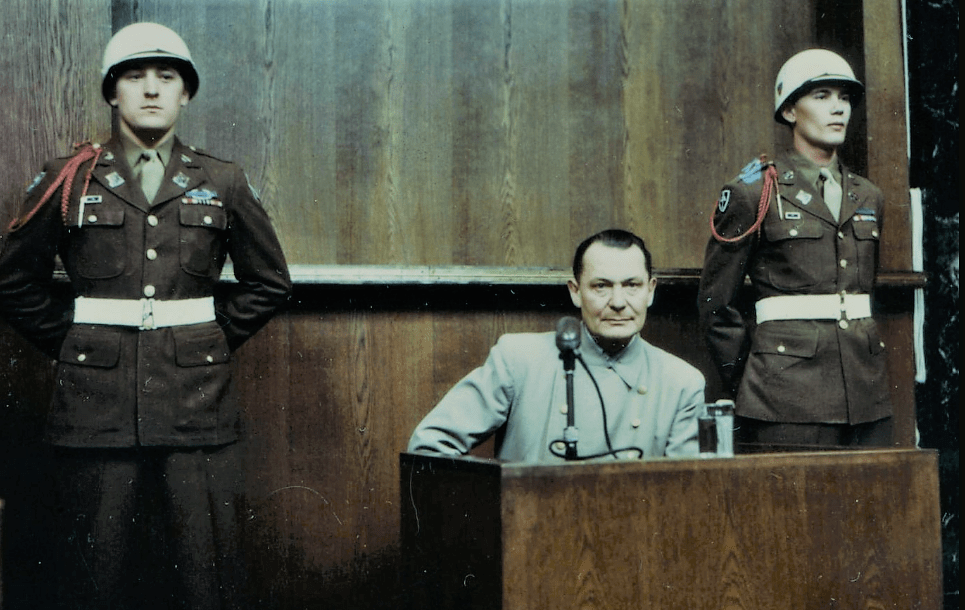
Extracts from Lord Shawcross’ final speech for the prosecution at the Nuremberg Trials (1946)
“Twelve million murders; two-thirds of the Jews in Europe exterminated; more than six million of them on the killers’ own figures. Murder was conducted like some mass production industry in the gas chambers and ovens of Auschwitz, Dachau, Treblinka, Buchenwald, Mauthausen, Majdanek and Oranienburg.
For such crimes these men might well have been proceeded against by summary executive action and had the treatment which they had been parties to meeting out against so many millions of innocent people been meted out to them they could hardly have complained. But this tribunal is to adjudge their guilt not on any moral or ethical basis alone but according to law. That natural justice which demands that these crimes should not go unpunished at the same time insists that no individual should be punished unless patient and careful examination of the facts shows that he shared the guilt for what has been done.
And so during these many months, this tribunal has been investigating the facts and has now to apply the law in order both that justice may be done to these individuals as to their countless victims and also that the world may know that in the end the predominance of power will be driven out and law and justice shall govern the relations between states.”
source
 History of Sorts
Leave a comment