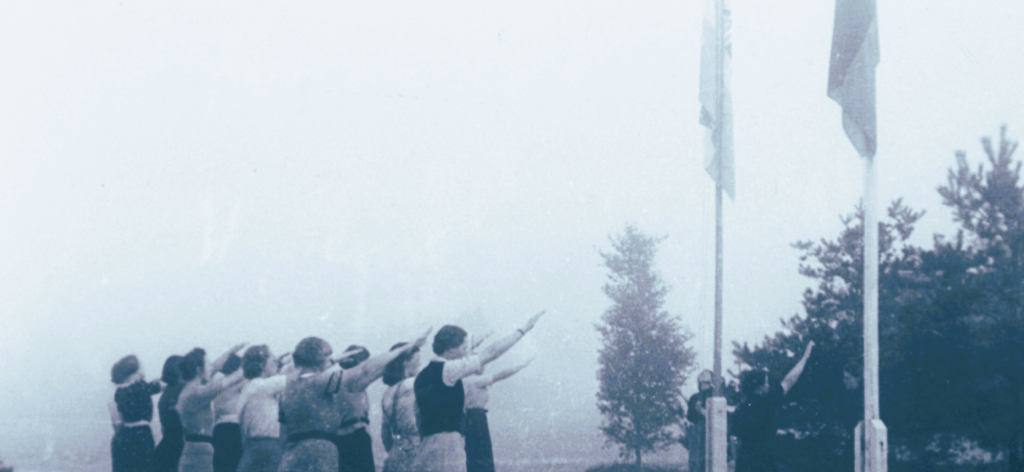
The NSVO—Nationaal-Socialistische Vrouwenorganisatie (National Socialist Women Organisation-SS), was the female branch of the NSB, the Dutch Nazi party.
To win women for National Socialism in the Netherlands, Mussert founded the NSVO on 1 September 1938. As an independent branch of the NSB, it was led by Mrs. A.M. by Hoey Smith-van Stolk. The purpose of the NSVO was to promote and strengthen the National Socialist philosophy of life and worldview among Dutch women and the care of National Socialist workers who needed it.
The establishment of the NSVO was not an immediate success. In 1939, the organization had about a thousand members. For comparison, the NSB had about 37,000 members around that time. However, during the course of the occupation, enthusiasm for the NSVO increased. The NSVO in 1943 was at its peak and had twenty thousand plus members. This can partly be explained by the forced closure of various other women’s organizations under pressure from the German authorities. Another explanation for this explosive growth is the change in direction by the newly appointed leader.
Up till May 1940, the character of the NSVO was more social than political in nature. That changed after the German invasion. The Greater Germanic idea gradually came to play more and more of a role, and the racial doctrine of the SS was eventually accepted. For example, for NSVO women, the racial theory had to guide their choice of a husband. Keers-Laseur and Op ten Noort were now the pivot of the NSVO. The organization grew from 1,500 to 6,500 members in February 1941. All this meant that the NSVO increasingly ended up in the more radical camp of the German-oriented Dutch SS. For the NSB, the NSVO thus went from supportive to threatening. Mussert, therefore, dismissed the duo, which, in his opinion, were too oriented towards Rost van Tonningen in February 1941. The childless Keers-Laseur and the unmarried Op ten Noort were not role models for the comrades. Their new leader, Mrs. Olga de Ruiter-Van Lankeren Matthes, was married (to the Amsterdam Circle leader of the NSB, JW de Ruiter. They had four children and, therefore, optimally fulfilled the National Socialist ideal of women.
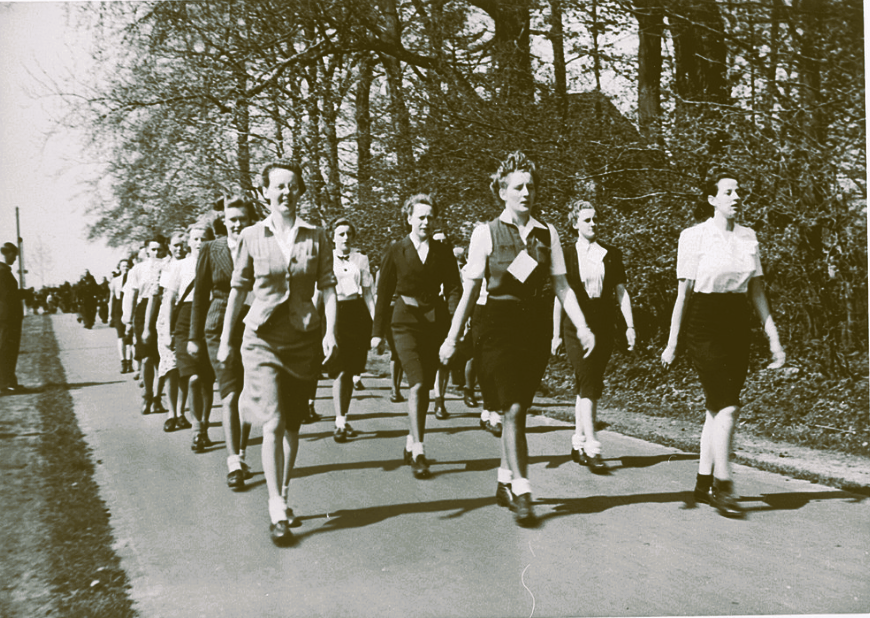
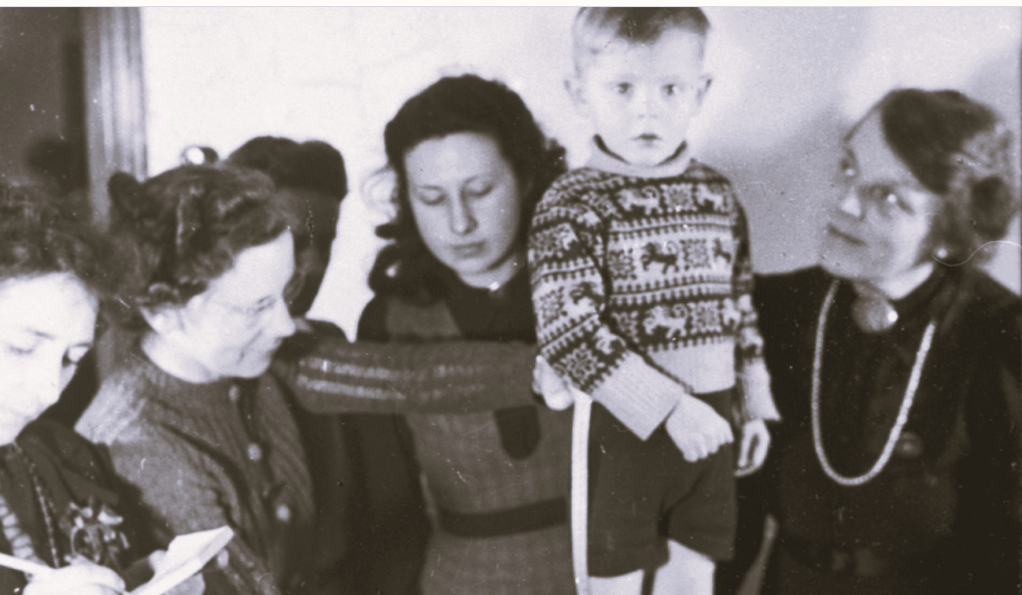
The image of the ideal National Socialist woman also changed. The magazine The National Socialist Woman (later Nederlandsch Vrouwenleven) was increasingly filled with tips on women’s fashion, housekeeping, and education. From a political struggle magazine, it became a typical women’s magazine in order to recruit more women for the NSVO. The photos of the NSVO meetings show there were activities of making children’s clothing, rope bags, and slippers, as well as practising how to care for children. For example, the Mother Service Department provided courses for housekeeping, infant care, first aid, and parenting.
The NSVO members were also busy collecting money. After the invasion of the Soviet Union, leader Olga started a major fundraising campaign for the German Red Cross. This yielded no less than eighty thousand guilders. Part of the money went to Kareol, the convalescent home for the Dutch wounded. The rest of the amount was received by Mrs Seyss-Inquart, the wife of Arthur Seyss-Inquart.
Later, Olga visited Dutch Waffen-SS members recovering from injuries sustained on the Eastern Front in the Lazaret (hospital) in Rosmalen.

After German chances of eventual victory diminished in the course of 1943, no new membership numbers were announced.
The NSVO emerged from fundraising, and The Aid and Assistance Department continued that work. This included providing frontline fighters with Christmas packages and knitting warm clothing for the Eastern Front fighters. Home visits to wounded comrades and cooking one-pot meals were among the typically female tasks of this department. In September 1944, during the panic of Mad Tuesday (5 September 1944), the Aid and Assistance department arranged the evacuation of NSB members to the east of the country. The care of all these refugees was in the hands of members of the NSVO. In the chaos of early 1945, the NSVO could no longer function properly. Some individual NSVO women continued to provide practical assistance to the evacuees.
After the liberation, male NSB members and their female counterparts were arrested. They were locked up in makeshift camps. Some children were locked up, usually until care was arranged through family or the Special Youth Care Office. But the women often spend at least a year in pre-trial detention.
Most members of the NSVO and NSB served very little time (if any) imprisoned. The most disturbing aspect was that none of these women were forced to join—they were all volunteers. Through their collaboration and complacency, they were guilty of Nazi crimes and the Holocaust.
Source
https://www.oorlogsbronnen.nl/artikel/pantoffels-en-rassenleer-de-vrouwen-van-de-nsb

 History of Sorts
Leave a comment