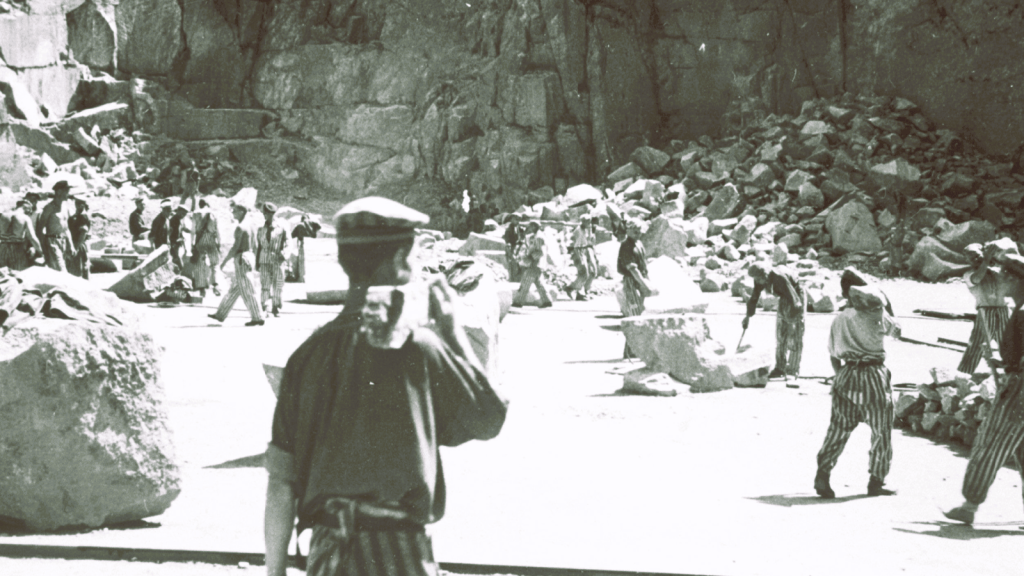
Mauthausen was one of the most prominent and most notorious Nazi concentration camps during World War II. Located near the town of Mauthausen in Upper Austria, it was established shortly after Germany annexed Austria in 1938. The camp, originally intended for political prisoners and those considered enemies of the Nazi regime, eventually held a wide variety of detainees, including Jews, Roma, Soviet POWs, Spanish Republicans, and others from across Europe.
Mauthausen opened in August 1938 and became a central hub for a network of satellite camps throughout Austria. The camp’s location near granite quarries meant that many prisoners were forced into hard labor, often in brutal conditions. The conditions at Mauthausen were harsh, with prisoners subjected to severe overwork, malnutrition, disease, and inhumane treatment. The infamous “Stairs of Death” forced prisoners to carry heavy stone blocks up 186 steps, leading to many deaths from exhaustion and falls.

It is estimated that between 95,000 and 320,000 people died at Mauthausen and its subcamps, either from execution, forced labor, medical experiments, or harsh living conditions. The camp was liberated by the U.S. 11th Armored Division on May 5, 1945. At the time of liberation, there were approximately 20,000 survivors, many of whom were in critical condition.
Francisco Boix Campo was a Spanish veteran of the Spanish Civil War and photographer who was imprisoned in the Mauthausen concentration camp. At both the Nuremberg trials and the Dachau trials, he presented photographs that played a role in the conviction of Nazi war criminals. The book and the film “The Photographer of Mauthausen” are based on his life. The following are some excerpts from his testimony.
Francisco Boix’s Testimony at the Nuremberg Trials
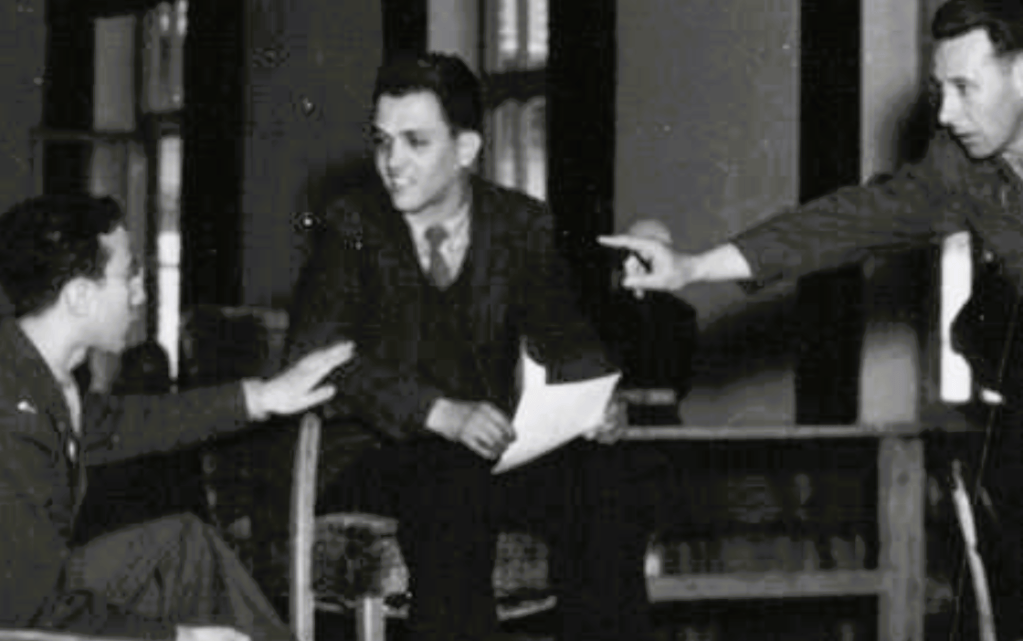
May 28, 1946
Francisco Boix:
“I am Francisco Boix. I was born on August 14, 1920, in Barcelona, Spain. I was a prisoner at Mauthausen concentration camp from January 27, 1941, until the liberation on May 5, 1945.”
Prosecution:
“Mr. Boix, can you describe your duties at the Mauthausen camp?”
Francisco Boix:
“I was assigned to the camp’s photography department, which was run by the SS. My job included developing photographs that were taken by the SS officers. These photographs documented various aspects of the camp, including executions, mass burials, and the daily life of prisoners.”
Prosecution:
“How were you able to preserve these photographs?”
Francisco Boix:
“Together with other prisoners, I managed to duplicate and hide many photographs. These photographs were smuggled out of the camp with the help of the Austrian resistance. The duplicates were hidden in the camp, and after the liberation, they were handed over to the Allies.”
Prosecution:
“Can you identify the individuals in these photographs and describe the events they depict?”
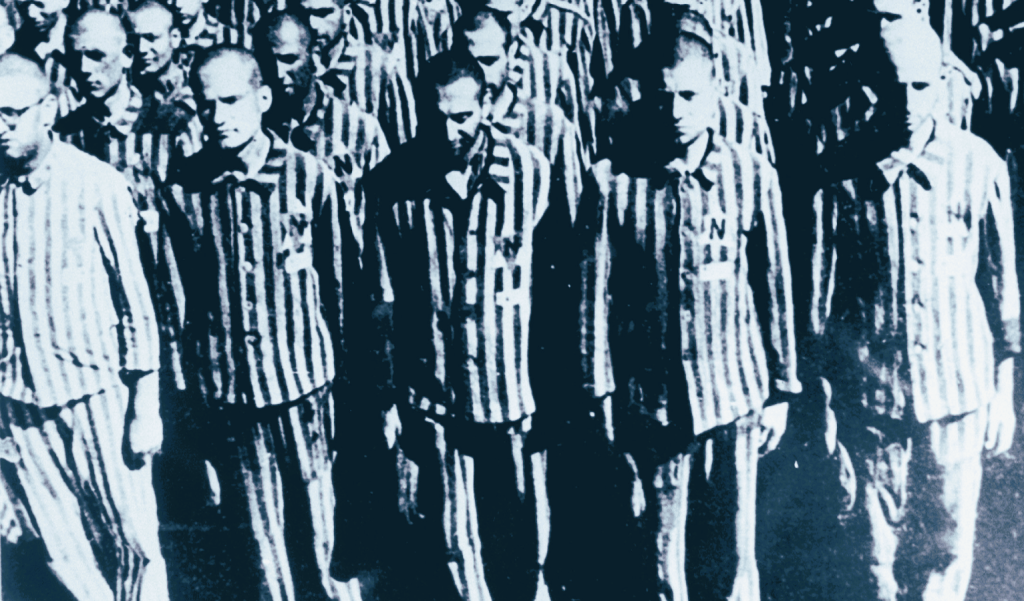
Francisco Boix:
(Pointing to a series of photographs) “This photograph shows SS officers, including Ernst Kaltenbrunner and August Eigruber, inspecting the camp. This series depicts the execution of Soviet prisoners of war. These images were taken by the SS and show the brutal conditions and the systematic killings carried out at Mauthausen.”
Prosecution:
“Were these high-ranking officers aware of the conditions and the activities at the camp?”
Francisco Boix:
“Yes, they were. These photographs show them present during inspections and events at the camp. They cannot claim ignorance of what was happening.”
Prosecution:
“Thank you, Mr. Boix. Your testimony and these photographs are crucial in documenting the atrocities committed at Mauthausen.”
Sources
https://encyclopedia.ushmm.org/content/en/film/trial-testimony-against-albert-speer
https://www.findagrave.com/memorial/10488320/francisco-boix
chrome-extension://efaidnbmnnnibpcajpcglclefindmkaj/https://arrow.tudublin.ie/cgi/viewcontent.cgi?article=1042&context=totalarcscbk
https://avalon.law.yale.edu/imt/01-28-46.asp

Donation
Your readership is what makes my site a success, and I am truly passionate about providing you with valuable content. I have been doing this at no cost and will continue to do so. Your voluntary donation of $2 or more, if you are able, would be a significant contribution to the continuation of my work. However, I fully understand if you’re not in a position to do so. Your support, in any form, is greatly appreciated. Thank you. To donate, click on the credit/debit card icon of the card you will use. If you want to donate more than $2, just add a higher number in the box left from the PayPal link. Your generosity is greatly appreciated. Many thanks.
$2.00
 History of Sorts
Leave a comment