For anyone who has studied or has some interest in the NSDAP or Nazi party. it will come as no big surprise that they had no original ideas. The Swastika originated in India. The concentration camps were first used by the British during the Boer wars in South Africa. The Eagle symbol came from the Roman Empire. The list of stolen ideas goes on.
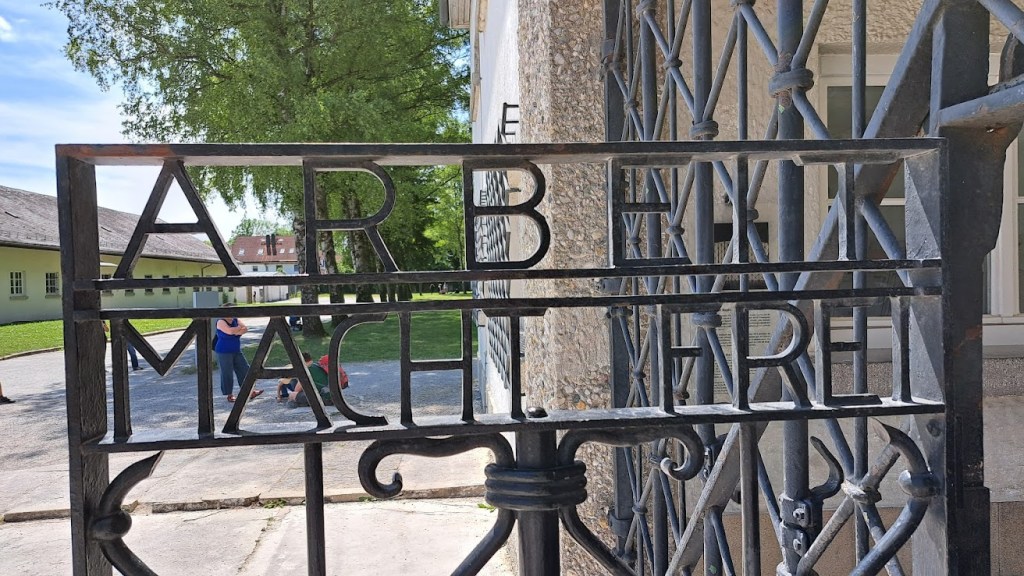
Even the 3 words that they turned into a motto of hate, fear, and destruction: “Arbeit Macht Frei” Work makes free (or set you free) wasn’t an original idea.
Lorenz Diefenbach is often associated with the phrase “Arbeit macht frei” due to his use of it as the title of one of his novels, published in 1873. The novel is a social commentary on the value of work and self-discipline in achieving personal freedom and moral integrity. Here are some key points regarding this phrase and its later, more infamous use:
In Diefenbach’s novel “Arbeit macht frei,” the phrase conveys a positive, moralistic message that hard work leads to personal improvement and societal benefit. It reflects 19th-century values emphasizing the virtue of labor.
• The phrase “Arbeit macht frei” was later co-opted by the Nazis and cynically inscribed above the entrances to several concentration camps, including Auschwitz, Dachau, and Theresienstadt. In the context of the Holocaust, the phrase was a grotesque piece of propaganda used to create a false sense of hope and to mask the brutal reality of the camps where forced labor was a means of exploitation, suffering, and extermination.
• In Diefenbach’s work, the phrase held a genuine belief in the redemptive power of work, consistent with the ideals of his time. The Nazis’ use of this phrase was profoundly ironic and cruel, given that the camps were sites of immense suffering and death and not places where work led to any form of liberation or freedom.
• The tragic irony of the phrase’s use by the Nazis has overshadowed its original meaning, making it a symbol of the Holocaust and the atrocities committed during that period.
The association with Nazi propaganda has forever tainted the phrase, transforming it into a reminder of the regime’s cruelty and the suffering of millions.
Understanding the history and transformation of “Arbeit macht frei” highlights the complex interplay between language, ideology, and historical events. While Diefenbach’s use of the phrase was intended to inspire and promote moral values, its later appropriation by the Nazis serves as a stark example of how language can be manipulated to serve oppressive and inhumane purposes.
Sources
https://archive.org/details/bub_gb_4tlbAAAAcAAJ/page/n9/mode/2up
https://en.wikipedia.org/wiki/Lorenz_Diefenbach
https://www.degruyter.com/document/doi/10.1515/9783111175829/html?lang=de
https://goodfaithmedia.org/labor-of-love/
Donation
I am passionate about my site and I know you all like reading my blogs. I have been doing this at no cost and will continue to do so. All I ask is for a voluntary donation of $2, however if you are not in a position to do so I can fully understand, maybe next time then. Thank you. To donate click on the credit/debit card icon of the card you will use. If you want to donate more then $2 just add a higher number in the box left from the PayPal link. Many thanks.
$2.00
 History of Sorts
Leave a comment