
Bariloche, officially known as San Carlos de Bariloche, is a city located in the Patagonia region of Argentina, within the province of Río Negro. Nestled in the foothills of the Andes and on the shores of the stunning Lake Nahuel Huapi, Bariloche is renowned for its breathtaking natural beauty, making it one of Argentina’s top tourist destinations. The city is known for its distinctive Alpine-style architecture, with buildings featuring stone and wood reminiscent of a European mountain village. It also is or has been a safe haven for escaped Nazi war criminals.
Here’s a list of notable Nazi war criminals who were known to have lived in or passed through Bariloche, Argentina:
- Erich Priebke: The most infamous Nazi criminal associated with Bariloche, Priebke was a former SS officer involved in the Ardeatine Caves massacre in Rome, where 335 civilians were killed in 1944. He fled to Argentina after the war and lived in Bariloche for decades under his real name. His presence was revealed in 1994, leading to his extradition to Italy, where he was tried and convicted of war crimes.
- Josef Schwammberger: Although primarily known for his time in Argentina rather than specifically in Bariloche, Schwammberger was a Nazi SS officer responsible for atrocities in several Polish ghettos. He was arrested in Argentina in 1987 and extradited to Germany, where he was sentenced to life imprisonment.
- Reinhard Kopps (alias Juan Maler): Kopps, a former SS officer, lived in Bariloche under the name Juan Maler. He was involved in Nazi propaganda during the war. His identity was exposed in the 1990s. Still, he managed to avoid extradition by fleeing Argentina.
- Adolf Eichmann (brief connection): Eichmann, one of the principal architects of the Holocaust, famously fled to Argentina. While he lived primarily in Buenos Aires under the alias Ricardo Klement, he reportedly visited Bariloche at least once. His eventual capture by Israeli Mossad agents in 1960 led to his trial and execution in Israel.

Erich Priebke
Erich Priebke was a former Nazi SS officer notorious for his involvement in one of the most heinous war crimes of World War II—the Ardeatine Caves massacre. Born on July 29, 1913, in Hennigsdorf, Germany, Priebke joined the Nazi Party in 1931 and later became a member of the SS, where he quickly rose through the ranks.
Role in the Ardeatine Caves Massacre
Priebke’s most infamous act occurred on March 24, 1944, in Rome. Following a partisan attack that killed 33 German soldiers, Adolf Hitler ordered a brutal reprisal—10 Italians were to be killed for every German soldier lost. The responsibility for executing this order fell to the SS, with Priebke playing a pivotal role.
In total, 335 Italian civilians were rounded up, including Jews, political prisoners, and even randomly selected civilians. They were taken to the Ardeatine Caves outside Rome and systematically executed. Priebke was directly involved in the organization and execution of the massacre, personally participating in the shootings. The massacre remains one of the most infamous war crimes committed by the Nazis in Italy.
Post-War Escape and Life in Argentina
After the war, Priebke was captured by Allied forces but managed to escape from a British prison camp. Like many Nazis, he fled Europe, using ratlines organized by networks sympathetic to the Nazis. Priebke eventually found refuge in Argentina, arriving there in 1948.
Settling in San Carlos de Bariloche, a scenic town in Patagonia, Priebke lived under his own name and integrated into the local German-speaking community. For decades, he lived a quiet life, running a delicatessen and becoming a well-known figure in the community, even serving as a director of the German School in Bariloche.
Exposure and Extradition
Priebke’s past came to light in 1994 when he was discovered by ABC News journalist Sam Donaldson. Priebke openly admitted his role in the Ardeatine Caves massacre, showing no remorse and claiming he was simply following orders. This revelation caused an international outcry, leading to his arrest by Argentine authorities.
After a prolonged legal battle, Argentina extradited Priebke to Italy in 1995. He was tried in a military court in Rome, where he was convicted of war crimes and sentenced to life imprisonment. Due to his age and health, Priebke served his sentence under house arrest.
Death and Legacy
Erich Priebke died on October 11, 2013, at the age of 100. His death reignited debates over his crimes and the broader issue of justice for Nazi war criminals. Priebke remained unrepentant to the end, insisting that he was a soldier following orders, a defense that was rejected by courts and condemned by the public.
Priebke’s case is a stark reminder of the atrocities committed during the Nazi era and the long, often frustrating pursuit of justice for those responsible. His life in Argentina highlights how some war criminals managed to evade justice for decades, living out their lives in obscurity far from the scenes of their crimes.

Josef Schwammberger
Josef Schwammberger was a Nazi SS officer and war criminal known for his brutal role as a concentration camp commander during World War II. Born on February 14, 1912, in Brixen, Austria-Hungary (now Bressanone, Italy), Schwammberger joined the Nazi party and the SS in the late 1930s. His career in the SS involved overseeing labor camps in Nazi-occupied Poland, where he became infamous for his cruelty.
He was responsible for overseeing the forced labor camps in Przemyśl, Mielec, and Rozwadow in Poland. He was directly involved in the persecution and murder of thousands of Jews. He personally ordered mass executions, often with sadistic brutality, and was known for his arbitrary killings.
After World War II, Schwammberger managed to evade capture by fleeing to Argentina, like many other Nazis. He lived there for decades under a false identity. However, after years of investigation and pressure from international authorities, he was finally arrested in Argentina in 1987.
Schwammberger was extradited to West Germany in 1990. His trial, which took place in Stuttgart, brought to light many of the horrific atrocities he committed during the war. Survivors and witnesses provided detailed testimonies of his crimes. In 1992, Schwammberger was convicted of multiple counts of murder and sentenced to life imprisonment.
Josef Schwammberger died in prison on December 3, 2004, at the age of 92. His case is often cited as an example of the pursuit of justice for Holocaust war criminals, even decades after their crimes were committed.

Reinhard Kopps
Reinhard Kopps was a former Nazi SS officer who became notable for his post-war activities, particularly his escape to Argentina and his efforts to evade justice for his wartime actions. He was born on September 29, 1914, in Hamburg, Germany. Kopps played a role in the Nazi regime’s efforts during World War II. Still, his best known for his life after the war, where he became a significant figure in the network of Nazi fugitives who found refuge in South America.
Kopps was an SS officer during World War II, involved in Nazi propaganda and intelligence operations. He worked in Albania, where he was responsible for anti-partisan activities and spreading Nazi ideology. His exact role in wartime atrocities remains less documented compared to other Nazis. Still, his association with the SS and Nazi activities places him among those implicated in the regime’s crimes.
After the collapse of Nazi Germany in 1945, Kopps, like many Nazis, fled Europe to avoid prosecution. He made his way to Argentina, where he settled under the alias “Juan Maler.” Argentina, under the rule of President Juan Perón, became a safe haven for many former Nazis and fascists, who were able to live relatively undisturbed.
In Argentina, Kopps integrated into the local German expatriate community. He was reportedly involved in networks that assisted other Nazi fugitives. He maintained a low profile for many years, blending into society and avoiding the scrutiny of authorities.
Kopps’ past eventually came to light thanks to investigative efforts by Nazi hunters and journalists, particularly during the 1980s and 1990s. His case gained wider attention when he was identified as a former SS officer. Kopps denied involvement in any war crimes and lived out his life essentially free from prosecution.
Reinhard Kopps died in Bariloche, Argentina, on September 11, 2001. His case is one of many that highlight the difficulties faced in bringing Nazi war criminals to justice, particularly those who managed to escape to South America.
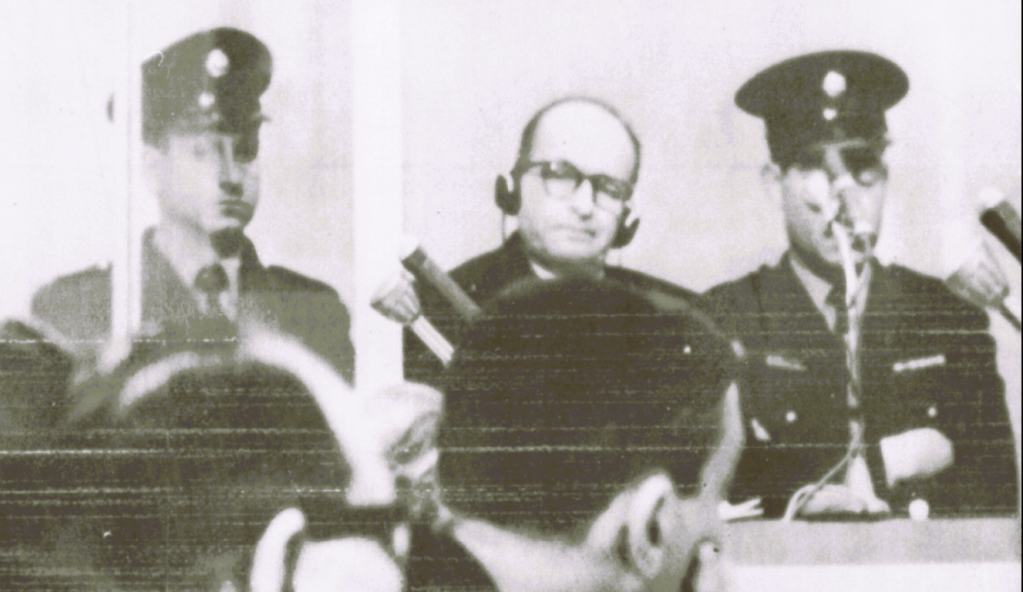
Adolf Eichmann
Adolf Eichmann was one of the most notorious figures of the Nazi regime, playing a central role in the Holocaust as the architect of the “Final Solution”—the plan to systematically exterminate the Jewish population of Europe. His story is a chilling example of how bureaucratic efficiency and ideological fanaticism combined to facilitate one of the greatest crimes in human history.
Early Life and Rise in the Nazi Party
Adolf Eichmann was born on March 19, 1906, in Solingen, Germany. After an unremarkable early life and career, Eichmann joined the Austrian branch of the Nazi Party in 1932. His involvement in the party led to his recruitment into the SS (Schutzstaffel), where he quickly rose through the ranks due to his organizational skills and ideological commitment.
Eichmann became an expert on Jewish affairs, studying Zionism and the Jewish diaspora in detail. By 1938, after the Nazi annexation of Austria (the Anschluss), Eichmann was put in charge of the Central Office for Jewish Emigration in Vienna, where he orchestrated the forced emigration of Jews. His efficiency in this role earned him the attention of higher-ups in the Nazi hierarchy.
Role in the Holocaust
In 1942, at the Wannsee Conference, senior Nazi officials, including Eichmann, formally adopted the “Final Solution,” the plan to exterminate the Jews of Europe. As head of Department IV B4 of the Reich Main Security Office, Eichmann was responsible for the logistics of mass deportations to ghettos, concentration camps, and extermination camps. He organized the transportation of millions of Jews from across Europe to their deaths, ensuring that trains ran on time and that the Nazi machine of mass murder operated efficiently.
Eichmann’s role in the Holocaust was that of a meticulous bureaucrat who took pride in his work. He was not only a facilitator of genocide but also a fervent believer in Nazi ideology, untroubled by the moral implications of his actions. He often described his role as simply following orders, though his enthusiasm for the task suggested a more profound commitment.
Post-War Escape and Life in Argentina
At the end of World War II, Eichmann was captured by American forces but managed to escape using a false identity. He went underground and, like many high-ranking Nazis, sought refuge in South America. With the help of a network of sympathizers, Eichmann fled to Argentina in 1950 under the alias Ricardo Klement.
In Argentina, Eichmann lived a relatively quiet life with his family in the suburbs of Buenos Aires. He worked for Mercedes-Benz and blended into the local German-speaking community. For nearly a decade, he evaded capture, but his past eventually caught up with him.
Capture by Mossad and Trial
Eichmann’s location was eventually discovered by Israeli intelligence, thanks in part to efforts by Nazi hunters like Simon Wiesenthal and information provided by Holocaust survivors. In 1960, the Israeli Mossad, with the help of Shin Bet, launched a covert operation to capture Eichmann and bring him to justice.
On May 11, 1960, Eichmann was abducted by Mossad agents as he was returning home from work. He was secretly flown to Israel, where he was put on trial in Jerusalem in 1961. The trial was one of the first televised globally, and it became a landmark event, highlighting the horrors of the Holocaust and bringing Eichmann’s crimes to the forefront of public consciousness.
During the trial, Eichmann’s defense was that he was merely following orders, a claim that became known as the “banality of evil,” a term coined by political theorist Hannah Arendt. She argued that Eichmann was not a fanatic or a sociopath but an ordinary, unimaginative bureaucrat who carried out monstrous acts with a dispassionate sense of duty. Despite this defense, Eichmann was found guilty on multiple charges, including crimes against humanity, and was sentenced to death.
Execution and Legacy
Adolf Eichmann was executed by hanging on June 1, 1962. His execution remains the only civil execution ever carried out in Israel. His ashes were scattered at sea to prevent any burial site from becoming a place of pilgrimage.
Eichmann’s capture, trial, and execution were significant in several ways. They demonstrated Israel’s commitment to bringing Nazi war criminals to justice, no matter how long it took or where they hid. The trial also played a crucial role in educating the world about the Holocaust, as survivors’ testimonies were broadcast widely, bringing the horrors of the genocide into public view.
Eichmann’s story continues to serve as a potent reminder of how ordinary people can become agents of great evil and how justice, though sometimes delayed, can eventually be served.

Juan & Evita Perón
Juan Domingo Perón, the influential Argentine leader who served as president from 1946 to 1955 and again from 1973 to 1974, played a controversial role in the post-World War II era, particularly in relation to the protection and harboring of Nazi war criminals. Perón’s government provided refuge to numerous former Nazis and collaborators, enabling them to evade justice for their wartime crimes. This policy was part of a broader strategy that combined ideological, political, and pragmatic motivations.
Perón’s Ideological Sympathies
Perón, a military officer before becoming president, admired the authoritarian regimes of Europe, particularly the fascist model exemplified by Mussolini in Italy and, to some extent, Nazi Germany. Although Argentina remained officially neutral for most of World War II, Perón and other military leaders were known to have pro-Axis sympathies.
After the war, Perón’s Argentina offered a welcoming environment for former Nazis, fascists, and other collaborators, mainly due to shared ideological leanings. While Perón himself was not a Nazi, his admiration for their organizational methods, coupled with his anti-communist stance, made him more inclined to assist individuals who had been part of the Axis powers.
Argentina as a Safe Haven
Following the defeat of the Axis powers in 1945, many high-ranking Nazis, SS officers, and collaborators fled Europe to escape prosecution. Argentina, under Perón’s leadership, became one of the primary destinations for these fugitives. The country’s immigration policies were relatively lax, and Argentina had a well-established German-speaking community, which facilitated the integration of these newcomers.
Perón’s government facilitated the entry of these war criminals through various means:
- False Passports and Identities: With the help of sympathizers in Europe, including Catholic Church officials and secret networks like the “ratlines,” many Nazis were able to obtain false identities and travel documents. The Argentine government, often turning a blind eye, allowed these individuals to settle in the country.
- Official Support: While not all government officials were aware of the exact identities of the individuals they were aiding, there was a general policy of acceptance for European refugees, including those with questionable pasts. Perón saw value in their skills, connections, and anti-communist credentials.
Motivations Behind Perón’s Policy
Perón’s decision to harbor these war criminals was driven by a combination of factors:
- Anti-Communism: In the context of the early Cold War, Perón viewed these individuals as valuable allies against the spread of communism, which he saw as a greater threat than the legacy of Nazism.
- Economic and Technical Expertise: Perón believed that some of these individuals could contribute to Argentina’s industrial and scientific development. Former Nazi engineers, scientists, and military experts were seen as assets to Argentina’s ambitions to modernize and strengthen its national infrastructure.
- Geopolitical Neutrality: Perón sought to position Argentina as a third force, independent of both the U.S. and the Soviet Union. By harboring former Nazis, he reinforced Argentina’s stance as a sovereign nation that could not be dictated by external powers.
Legacy and Controversy
Perón’s policy of welcoming Nazi war criminals remains one of the most controversial aspects of his legacy. While it brought some short-term benefits in terms of expertise and loyalty, it also stained Argentina’s international reputation and became a point of contention in post-war global politics.
In later years, especially after the capture of Eichmann, Argentina faced international criticism for its role in sheltering these criminals. The revelation of their presence led to a broader reckoning with the country’s past and its complicity in allowing some of history’s most notorious war criminals to evade justice for so long.
Evita Perón’s Role:
Eva Perón, though not directly involved in the logistical aspects of the Nazi escape networks, played a significant diplomatic role that indirectly supported her husband’s policies. She traveled extensively across Europe, including visits to Spain, Switzerland, and Italy, where she engaged with fascist sympathizers and others who could assist in facilitating the entry of Nazis into Argentina.
There are allegations that Evita may have been involved in managing or benefiting from funds looted by Nazis during the war. Some historians suggest that her visits to Switzerland, a known hub for hidden Nazi assets, may have involved the transfer of these assets to Argentina. However, concrete evidence of Evita’s direct involvement in such financial dealings remains a matter of debate.
Eva Perón’s image as a champion of the poor and a symbol of social justice in Argentina contrasts sharply with the darker aspects of her and her husband’s connections to former Nazis. Her role in promoting Argentina’s global image and her involvement in diplomacy likely aided in the country’s acceptance of Nazi war criminals, contributing to the broader Perónist agenda.
The Legacy:
The Peróns’ actions regarding Nazi war criminals have left a lasting impact on Argentina’s history and its international reputation. While Juan and Evita Perón are often remembered for their populist policies and contributions to Argentine society, their connection to Nazi fugitives represents a controversial and morally complex chapter in their legacy.
Sources
https://encyclopedia.ushmm.org/content/en/article/adolf-eichmann
https://www.britannica.com/biography/Adolf-Eichmann
https://www.theguardian.com/world/1998/nov/18/ukigoni
https://www.jewishvirtuallibrary.org/josef-schwammberger?utm_content=cmp-true
https://www.wilsoncenter.org/publication/144-peron-and-the-nazi-war-criminals
https://www.latimes.com/archives/la-xpm-2004-dec-05-me-josef5-story.html
Donation
Your readership is what makes my site a success, and I am truly passionate about providing you with valuable content. I have been doing this at no cost and will continue to do so. Your voluntary donation of $2 or more, if you are able, would be a significant contribution to the continuation of my work. However, I fully understand if you’re not in a position to do so. Your support, in any form, is greatly appreciated. Thank you. To donate, click on the credit/debit card icon of the card you will use. If you want to donate more than $2, just add a higher number in the box left from the PayPal link. Your generosity is greatly appreciated. Many thanks.
$2.00
 History of Sorts
Leave a comment