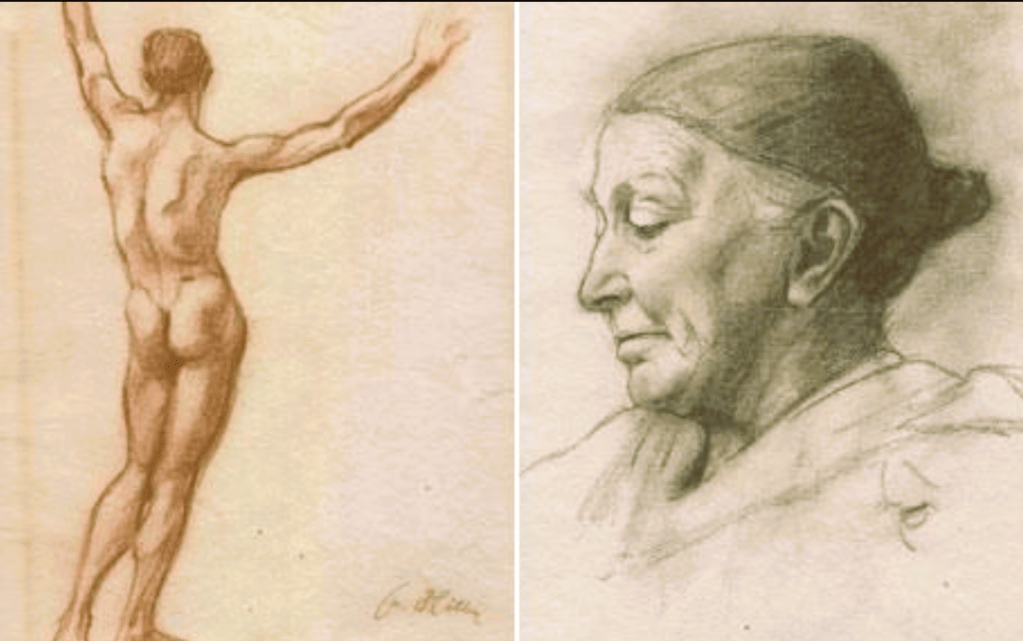
Adolf Hitler is infamous for his evil deeds and politics , but a lesser-known chapter of his life is his early pursuit of a career in art. Before he became the architect of one of history’s darkest periods, Hitler aspired to be a professional painter. His time as an artist, though ultimately unsuccessful, played a significant role in shaping his personality, worldview, and, eventually, his political ambitions. This blog explores Hitler’s artistic aspirations, his rejection from art academies, and the impact this phase of his life had on his future trajectory. What if he had been successful as an artist?
Early Life and Artistic Aspirations
From a young age, he exhibited an interest in art, particularly drawing and painting. He was known to sketch landscapes, buildings, and scenes from nature, and his work reflected a detailed and somewhat conservative style. His father, Alois Hitler, disapproved of Adolf’s artistic inclinations and wanted him to pursue a more stable career in the civil service. However, after his father’s death in 1903, Hitler felt more emboldened to follow his passion for art.
In 1907, at the age of 18, Hitler moved to Vienna with the dream of attending the prestigious Academy of Fine Arts. Vienna was a cultural hub at the time, and Hitler was drawn to its rich artistic and intellectual atmosphere. He spent much of his time wandering through the city’s galleries, theaters, and cafes, absorbing the cultural milieu. His primary goal was to gain admission to the Academy of Fine Arts and train to become a professional artist.
Rejection and the Impact on Hitler’s Psyche
In 1907 and again in 1908, Hitler applied to the Academy of Fine Arts Vienna. However, his applications were rejected both times. The academy’s admissions committee acknowledged that Hitler had some talent in architectural drawing but found his work with human figures lacking. This rejection was a severe blow to Hitler’s aspirations, as he had placed all his hopes on pursuing a career as an artist.

The rejection from the academy had profound psychological effects on Hitler. He was devastated and humiliated, and this period marked the beginning of his deepening bitterness and resentment. In his autobiography, Mein Kampf, Hitler later wrote about this time with a mixture of regret and anger, expressing his belief that his failure to gain admission to the academy was due to a combination of bad luck and personal injustice. His artistic failure became a turning point, leading him to abandon his dreams of becoming a painter and setting him on a different path.
The “Artist” in Vienna: A Life of Struggle
After his rejection from the academy, Hitler remained in Vienna, living in poverty and struggling to make a living. He survived by selling his artwork, which primarily consisted of watercolors and drawings of Vienna’s architecture and landscapes. Hitler produced numerous paintings during this time, many of which were sold to tourists and shop owners. His works were technically competent but lacked innovation and originality, focusing on traditional and somewhat sentimental subjects.
Hitler’s time in Vienna also exposed him to the social and political environment of the city, which was rife with ethnic tensions, class struggles, and anti-Semitic sentiments. As a young man facing economic hardship and social isolation, Hitler began to adopt the extreme nationalist and anti-Semitic views that would later define his political ideology. His failure as an artist, combined with the frustrations of his impoverished existence, contributed to his growing hatred and resentment, which he projected onto various scapegoats, particularly Jews.
The Transition from Art to Politics
By 1913, Hitler had given up on his dreams of becoming an artist and moved to Munich, Germany, where he continued to live a meager existence. The outbreak of World War I in 1914 provided him with a new sense of purpose. He volunteered for the German army and served as a dispatch runner on the Western Front. Although he was wounded during the war, Hitler emerged with a strong sense of nationalistic fervor and a determination to rebuild Germany in line with his ideological vision.
After the war, Hitler’s political career began to take shape. He joined the German Workers’ Party, which later became the National Socialist German Workers’ Party (Nazi Party). Hitler’s oratory skills, charisma, and fanatical nationalism quickly propelled him to the forefront of the party, and he used his newfound influence to advocate for a radical transformation of German society. His artistic ambitions were now fully replaced by his political aspirations, though his early experiences as a struggling artist continued to influence his thinking.
The Legacy of Hitler’s Artistic Pursuits
Hitler’s time as an artist, though often overshadowed by his later role as a dictator, is a significant aspect of his early life. His artistic failure and the rejection he experienced in Vienna contributed to the development of his personality and worldview. The rejection from the Academy of Fine Arts marked the end of his artistic dreams and the beginning of a path that would lead him to politics and ultimately to the horrors of the Third Reich.
In a broader sense, Hitler’s artistic ambitions and subsequent failure highlight the complex and multifaceted nature of his character. While his artistic talents were limited and his works largely unremarkable, his early experiences as an aspiring painter played a crucial role in shaping the man who would later become one of history’s most notorious figures. In the end, Hitler’s art was a reflection of his desire for control, order, and beauty—a desire that would take on a much darker and more destructive form in his political career.

Adolf Hitler’s time as an artist was a formative but ultimately unfulfilled chapter in his life. His early aspirations of becoming a painter were thwarted by rejection and failure, which had a profound impact on his psyche and contributed to his radicalization. Although he never achieved success as an artist, this period of his life is essential to understanding the evolution of his character and the ideological forces that shaped his later actions. Hitler’s artistic failure is a reminder of the deep connections between personal experiences, psychological development, and historical events.
Sources
https://www.bbc.com/news/world-europe-46991969
https://www.newyorker.com/magazine/2002/08/19/hitler-as-artist
https://www.historyplace.com/worldwar2/riseofhitler/art.htm
https://www.history.com/news/adolf-hitler-artist-paintings-vienna
https://www.iliketowastemytime.com/different-side-of-adolf-hitler-you-didnt-know-about
Donation
Your readership is what makes my site a success, and I am truly passionate about providing you with valuable content. I have been doing this at no cost and will continue to do so. Your voluntary donation of $2 or more, if you are able, would be a significant contribution to the continuation of my work. However, I fully understand if you’re not in a position to do so. Your support, in any form, is greatly appreciated. Thank you. To donate, click on the credit/debit card icon of the card you will use. If you want to donate more than $2, just add a higher number in the box left from the PayPal link. Your generosity is greatly appreciated. Many thanks.
$2.00
 History of Sorts
Leave a comment