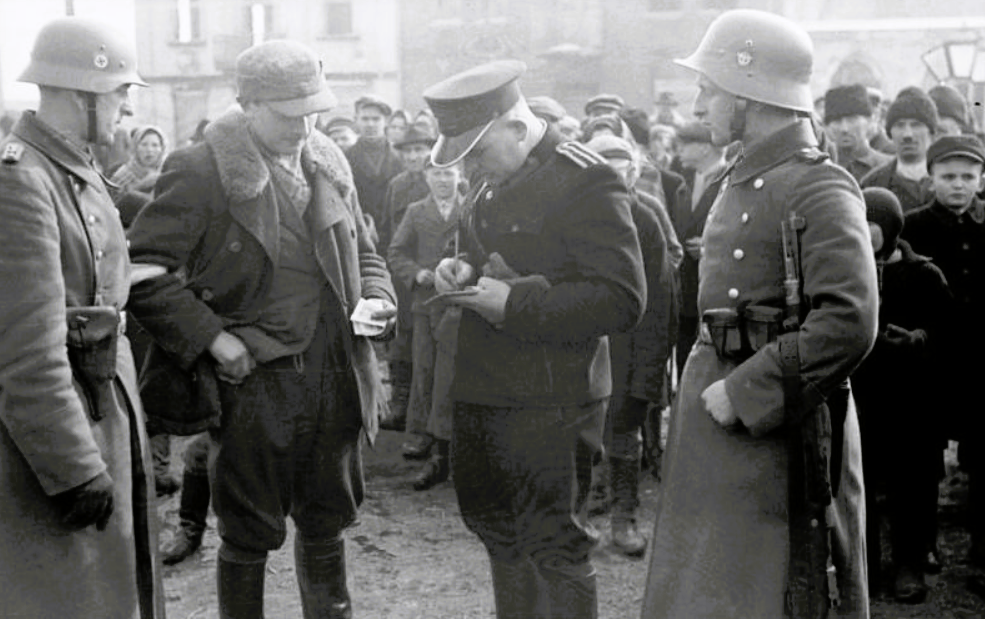
The Polish Blue Police (Granatowa Policja), officially known as the Policja Polska Generalnego Gubernatorstwa, represents one of the more controversial aspects of Poland’s experience under Nazi occupation during World War II. Established by Nazi Germany following its invasion of Poland in 1939, this police force, composed primarily of pre-war Polish police officers, operated under the direct control of the Germans within the territories of the General Government (central and southern Poland). Its role during the war, particularly in relation to the Holocaust, is a subject of significant historical debate, reflecting a complex combination of coercion, collaboration, and resistance.
While many members of the Blue Police served under duress, others collaborated with the Nazi regime in the persecution of Jews and other victims of the Holocaust. This essay explores the formation, responsibilities, and controversial actions of the Blue Police, analyzing the extent to which its members facilitated Nazi policies, including the destruction of Polish Jewry, while also acknowledging instances of resistance and moral ambiguity.
Formation and Structure of the Blue Police
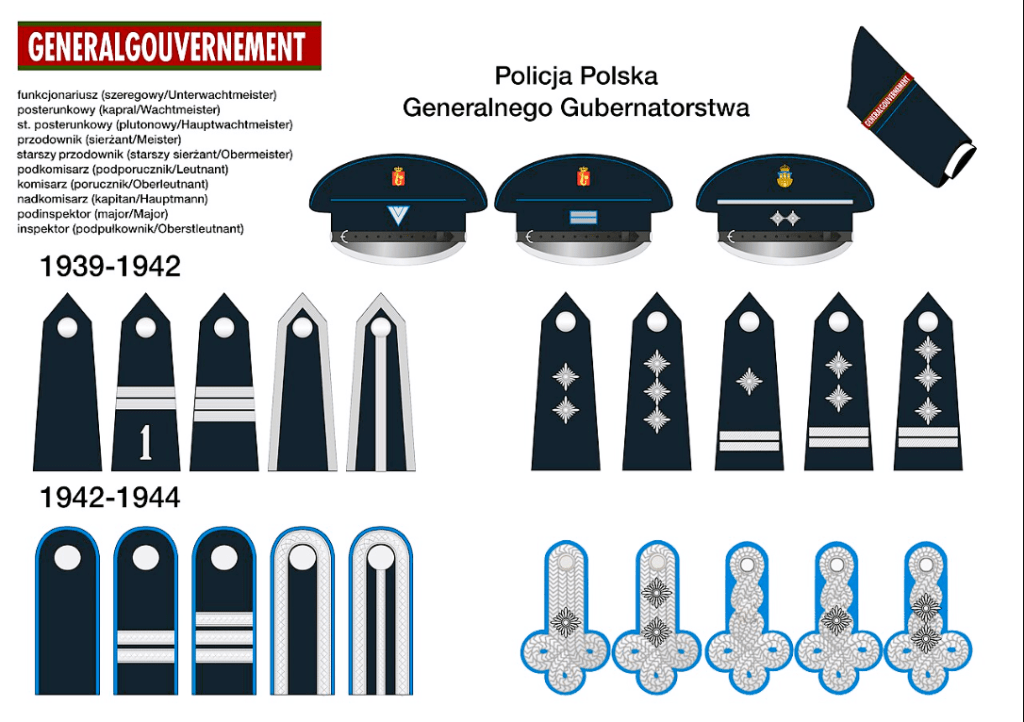
The Polish Blue Police was created shortly after the Nazi invasion of Poland in September 1939. Following the defeat of the Polish military, the country was divided between Nazi Germany and the Soviet Union, with central Poland coming under direct Nazi administration as the General Government. In this occupied zone, the Germans needed a policing force to manage civil society, maintain order, and enforce new regulations. However, with the bulk of German forces occupied by military campaigns elsewhere, the Nazis relied heavily on local forces to serve as a paramilitary presence and implement their policies.
- Composition and Recruitment: The Blue Police consisted mainly of pre-war Polish police officers who were forced to serve under Nazi control. Initially numbering around 8,000 men, the force expanded over time to between 12,000 and 16,000 members. For many officers, service in the Blue Police was not voluntary—refusal often led to imprisonment or death. This forced recruitment and coercion created an internal conflict for officers who were tasked with upholding public order while also enforcing Nazi policies.
- Responsibilities: While the Blue Police officially had the role of maintaining order, enforcing criminal laws, and controlling smuggling, their duties were shaped by the Nazi occupation’s broader objectives, which increasingly involved persecuting Poland’s Jewish population. The Blue Police was responsible for enforcing anti-Jewish decrees, patrolling Jewish ghettos, and aiding the Nazis in identifying and capturing Jews who were trying to escape persecution.
Though formally a Polish police force, the Blue Police had no real autonomy. It operated under the command of German authorities, who dictated its actions and assignments. The tension between Polish identity and forced collaboration with the Nazis lay at the heart of the moral ambiguity surrounding the Blue Police.
Role in the Persecution of Jews
While the primary agents of the Holocaust were the German SS, police, and military units, the Blue Police became complicit in Nazi genocidal policies. Although some officers participated reluctantly or under duress, others became willing collaborators in the persecution of Jews, contributing to a tragic chapter in Polish history.
Policing the Ghettos
One of the Blue Police’s most significant roles in the Holocaust was its involvement in policing Jewish ghettos. In cities like Warsaw, Kraków, and Łódź, the Nazis established ghettos as a preliminary step toward the eventual extermination of the Jewish population. The Blue Police was tasked with patrolling the boundaries of these ghettos, ensuring that Jews could not escape and that no one could enter without permission. They often assisted in preventing the smuggling of food and essential goods into the ghettos, further exacerbating the suffering of those imprisoned within.
- Collaboration in Ghetto Liquidations: As the war progressed, the Nazis began the systematic liquidation of the ghettos, deporting Jews to extermination camps such as Auschwitz, Treblinka, and Bełżec. During these operations, the Blue Police played a crucial role by helping round up Jews for deportation. Often acting under the direct orders of German SS officers, Blue Police units assisted in capturing Jews, loading them onto trains, and violently suppressing any attempts at resistance or escape.
Participation in Mass Executions
While the direct responsibility for mass shootings of Jews typically fell to the German Einsatzgruppen (mobile killing units) or SS troops, the Blue Police were sometimes involved in massacres of Jews, especially in rural areas where German forces were thinly spread. In numerous villages, local Blue Police units, either on their own or in cooperation with German forces, participated in or helped organize mass executions of Jews, particularly those who had escaped from ghettos or deportations.
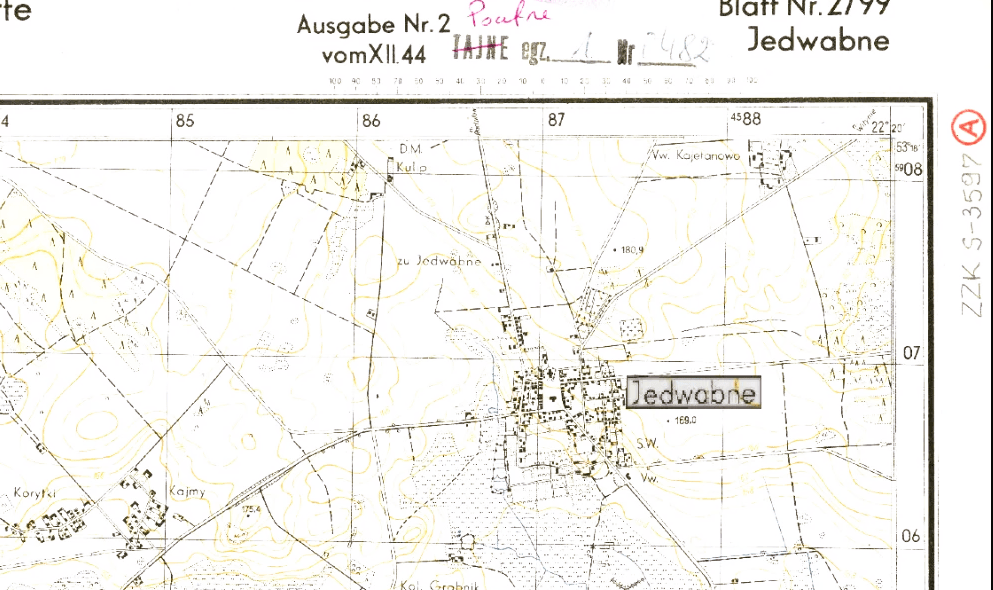
A prominent example of local collaboration is the Jedwabne pogrom in 1941, where Polish civilians, with some complicity from local authorities, murdered hundreds of Jewish residents by burning them alive in a barn. Although the Blue Police’s direct involvement in this specific event remains debated, it represents the broader pattern of collaboration by local forces in anti-Jewish violence.
Pursuing Jews in Hiding
Another dark aspect of the Blue Police’s role in the Holocaust was their participation in hunting down Jews who had fled from ghettos or deportations and were attempting to hide in the Polish countryside. Many Jews sought refuge with sympathetic Polish families or in the forests. Still, these efforts were often thwarted by the Blue Police, who acted as the eyes and ears of the German occupiers. Under Nazi orders, the Blue Police conducted raids, searched suspected hideouts, and frequently informed on Jews in hiding. Some officers engaged in blackmail and extortion, threatening to betray Jews unless they were paid—a practice known as Szmalcownictwo.
Collaboration vs. Coercion: A Moral Dilemma
The relationship between the Polish Blue Police and the Nazi occupiers highlights the profound moral ambiguity that many individuals faced during the war. While some members actively collaborated with the Nazis for personal gain or out of ideological alignment, many were coerced into participating in these actions under threat of death or imprisonment. Understanding the complex motivations of individual Blue Policemen is crucial to painting an accurate picture of their role in the Holocaust.
Collaboration with the Nazis
Some members of the Blue Police actively collaborated with the Germans, seeing it as a way to preserve their position or exert power under the occupation. For these individuals, the collaboration provided personal benefits, such as access to food and resources, or a means of maintaining influence in their local communities. Others may have collaborated out of antisemitism, aligning themselves with Nazi racial policies either due to pre-existing prejudices or out of opportunism.
Coercion and Resistance
Many members of the Blue Police were placed in an extremely difficult situation: refuse to follow orders and face execution or comply and become complicit in atrocities. Numerous officers performed their duties under duress, trying to balance their responsibility to the Polish population with the impossible demands of their German overseers.
- Instances of Resistance: Despite these pressures, there were instances of resistance within the Blue Police. Some officers secretly aided the Polish resistance or even provided assistance to Jews. A number of policemen helped Jews escape from ghettos or supplied intelligence to the Armia Krajowa (Home Army), the principal Polish resistance movement. Several members of the Blue Police have been recognized as Righteous Among the Nations for their efforts to protect Jews at great personal risk.
Post-War Trials and Legacy
After World War II, the role of the Polish Blue Police in the Holocaust became a matter of contention in post-war trials and historical narratives. While some members were tried for collaboration with the Nazis, many avoided prosecution, either due to the chaotic nature of post-war Poland or the ambiguity surrounding their actions. The moral complexity of their role made it difficult to draw a clear line between victims of coercion and willing collaborators.
In contemporary Polish memory, the legacy of the Blue Police remains a controversial and sensitive issue. While many Poles emphasize the suffering of their nation under Nazi occupation, the complicity of the Blue Police in the Holocaust serves as a painful reminder that collaboration, though often coerced, was part of Poland’s wartime reality.
The Polish Blue Police (Granatowa Policja) occupies a problematic and contested place in the history of World War II and the Holocaust. Created by the Nazis to enforce their brutal policies in occupied Poland, the Blue Police played a significant role in the persecution of Jews, particularly in the enforcement of ghetto regulations and participation in deportations and executions. While many officers were forced into collaboration under threat of violence, others willingly participated in Nazi policies motivated by personal gain or ideological alignment.
At the same time, there were those within the Blue Police who resisted the Nazis in subtle or overt ways, aiding the Polish resistance or helping Jews escape the genocidal machinery. The story of the Blue Police is thus one of moral complexity, reflecting the difficult choices faced by individuals under the terror of occupation. Understanding their role in the Holocaust is essential for grappling with the full scope of the tragedy that unfolded in Nazi-occupied Poland and the intricate legacies that remain in its aftermath.
Sources
https://muse.jhu.edu/book/26455/
https://en.wikipedia.org/wiki/Blue_Police
https://www.jhi.pl/en/articles/anniversary-of-the-jedwabne-pogrom,3752
Donation
Your readership is what makes my site a success, and I am truly passionate about providing you with valuable content. I have been doing this at no cost and will continue to do so. Your voluntary donation of $2 or more, if you are able, would be a significant contribution to the continuation of my work. However, I fully understand if you’re not in a position to do so. Your support, in any form, is greatly appreciated. Thank you. To donate, click on the credit/debit card icon of the card you will use. If you want to donate more than $2, just add a higher number in the box left from the PayPal link. Your generosity is greatly appreciated. Many thanks.
$2.00
 History of Sorts
Leave a comment