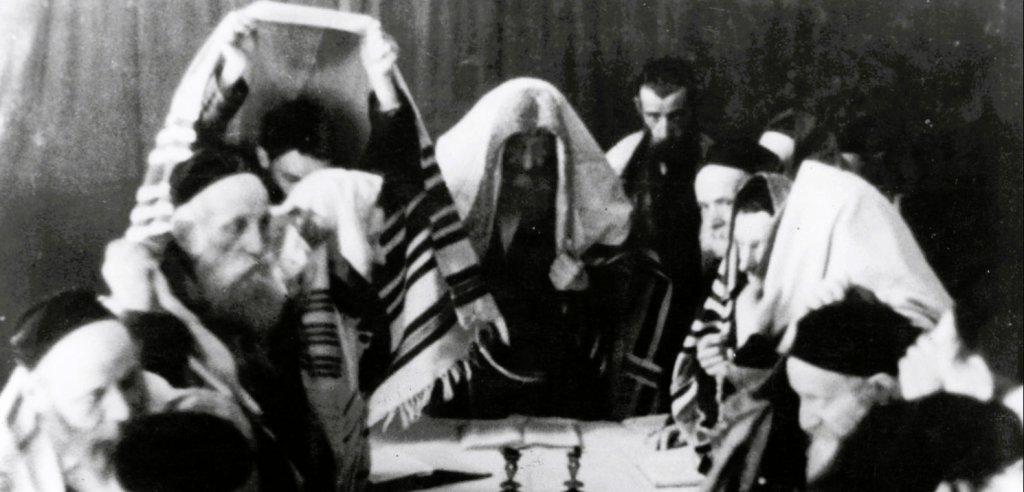
Yom Kippur, the holiest day in the Jewish calendar, is a solemn occasion dedicated to atonement, reflection, and reconciliation with God. Observed by fasting, prayer, and introspection, it offers a spiritual reprieve where individuals seek forgiveness for sins and hope for a fresh start in the year to come. Yet, during the Holocaust, this sacred day took on an even deeper and more tragic significance. Amidst the horrors of the Nazi genocide, Yom Kippur symbolized a profound tension between faith and despair, survival and spirituality. For Jews in ghettos, concentration camps, and hiding, Yom Kippur became not only a day of religious devotion but a day of existential struggle, as they confronted the annihilation of their people and the atrocities committed against them.
Observing Yom Kippur in the Ghettos
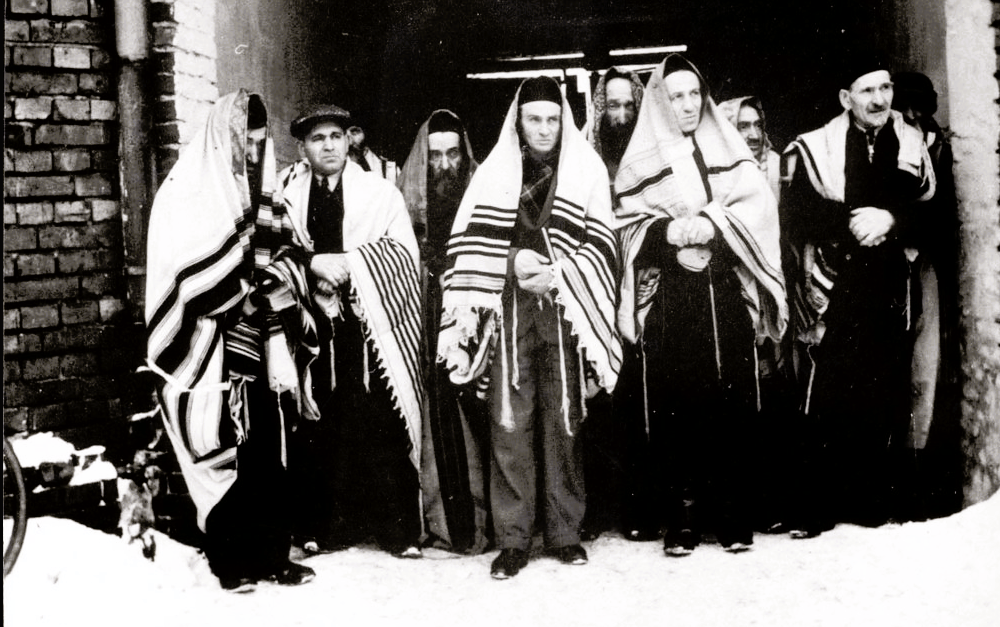
Life in the ghettos created by the Nazis was marked by extreme deprivation, overcrowding, and persecution. Jews living in these confined spaces faced constant hunger, disease, and the looming threat of deportation to death camps. Despite these conditions, many Jews tried to observe Yom Kippur as an act of resistance and a way to preserve their identity.
In ghettos like Warsaw, Lodz, and Vilna, Jews risked their lives to gather clandestinely for prayer services. Though religious practices were often outlawed by the Nazis, many Jews sought solace in tradition, even in the face of brutal suppression. Some ghettos had secret synagogues where Jews could pray, while others held makeshift services in private homes or communal spaces. Prayer books were often smuggled in, and individuals fasted as much as they could, even though food was already scarce. The observance of Yom Kippur became an act of spiritual defiance, as it reaffirmed their faith and identity despite Nazi efforts to dehumanize and destroy them.
However, fasting on Yom Kippur posed a profound dilemma. In the ghettos, hunger was a daily reality, and the physical toll of fasting could be deadly for those already weakened by malnutrition. Many struggled with the decision of whether to fast, balancing religious devotion against the need to survive. For some, the decision to fast was a way to maintain a sense of dignity and control over their own lives, even if it meant risking further physical decline. For others, survival took precedence, and they believed that preserving their lives was a sacred duty in itself. The tension between these choices reflected the broader moral and religious struggles that many Jews faced during the Holocaust.
Yom Kippur in Concentration Camps
In the concentration camps, the conditions were even more horrific. Jews were subjected to forced labor, torture, and mass murder in the gas chambers. The camps were designed to strip prisoners of their humanity, and religious observances were strictly forbidden. Yet, even in these places of death, Yom Kippur was observed by many Jews in whatever way they could manage.
Survivor testimonies reveal the lengths to which prisoners went to honor Yom Kippur. Some would whisper prayers while performing grueling labor, or quietly recite the Vidui (confessional prayers) in their barracks at night. In some camps, prisoners risked punishment or death by organizing secret minyanim (prayer quorums) to mark the day. Others observed a form of fasting, despite the meager rations provided by the camp. For them, fasting became a way of asserting their faith in the face of overwhelming degradation. It was a way to show that, even though their bodies were imprisoned, their spirits remained free.
In some instances, Nazi guards cruelly mocked Jewish prisoners on Yom Kippur, offering extra food on the day of fasting, or forcing them to work harder as a form of torment. Yet, the persistence of Yom Kippur observance was a testament to the resilience of the human spirit. Even in the darkest of times, many Jews continued to seek a connection with God and a sense of communal solidarity through their traditions. This endurance is often seen as one of the most poignant examples of spiritual resistance during the Holocaust.
Theological and Existential Struggles
The observance of Yom Kippur during the Holocaust also raised profound theological questions for many Jews. How could they atone for sins when they were being systematically exterminated? How could they seek forgiveness from a God who seemed to have abandoned them? The traditional themes of Yom Kippur—repentance, forgiveness, and renewal—took on a hauntingly different meaning in the context of mass death and destruction.

Some Jews, especially religious leaders, continued to affirm their faith despite the horrors they faced. They saw the continued observance of Yom Kippur as a way to maintain their covenant with God, even in the face of catastrophe. For these individuals, fasting and prayer were not only acts of devotion but expressions of hope that, despite everything, God’s justice would ultimately prevail.
Others, however, experienced a crisis of faith. The sheer magnitude of the suffering led many to question how such evil could exist in a world governed by a just and merciful God. For these individuals, Yom Kippur became a day of reckoning not only with their own sins but with the very idea of divine justice. Elie Wiesel, a Holocaust survivor and renowned writer, famously wrote about his struggle with faith during the Holocaust, recounting moments when he felt abandoned by God. In such cases, Yom Kippur was marked by silence, doubt, and a painful search for meaning amidst the chaos.
Yom Kippur during the Holocaust stands as a symbol of both tragedy and resilience. For the Jews who lived through the ghettos, concentration camps, and hiding, this sacred day was a reminder of their spiritual heritage in a world that sought to obliterate it. Whether through secret prayers, fasting, or quiet reflection, many continued to honor Yom Kippur even when doing so risked their lives. For others, Yom Kippur was a day of profound inner conflict, where the questions of faith, survival, and justice collided in unimaginable ways.
In the aftermath of the Holocaust, Yom Kippur continues to serve as a day of remembrance and reflection for the Jewish people. It is a day to honor the memory of those who perished and to reflect on the enduring power of faith and identity, even in the face of humanity’s darkest moments.
sources
https://www.yadvashem.org/holocaust/this-month/october/1940.html

 History of Sorts
Leave a comment