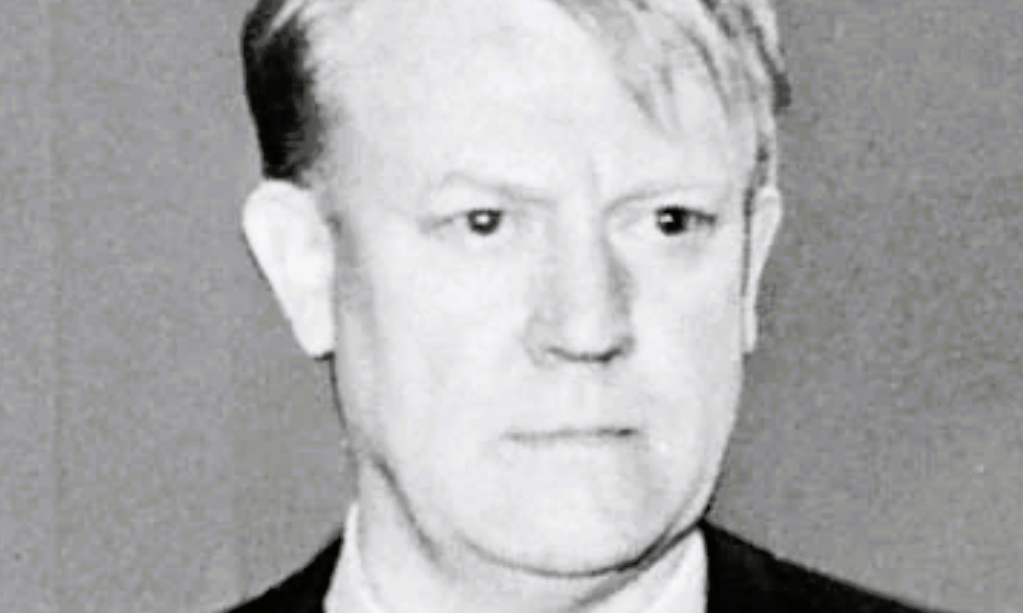
Vidkun Quisling is one of the most infamous figures in 20th-century European history. His name became synonymous with treason and collaboration during World War II, and his actions as a Nazi collaborator in Norway led to one of the most dramatic and controversial trials in the aftermath of the war. This essay delves into Quisling’s life, his rise to power, his betrayal of his country, and the events that culminated in his sentencing and execution.
Early Life and Military Career
Vidkun Abraham Lauritz Jonsson Quisling was born on July 18, 1887, in Fyresdal, Telemark, Norway. His family was well-regarded in Norwegian society; his father was a respected Lutheran pastor and genealogist. Quisling excelled in academics, especially in mathematics. By 1911, he had graduated from the Norwegian Military Academy at the top of his class. He pursued a career in the military, specializing in military intelligence and rising through the ranks quickly.
In the 1920s, Quisling began working as a military attaché and diplomat in various parts of Europe, including the Soviet Union. He witnessed the Bolshevik Revolution and the political turmoil in Russia, which shaped his deeply anti-communist worldview. Quisling served as an advisor to Fridtjof Nansen, the famed Norwegian explorer and humanitarian, on relief missions to the famine-stricken areas of Ukraine and the Soviet Union. During this period, Quisling’s ideological leanings began to crystallize; he developed a fervent belief in authoritarianism as a means to preserve order and prevent the rise of communism.
The Rise of Nasjonal Samling and Nazi Ideals
In the 1930s, as Europe was increasingly gripped by political extremism, Quisling found himself drawn to the rising tide of fascism. Inspired by the fascist movements in Italy under Mussolini and the growing power of Adolf Hitler’s Nazi Party in Germany, Quisling believed that Norway, too, needed a strong, centralized authoritarian government to steer the country away from what he saw as political decay.
In 1933, Quisling founded the political party Nasjonal Samling (National Unity). The party’s platform advocated for a corporatist state modeled after fascist regimes, with a strong emphasis on nationalism, militarism, and anti-communism. Nasjonal Samling, however, never gained significant traction in Norwegian politics during the 1930s. The party failed to secure seats in the Storting (Norwegian Parliament) and was generally dismissed by mainstream political forces. It was perceived as a fringe group, with Quisling being viewed as an eccentric and marginal figure. His support for German fascism and authoritarianism alienated him from the broader Norwegian population, who cherished their democratic institutions.
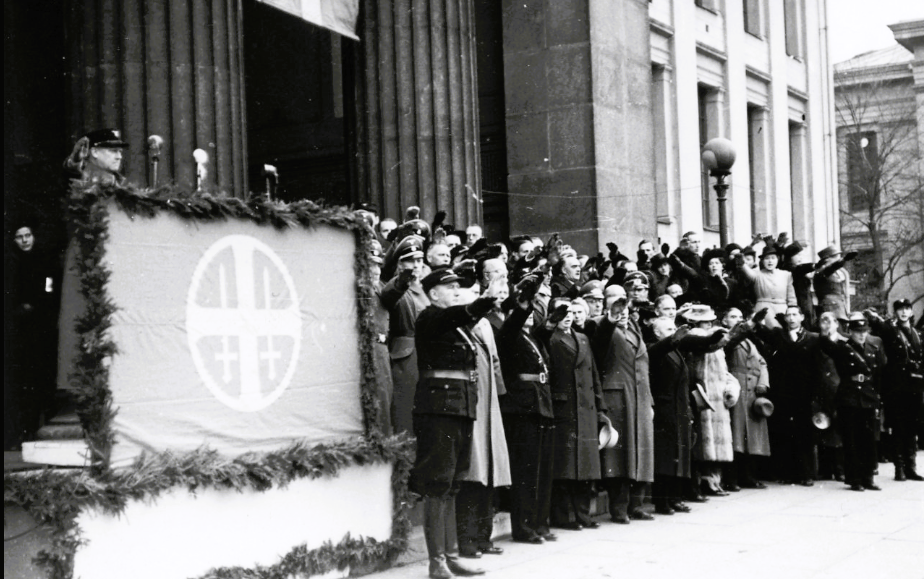
Quisling and the Nazi Invasion of Norway
Despite his lack of political success, Quisling’s loyalty to the Nazi cause deepened. By the late 1930s, he had established secretive contacts with Nazi officials and openly supported Germany’s ambitions in Europe. When World War II broke out in 1939, Norway, like many other neutral countries, tried to stay out of the conflict. However, Germany saw strategic importance in controlling Norway, which had valuable natural resources and a vital geographic position along the North Sea.
On April 9, 1940, Nazi Germany launched Operation Weserübung, the invasion of Denmark and Norway. Quisling saw this as an opportunity to seize power. He made a dramatic radio broadcast, declaring himself the head of Norway’s new government and urging the Norwegian people not to resist the Nazi invaders. This move shocked the country, as Norway had not yet fully capitulated to the Germans, and the royal family, along with much of the government, had fled to resist in exile.
Quisling’s coup, however, was premature and largely ineffective. Most Norwegians did not accept his claim to power, and the occupying German forces did not immediately support his self-proclaimed government. Nonetheless, Quisling’s willingness to collaborate with the Nazis led to him being installed as the nominal head of state under German occupation.
Quisling’s Role in the Nazi Occupation
During the German occupation, Quisling’s government became little more than a puppet regime, fully subordinate to the occupying Nazi authorities. As Minister-President, Quisling implemented policies that aligned with Nazi objectives, including the persecution of Norwegian Jews and the suppression of political dissent. His administration passed anti-Semitic laws, leading to the arrest, deportation, and eventual murder of many Norwegian Jews in concentration camps.
Quisling also supported Nazi indoctrination in schools, attempted to militarize Norwegian youth, and sought to restructure Norwegian society along fascist lines. His collaborationist government was widely despised by the Norwegian population, who viewed him as a traitor to the nation’s values of democracy, freedom, and independence. Resistance to the Nazis grew, with the Norwegian Resistance Movement engaging in acts of sabotage and underground defiance.
Throughout the occupation, Quisling’s power remained largely symbolic. The absolute authority in Norway rested with the German Reichskommissar Josef Terboven, who treated Quisling as a tool for enforcing Nazi rule. Despite this, Quisling clung to his belief that he was shaping the future of Norway in a way that would save it from communism and secure its place in a new European order dominated by Nazi Germany.
The Fall of Quisling
As World War II turned against Germany, the situation in Norway became increasingly untenable for Quisling and his collaborators. With the Allied victory in 1945 and the collapse of Nazi Germany, Norway was liberated, and Quisling’s government quickly fell apart. Quisling himself was arrested on May 9, 1945, just one day after Germany’s surrender.
His arrest marked the beginning of a legal process that would make him one of the most infamous symbols of collaboration and treason. Norway, like many other European countries, was eager to prosecute those who had collaborated with the Nazis, and Quisling’s trial became a focal point for this national reckoning.
The Trial and Sentence
Vidkun Quisling’s trial began on August 20, 1945, in Oslo. He faced charges of high treason, murder, and embezzlement. The trial, which lasted until September 10, was one of the most significant legal proceedings in post-war Norway. The court sought to hold Quisling accountable not only for his role in facilitating the Nazi occupation but also for his direct involvement in crimes against the Norwegian people, particularly his role in the deportation of Jews and the violent suppression of resistance movements.
Quisling’s defense during the trial was primarily based on the argument that he had acted in Norway’s best interests by preventing a prolonged war and minimizing casualties. He claimed that his collaboration with Germany had been intended to protect Norway from communism and that he had only sought to bring about a new political order. However, these arguments were rejected by the court, which viewed his actions as treasonous and driven by a desire for power.
The evidence against Quisling was overwhelming. His personal involvement in the arrest and deportation of Norwegian Jews, his endorsement of Nazi policies, and his role in supporting the occupation made him one of the most reviled figures in Norwegian history. On September 10, 1945, Quisling was found guilty of all charges. He was sentenced to death by firing squad. This punishment that was widely supported by the Norwegian public, who saw it as fitting retribution for his betrayal.
Execution and Legacy
On October 24, 1945, Vidkun Quisling was executed by firing squad at Akershus Fortress in Oslo. His execution marked the end of a dark chapter in Norway’s history, but his legacy lived on in infamy. The word “quisling” became a synonym for “traitor” and “collaborator” across much of Europe, a lasting reminder of his betrayal.
Quisling’s actions during the war are seen as a profound betrayal of the Norwegian people and their democratic institutions. He remains a symbol of the dangers of totalitarianism and collaboration with oppressive regimes. His name is still invoked when discussing the moral and political complexities of collaboration, occupation, and resistance.
Vidkun Quisling’s life and actions during World War II are a stark reminder of how individuals can betray their own country for personal and ideological reasons. From his early career as a promising military officer to his role as a collaborator and traitor during the Nazi occupation of Norway, Quisling’s legacy is one of treason and moral failure. His trial and execution in 1945 were not just a legal reckoning for his crimes but also a powerful symbol of Norway’s rejection of fascism, totalitarianism, and collaboration. His story serves as a cautionary tale about the dangers of authoritarianism and the consequences of betraying democratic values.
The Holocaust in Norway
The Holocaust in Norway is a lesser-known aspect of the broader genocide that took place during World War II. Norway, like many European nations, saw its Jewish population subjected to systematic persecution, deportation, and murder under Nazi occupation. While Norway’s Jewish community was small, the impact of the Holocaust there was profound.
Jewish Community in Norway Before the Holocaust
Before World War II, Norway’s Jewish population was modest, numbering approximately 2,100 people. Many were recent immigrants, having fled anti-Semitic persecution in Eastern Europe, especially from countries like Poland and Russia. The majority of Jews lived in urban areas, with the largest communities in Oslo and Trondheim. Despite their small numbers, Norwegian Jews were integrated into society, with synagogues, cultural institutions, and Jewish businesses playing a role in local economies.
Anti-Semitism existed in Norway but was not deeply ingrained or widespread, and Jewish citizens generally lived without fear of violent persecution. However, this would change dramatically after the Nazi invasion.
Anti-Jewish Legislation and Persecution
The persecution of Jews in Norway followed a pattern similar to that seen in other parts of Nazi-occupied Europe. It began with the introduction of discriminatory laws and regulations designed to isolate Jews socially, economically, and politically. These laws were initially met with shock by Norway’s Jewish population, as well as by some non-Jewish Norwegians. Still, resistance was limited in the early stages.
The first significant step was the registration of all Jews in Norway. In 1941, the Nazis ordered that all Jews must register with the authorities, listing their assets and properties. Jewish businesses were also marked for “Aryanization,” meaning they were either forcibly closed or handed over to non-Jewish owners. This process stripped Jewish families of their livelihoods and placed them under increasing scrutiny.

In October 1942, the situation worsened dramatically. Norwegian Jews were required to hand over their radios, preventing them from listening to news from the outside world. Then came the confiscation of identity cards, which were replaced with cards marked with a large “J” to identify them as Jews. These actions were intended to isolate and track Jews, making it easier for the Nazis to carry out the next phase of their plan: mass arrests and deportations.
Arrests and Deportations
The climax of the Holocaust in Norway came in late 1942, when the Nazi authorities, with the assistance of Norwegian collaborators, carried out a series of arrests and deportations of the Jewish population. The most infamous event occurred on October 26, 1942, when a large group of Norwegian Jews was rounded up and sent to the harbor in Oslo.
On that day, 529 Jews, including men, women, and children, were forcibly taken from their homes, arrested, and brought to the harbor, where they were loaded onto the German transport ship SS Donau.

The ship carried them to Stettin (now Szczecin, Poland), and from there, they were sent to Auschwitz, the infamous Nazi death camp in Poland. Upon arrival, most were immediately murdered in gas chambers. Only a small number survived the brutal conditions of the camp and the war.
In total, around 772 Norwegian Jews were deported to concentration camps. Of these, only 34 survived. The rest were systematically murdered by the Nazis. The deportation and murder of Norway’s Jews was one of the darkest moments in the country’s history and marked the near-total destruction of its Jewish community.
Norwegian Collaboration and Resistance
The Holocaust in Norway was facilitated by both the occupying German forces and Norwegian collaborators, including Vidkun Quisling and members of his Nasjonal Samling party. Quisling’s regime actively supported Nazi policies and helped in the registration and deportation of Jews. The collaboration of Norwegian police officers, civil servants, and other authorities played a crucial role in identifying, arresting, and deporting Jewish citizens.
However, there were also acts of resistance. Many ordinary Norwegians were horrified by the treatment of their Jewish neighbors and took steps to protect them. The Norwegian resistance movement, including groups like Milorg, worked to smuggle Jews to safety in neutral Sweden. In the months leading up to the large-scale deportations, around 1,000 Jews managed to escape to Sweden with the help of Norwegian resistance fighters, fishermen, and local villagers. These efforts saved many lives and remain a testament to the bravery of those who stood up against Nazi persecution.
Post-War Justice and Commemoration
After the war, Norway, like many other countries, sought to reckon with the horrors of the Holocaust and the role of collaborators. Vidkun Quisling was arrested, tried, and executed for treason, collaboration, and crimes against the Norwegian people, including his role in the persecution of Jews. Several other collaborators and Nazi officials involved in the deportations were also prosecuted.
In the years following the war, Norway’s Jewish community struggled to rebuild. Many of those who survived, either by escaping to Sweden or by enduring the concentration camps, returned to find their homes and businesses destroyed or confiscated. Rebuilding the community was a slow and painful process, and the scars of the Holocaust left a lasting impact on Norway.
Today, Norway commemorates the victims of the Holocaust through several memorials and educational programs. The most prominent is the Holocaust Center in Oslo, located at the site of Villa Grande, which was once the residence of Vidkun Quisling during the occupation. This center serves as a place of remembrance and education about the Holocaust in Norway, ensuring that future generations learn about this dark chapter in their history.
Sources
https://www.historytoday.com/archive/vidkun-quisling-short-biography
https://encyclopedia.ushmm.org/content/en/article/vidkun-quisling-1
https://www.britannica.com/biography/Vidkun-Abraham-Lauritz-Jonsson-Quisling
https://www.jewishvirtuallibrary.org/vidkun-quisling?utm_content=cmp-true
https://en.wikipedia.org/wiki/The_Holocaust_in_Norway#
https://encyclopedia.ushmm.org/content/en/article/norway
Donation
Your readership is what makes my site a success, and I am truly passionate about providing you with valuable content. I have been doing this at no cost and will continue to do so. Your voluntary donation of $2 or more, if you are able, would be a significant contribution to the continuation of my work. However, I fully understand if you’re not in a position to do so. Your support, in any form, is greatly appreciated. Thank you. To donate, click on the credit/debit card icon of the card you will use. If you want to donate more than $2, just add a higher number in the box left from the PayPal link. Your generosity is greatly appreciated. Many thanks.
$2.00
 History of Sorts
Leave a comment