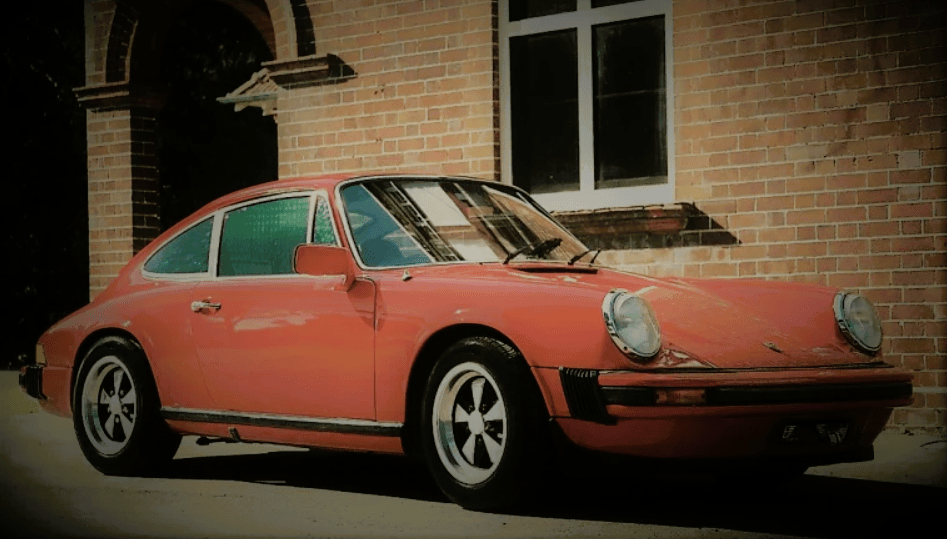
When people think of sports cars, Porsche often comes to mind. Its iconic design makes it instantly recognizable when spotted on the road.
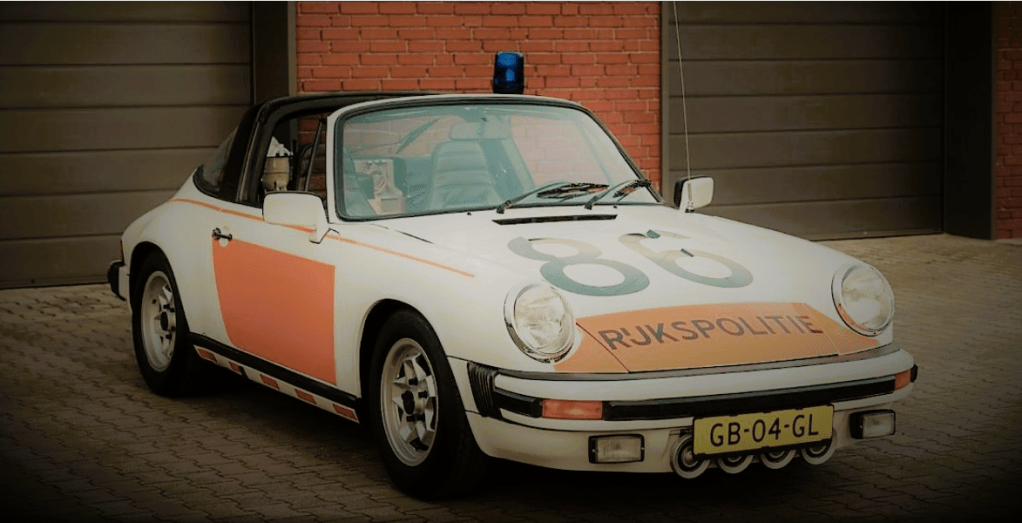
From 1962 to 1996, the Dutch police utilized Porsches for high-speed patrols, marking a significant chapter in the history of law enforcement vehicles. In the early 1960s, with no speed limits on Dutch motorways, the Rijkspolitie (State Police) needed a vehicle that could respond quickly to the rising number of serious accidents. Their chosen car had to meet strict requirements: it needed mechanical reliability, high-speed handling, rapid braking, and an open top, allowing officers to stand while directing traffic—an unusual feature for a police vehicle. They chose Porsche.
Interestingly, Porsche did not start as a sports and race car manufacturer. In 1934, Ferdinand Porsche presented a design to fulfill Hitler’s vision of an affordable car for the German population, the “Volkswagen” or “people’s car.” Hitler was so impressed that he initially wanted to name the Wolfsburg factory after Porsche. However, Porsche declined, and it was ultimately named the Volkswagen Plant.
The groundwork for this “Volkswagen” began with earlier prototypes, like the Type 12 for Zündapp. The first two prototypes were ready by 1935. With Hitler’s approval, Porsche and his business partner, Albert Speer, set up a factory in Fallersleben.

However, as World War II escalated, production at the factory was redirected to serve military purposes. In 1942, Porsche and Speer devised a plan to use concentration camp labor for large-scale, cost-effective production. This led to the establishment of the Arbeitsdorf concentration camp, where 800 inmates, initially from Neuengamme, were used for construction tasks. Despite receiving slightly better conditions in exchange for skilled labor, the camp’s purpose reflected the systematic exploitation of prisoners for industrial work.
On April 8, 1942, Arbeitsdorf opened with inmates from Neuengamme, later joined by prisoners from Sachsenhausen and Buchenwald. However, the camp was disbanded by October 1942 when plans to operate an aluminum foundry were abandoned due to a lack of government approval. Nonetheless, Arbeitsdorf became an early example of using concentration camp labor for industrial production. Speer’s involvement in these camps and their construction marks a controversial chapter, as he later denied any participation in the Holocaust.

In addition to automobiles, Porsche’s wartime production included a heavy tank prototype in 1942, the VK4501 or “Tiger (P).” However, the design’s complexity led to the Henschel model being chosen instead.

Due to the complexity of the drive system, a competing design by Henschel was ultimately chosen for production instead.
Ferdinand’s son, Ferry Porsche, shared his father’s passion for engineering and eventually became involved in company operations. He volunteered for the SS in 1938 but later claimed he was conscripted, a claim he maintained until his death.
Ferry Porsche’s life was closely intertwined with that of his father, Ferdinand Porsche, Sr., who began sharing his mechanical engineering expertise with Ferry from an early age. Together, they established an automobile design bureau in Stuttgart in 1931.
On December 17, 1938, Ferry volunteered to join the SS. However, he later falsely claimed he had been conscripted by Himmler to design the Schwimmwagen, a claim he maintained until his death.
In November 1945, the Porsche family was asked to continue designing the Volkswagen in France and to relocate factory equipment there as part of war reparations. While in France, Ferry was also invited to consult on the design and manufacture of the upcoming Renault 4CV, which led to significant conflict with Pierre Lefaucheux, Renault’s recently appointed head and a former resistance hero.

After World War II, the Porsche family was asked to relocate and redesign Volkswagen production in France as part of war reparations. However, disputes within the French government and objections from the local auto industry halted the project. In December 1945, French authorities arrested Ferdinand, Ferry, and Anton Piëch as suspected collaborators. Ferdinand and Piëch remained in custody in Paris and Dijon, while Ferry was released after six months.
In the wake of these challenges, Ferry and his sister, Louise, managed the company. Initially, the company focused on repairs and commercial products like water pumps and lathes. Over time, they secured contracts for automobile design, including race cars for the Cisitalia team and what would later become the iconic Porsche 356.
An often-overlooked figure in Porsche’s history is Adolf Rosenberger, who co-founded Porsche GmbH in 1931 alongside Ferdinand and Anton Piëch. Rosenberger was instrumental in the company’s initial funding and influenced the design of the Auto Union racing cars. However, Rosenberger’s career in Germany ended after a tragic accident in 1926. In 1933, he was arrested under Nazi racial laws due to his Jewish heritage.
Despite Rosenberger’s significant contributions, neither Porsche nor Piëch intervened to help him. He was eventually released, but only after paying a fee to the Gestapo. Forced to leave Germany, Rosenberger emigrated to France, Great Britain, and finally settled in the United States, where he continued his work in motorsports until his died in 1967.
The Nazi era erased the contributions of many Jewish figures in automotive history, including Rosenberger, Josef Ganz, Siegfried Marcus, and Edmund Rumpler, whose impact remains underappreciated today.
Sources
https://www.jstor.org/stable/j.ctt16gzb17.11#metadata_info_tab_contents
Donation
Your readership is what makes my site a success, and I am truly passionate about providing you with valuable content. I have been doing this at no cost and will continue to do so. Your voluntary donation of $2 or more, if you are able, would be a significant contribution to the continuation of my work. However, I fully understand if you’re not in a position to do so. Your support, in any form, is greatly appreciated. Thank you. To donate, click on the credit/debit card icon of the card you will use. If you want to donate more than $2, just add a higher number in the box left from the PayPal link. Your generosity is greatly appreciated. Many thanks.
$2.00


 History of Sorts
Leave a comment