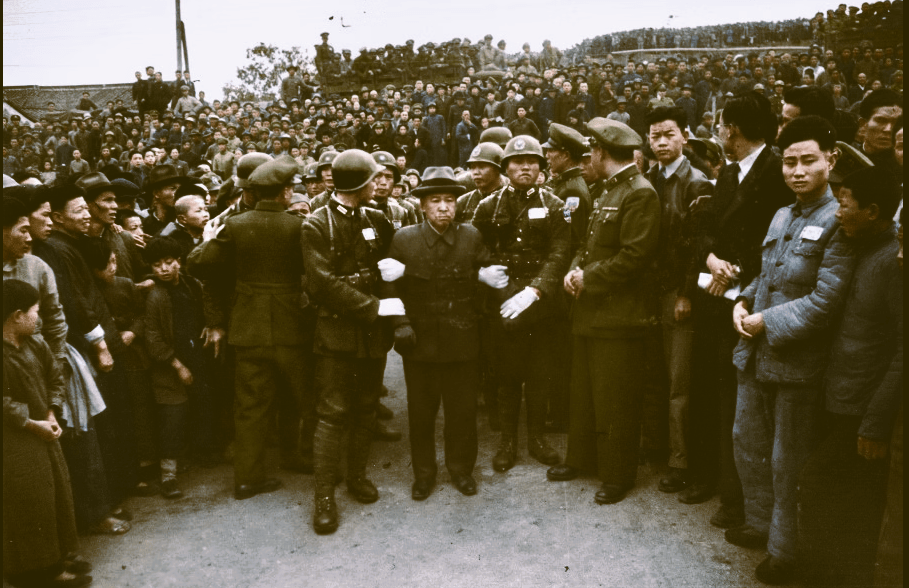
In the annals of history, specific names become etched with unique infamy, their legacies stained by actions that go beyond the brutality of war and enter the realm of sheer atrocity. Lieutenant General Hisao Tani of the Imperial Japanese Army is one such figure. While many factors shaped the Second Sino-Japanese War (1937-1945), Tani’s leadership during the Nanjing Massacre—also known as the Rape of Nanking—remains a dark testament to how far military leaders can go when unchecked by moral and human decency. His actions and failures of command, alongside his prosecution and execution, continue to serve as a haunting reminder of the capacity for cruelty within the context of war.
The Man and His Military Career
Born in 1882 in Okayama Prefecture, Hisao Tani had a distinguished early career in the Imperial Japanese Army. Like many of his contemporaries, he rose through the ranks in a period when Japan’s imperial ambitions were expanding rapidly. With successful campaigns in Japan’s earlier wars and rising political tensions, the nation’s military elite found itself playing a crucial role not only in warfare but in policy-making. By the time the Second Sino-Japanese War erupted in 1937, Tani was already a respected figure within the Japanese military establishment, known for his strategic expertise and unwavering loyalty to the empire.
When Tani was placed in command of the 6th Division, part of Japan’s Central China Area Army, his mission was straightforward: take Nanjing, the then-capital of China, and cement Japan’s control over one of Asia’s most significant cities. However, his path to accomplishing this objective quickly descended into a tragic chapter of unrestrained violence, cruelty, and disregard for human life.
The Nanjing Massacre: An Atrocity Beyond Words
The capture of Nanjing in December 1937 marked a turning point not only in the Second Sino-Japanese War but in the history of wartime atrocities. After a grueling advance through China, Japanese forces entered Nanjing, exhausted and demoralized yet feeling victorious. Rather than exercising restraint or demonstrating respect toward a defeated enemy, the occupation soon became a spree of violence unprecedented even by the brutal standards of the time.
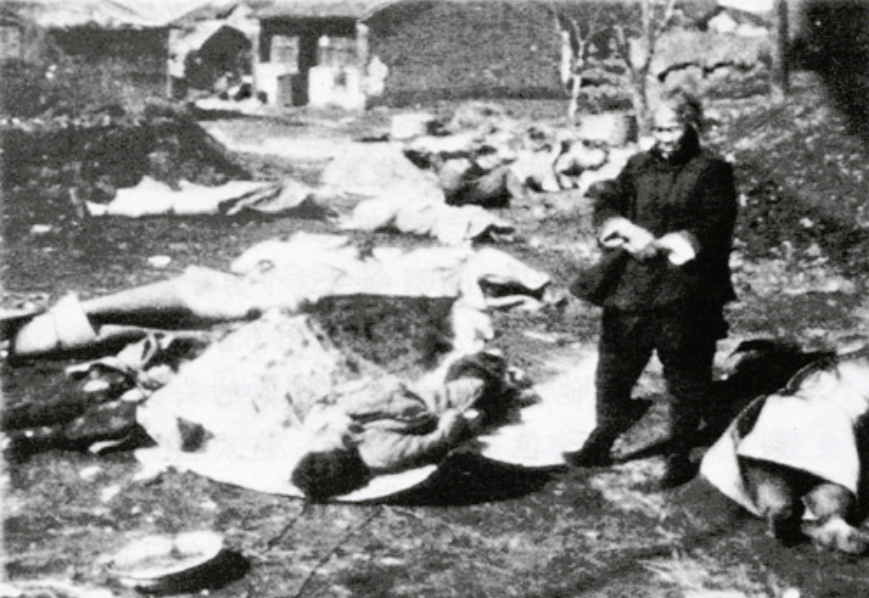
The Nanjing Massacre unfolded over six weeks, marked by atrocities that included mass executions, sexual violence, and indiscriminate killings. During this period, Japanese soldiers committed acts that historians estimate led to the deaths of between 200,000 to 300,000 Chinese civilians and disarmed soldiers. Tens of thousands of women were raped, and the looting and burning of homes further compounded the suffering. Foreign journalists, missionaries, and Chinese survivors documented these horrific events, providing irrefutable evidence of the scale of devastation.
Hisao Tani’s Role and Responsibility
As the commander of the 6th Division, Hisao Tani had a direct responsibility to control his troops. Testimonies from the post-war Nanjing War Crimes Tribunal pointed to Tani’s knowledge, if not active endorsement, of the actions taken by his forces. While some historians suggest that the massacre was a result of inadequate discipline or pent-up frustration among the soldiers, the reality remains that Tani had both the authority and obligation to prevent such conduct. Instead, he either tacitly allowed or was powerless to stop a culture of impunity that emerged, leading to the massacre’s horrific scale.
His division, along with others, carried out systematic massacres of disarmed Chinese soldiers and civilians, often executing people in groups to expedite the killings. Thousands of prisoners and civilians were rounded up, marched to the city’s outskirts, and killed in a manner intended to instill terror. Tani and his contemporaries in the Japanese high command were fully aware of these acts. They failed to intervene, giving soldiers free rein to commit some of the most brutal crimes of the 20th century.
Post-War Justice and Tani’s Trial
After World War II, the Allied forces took steps to prosecute those responsible for wartime atrocities. As part of this effort, China established the Nanjing War Crimes Tribunal in 1946, specifically to try Japanese military leaders involved in the massacre. Hisao Tani was among the most prominent figures brought to trial. Charged with war crimes and crimes against humanity, Tani faced testimonies from survivors, Chinese civilians, and foreign observers who recounted the horrors of those six weeks.
In his defense, Tani argued that he was unaware of the extent of the atrocities and claimed he had not sanctioned them. However, the tribunal found that the sheer scale of violence committed under his command pointed to at least tacit complicity or extreme negligence. He was convicted and sentenced to death in 1947, symbolizing a rare instance of accountability for Japanese wartime leaders. On April 26, 1947, Tani was executed by firing squad in Nanjing, a city forever scarred by the tragedy he helped unleash.
The Legacy of Hisao Tani and the Nanjing Massacre
The case of Hisao Tani and the events in Nanjing have left a lasting impact on the study of war crimes, human rights, and the responsibilities of military leaders. The Nanjing Massacre remains a point of deep historical trauma in China and has left unresolved tensions between China and Japan. While Tani’s prosecution was part of the effort to address war crimes, many believe that true justice for Nanjing has yet to be fully realized, particularly given the difficulty of achieving accountability for such extensive wartime atrocities.
The trial and execution of Hisao Tani underscore the critical importance of command responsibility in military operations. His failure to prevent, or even condone, the violence committed by his troops in Nanjing reminds us of the brutal consequences of unchecked power and a lack of moral accountability. For generations to come, the story of Hisao Tani and the Nanjing Massacre will serve as a grim reminder of the atrocities that can arise when those in positions of authority fail to safeguard humanity—even amidst the chaos of war.
Sources
https://www.19371213.com.cn/sylm/enlatestnews/202407/t20240717_4716417.html
https://generals.dk/general/Tani/Hisao/Japan.html
https://en.wikipedia.org/wiki/Hisao_Tani
Donation
Your readership is what makes my site a success, and I am truly passionate about providing you with valuable content. I have been doing this at no cost and will continue to do so. Your voluntary donation of $2 or more, if you are able, would be a significant contribution to the continuation of my work. However, I fully understand if you’re not in a position to do so. Your support, in any form, is greatly appreciated. Thank you. To donate, click on the credit/debit card icon of the card you will use. If you want to donate more than $2, just add a higher number in the box left from the PayPal link. Your generosity is greatly appreciated. Many thanks.
$2.00


 History of Sorts
Leave a comment