
The Battle of Vianden: A Testament to Courage and Resistance on November 19, 1944
The Battle of Vianden, fought on November 19, 1944, stands as a remarkable episode of defiance during World War II. Taking place in the medieval town of Vianden in northern Luxembourg, this engagement showcased the extraordinary bravery of a small group of Luxembourgish resistance fighters who defended their homeland against a larger and better-equipped German force. Though minor in scale compared to other battles of the war, the confrontation at Vianden carries profound symbolic importance, reflecting the resilience of a nation under occupation and its unyielding commitment to freedom.
Historical Context
By late 1944, the tide of World War II had turned decisively in favor of the Allies. Most of Luxembourg had been liberated by September 1944, as Allied forces swept through Western Europe after the successful D-Day landings in Normandy. However, the situation in the Ardennes region of northern Luxembourg remained precarious. German forces continued to occupy parts of the region, and they were preparing for a major counteroffensive that would culminate in the Battle of the Bulge in December 1944.

Amid this turmoil, Luxembourgish resistance fighters emerged as critical players. These small but determined groups not only gathered intelligence for the Allies but also conducted sabotage operations to disrupt German logistics and troop movements. One of the most active resistance groups operated in and around Vianden, a picturesque town perched on the Our River near the German border. The group’s base of operations was the Vianden Castle, a formidable medieval fortress that had survived centuries of conflict and now became a bastion of Luxembourgish defiance.
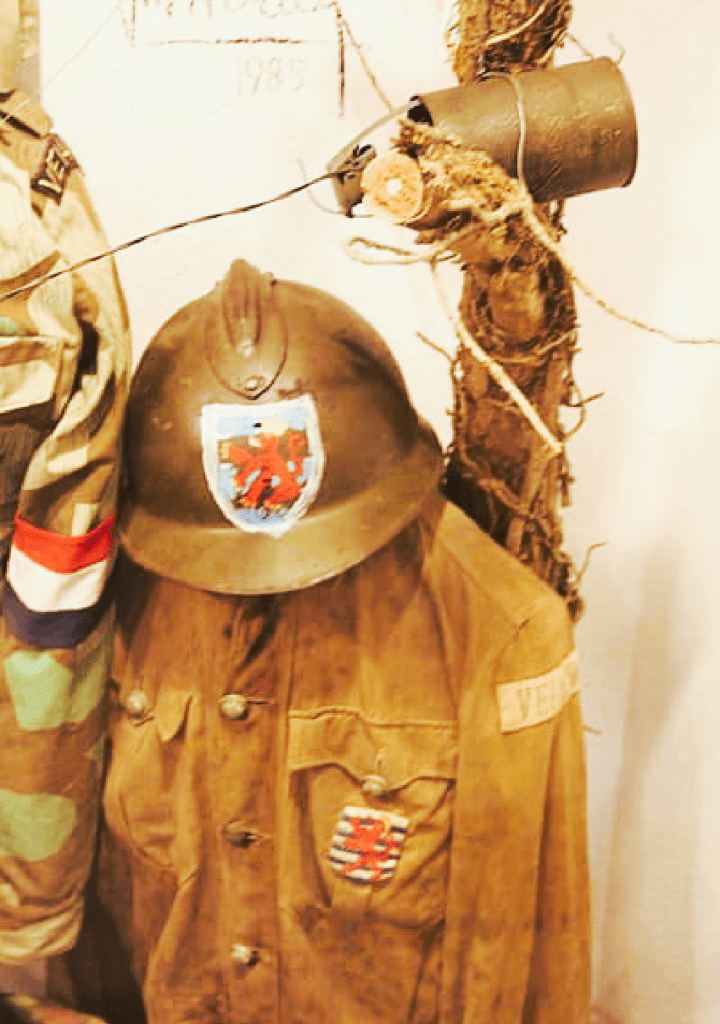
Prelude to the Battle
Vianden Castle was strategically significant due to its commanding position overlooking the surrounding valley. In November 1944, a resistance unit of about 30 fighters fortified the castle, arming themselves with rifles, machine guns, and limited ammunition. Despite their small numbers and meager resources, they were determined to hold the castle and the town against any German incursion.
German forces, aware of the resistance activity in Vianden, sought to eliminate this pocket of opposition. On November 19, 1944, approximately 250 German soldiers, including Waffen-SS troops, launched an attack on Vianden with the aim of seizing the castle and neutralizing the resistance fighters. The stage was set for a dramatic confrontation between the heavily outnumbered defenders and a formidable attacking force.
The Battle
The Battle of Vianden began in the early hours of November 19 with a German assault on the town. The attackers expected a swift victory, as their superior numbers and firepower seemed overwhelming. However, they underestimated the resolve and ingenuity of the Luxembourgish resistance fighters.
Using the castle’s thick stone walls and elevated position to their advantage, the resistance fighters mounted a tenacious defense. They repelled multiple German assaults with well-placed rifles and machine-gun fire. Despite the Germans’ attempts to encircle the castle and bombard it with artillery, the defenders held their ground.
The resistance fighters also benefited from their intimate knowledge of the local terrain. They established defensive positions in the steep, forested hills surrounding Vianden, ambushing German troops and inflicting significant casualties. By the end of the day, the Germans had suffered 18 killed or wounded. At the same time, the defenders sustained only one fatality—a testament to their skillful use of defensive tactics and the castle’s natural fortifications.
Unable to breach the castle or overcome the fierce resistance, the Germans were forced to retreat. Their failure to capture Vianden was a blow to their morale and a testament to the courage and determination of the Luxembourgish fighters.
Aftermath and Legacy
Though small in scale, the Battle of Vianden had a profound impact on Luxembourg and its people. It was one of the few direct engagements between the Luxembourgish resistance and German forces, and its outcome was a symbolic victory for a nation that had endured four years of Nazi occupation.
The battle delayed German plans in the region and boosted the morale of both the resistance and the civilian population. It also highlighted the significant role that resistance movements played in the broader Allied war effort, particularly in gathering intelligence and tying down enemy forces.
In the years following World War II, the Battle of Vianden became an enduring symbol of Luxembourg’s resilience and determination to defend its sovereignty. The resistance fighters who defended the castle were celebrated as national heroes, and the battle was commemorated as a key moment in the country’s wartime history.
Vianden Castle Today
Vianden Castle was abandoned and in disrepair by the early 20th century. It was restored in the latter half of the century and remained a major historical and cultural landmark in Luxembourg. Visitors can explore its medieval architecture and learn about its storied past, including its role in the Battle of Vianden.
The town of Vianden also honors the memory of the battle through monuments and annual commemorations. These serve as a reminder of the courage and sacrifice of those who fought to liberate their homeland and uphold the values of freedom and democracy.
The Battle of Vianden was a small but significant engagement that demonstrated the power of determination and courage in the face of overwhelming odds. It highlighted the vital contributions of resistance movements during World War II and underscored the deep resolve of the Luxembourgish people to resist tyranny and reclaim their independence.
As a historical episode, the battle continues to inspire and resonate, offering a powerful example of how even the most minor acts of defiance can have a lasting impact. For Luxembourg, it remains a source of national pride and a testament to the enduring spirit of its people.
Sources
https://www.nationalww2museum.org/programs/battle-bulge
https://en.wikipedia.org/wiki/Battle_of_Vianden
Donations
Your readership is what makes my site a success, and I am truly passionate about providing you with valuable content. I have been doing this at no cost and will continue to do so. Your voluntary donation of $2 or more, if you are able, would be a significant contribution to the continuation of my work. However, I fully understand if you’re not in a position to do so. Your support, in any form, is greatly appreciated. Thank you. To donate, click on the credit/debit card icon of the card you will use. If you want to donate more than $2, just add a higher number in the box left from the PayPal link. Your generosity is greatly appreciated. Many thanks.
$2.00


 History of Sorts
Leave a comment