
The term “Aryanization” refers to a series of policies and actions implemented by Nazi Germany during the 1930s and 1940s aimed at excluding Jews from economic, cultural, and social life while transferring their property to non-Jewish Germans, often referred to as “Aryans” in Nazi racial ideology. This systematic process was not merely an act of theft but a cornerstone of the regime’s broader strategy of anti-Semitic persecution.
Origins and Ideological Basis
Rooted in the Nazis’ racial theories, Aryanization began subtly after Adolf Hitler’s rise to power in 1933. Initially, Jewish professionals were pushed out of state employment and prominent roles in the arts, education, and law. The Nuremberg Laws of 1935 codified racial discrimination, legally defining Jews as second-class citizens and paving the way for their systematic exclusion from the economy.
This exclusion escalated after the Kristallnacht pogrom in November 1938, when violent attacks on Jewish homes, synagogues, and businesses forced many Jews to flee or sell their assets under duress. The state facilitated these sales, often at significantly undervalued prices, ensuring that the Jewish owners had no choice but to relinquish their livelihoods.
Mechanics of Aryanization
The process unfolded in two phases: “voluntary Aryanization,” where Jewish business owners were pressured to sell their enterprises, and “forced Aryanization,” in which the state confiscated Jewish assets outright. By 1939, more than 70% of Jewish businesses in Germany had been transferred to Aryan ownership. Banks, real estate, and personal assets were similarly seized, enriching non-Jewish Germans and Nazi institutions.
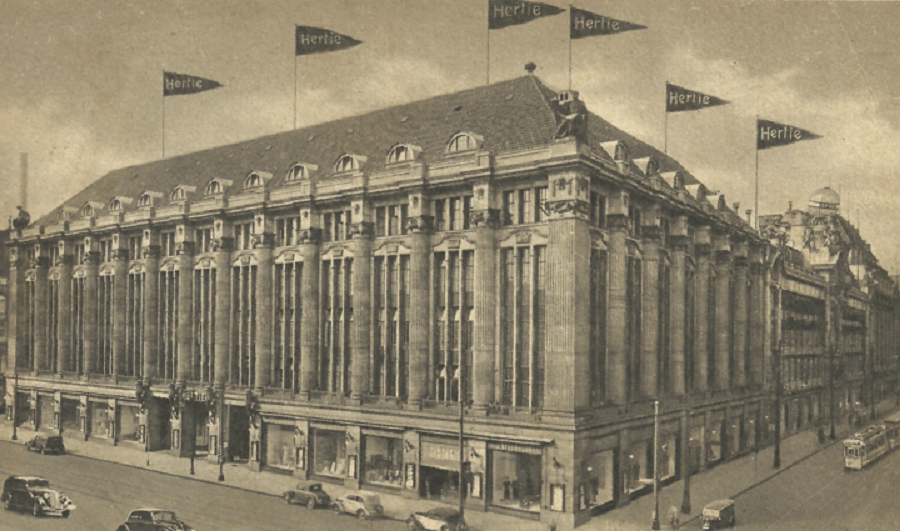
The dispossession extended beyond economic domains. Cultural Aryanization sought to cleanse German art, music, and literature of Jewish influence, redefining cultural narratives to align with Nazi ideology. Jewish contributions to intellectual life were erased, and Jewish scholars and artists were excluded from public recognition.
Consequences
Aryanization had devastating consequences for Germany’s Jewish community, stripping individuals of financial stability, professional identity, and personal dignity. Many who were impoverished by these policies found themselves unable to emigrate, trapped in a country where their rights, livelihoods, and, eventually, lives were systematically destroyed.
For the broader German society, Aryanization created an illusion of prosperity. Non-Jewish Germans benefited from the redistribution of Jewish assets, fostering complicity and reducing resistance to Nazi policies. At its core, Aryanization was an act of organized theft masquerading as legal economic reform.
Legacy and Reckoning
In the aftermath of World War II, Aryanization became a critical focus of efforts to address Nazi crimes. Post-war restitution programs sought to return property to Jewish survivors or their heirs, though these efforts were often incomplete and contested. The process of Aryanization remains a chilling reminder of how state-sponsored racism and greed can intertwine to produce catastrophic injustice.
Aryanization in Nazi-Occupied Countries: An Instrument of Plunder and Persecution
During World War II, Nazi Germany extended its policy of “Aryanization” beyond its borders into the countries it occupied, implementing a systematic campaign to exclude Jews from economic and social life and expropriate their property. This process, central to the broader framework of Nazi racial ideology, was characterized by forced economic dispossession, collaboration with local authorities, and devastating consequences for Jewish communities across Europe.

The Spread of Aryanization
Aryanization, initially developed and enforced in Germany, became a template for occupation policy. As Nazi forces swept across Europe, they imposed similar measures in occupied territories, adapting them to local conditions. In Austria, the process began almost immediately after the Anschluss in 1938, mirroring the methods used in Germany, with widespread confiscation of Jewish businesses and property. The same pattern followed in countries like France, Belgium, the Netherlands, Poland, Hungary, and Czechoslovakia.
These policies were framed as legal and administrative actions, often involving the cooperation of local bureaucracies and businesses. The process was typically divided into two phases: the economic exclusion of Jews and the subsequent transfer of their assets to “Aryan” owners. In many cases, these measures were justified by invoking nationalist rhetoric, claiming that they were restoring assets to the “rightful” majority populations.
Aryanization Across Europe
- France: After the Nazi occupation of France in 1940, Aryanization was implemented under the auspices of the Vichy regime, which collaborated extensively with German authorities. Jewish-owned businesses were placed under the control of “administrators” who oversaw their transfer to non-Jewish ownership. The seizure of property extended to cultural artifacts, with thousands of valuable works of art looted and sent to Germany.
- The Netherlands: In the Netherlands, the process of Aryanization was meticulously carried out and facilitated by a compliant Dutch bureaucracy. Jewish businesses were forcibly sold or shut down, and bank accounts were frozen. In addition to economic dispossession, Dutch authorities helped identify Jewish individuals for deportation, making the Netherlands one of the countries with the highest percentage of its Jewish population murdered during the Holocaust.

- Poland: Aryanization in Poland was particularly brutal, given the Nazis’ perception of the Polish population as racially inferior. Jewish property was seized outright, often redistributed to German settlers as part of the regime’s broader plans for Germanization. The destruction of Jewish businesses and livelihoods went hand in hand with the establishment of ghettos, where Jews were confined in inhumane conditions.
- Hungary: In Hungary, Aryanization began under local anti-Semitic laws even before the German occupation in 1944 but intensified dramatically afterward. The Nazi-installed government implemented wide-scale confiscation of Jewish property, which was funneled to Hungarian elites and used to fund the war effort.
Mechanisms and Collaboration
In each occupied country, the implementation of Aryanization depended on the active participation of local authorities, businesses, and individuals. While Nazi officials orchestrated the overall policy, they relied on local collaborators to enforce regulations, identify Jewish-owned properties, and manage their redistribution. This collaboration often stemmed from a mix of ideological alignment, opportunism, and fear of Nazi retribution.
In some cases, local populations benefited from Aryanization, acquiring homes, businesses, or personal belongings at discounted prices or through outright confiscation. This economic advantage contributed to a broader complicity, as individuals and institutions turned a blind eye to the persecution and suffering of their Jewish neighbors.
Consequences for Jewish Communities
The effects of Aryanization on Jewish communities in occupied countries were catastrophic. Families were stripped of their means of livelihood, homes, and savings, leaving them destitute and vulnerable. Many were unable to escape Nazi-controlled territories because they lacked the resources to flee. The economic devastation inflicted by Aryanization was often a prelude to physical destruction, as impoverished and marginalized Jewish populations were subsequently deported to concentration camps.
In addition to the immediate human cost, Aryanization resulted in the permanent loss of Jewish cultural, economic, and social contributions in these regions. Entire communities, some of which had thrived for centuries, were obliterated.
Post-War Reckoning and Legacy
After the war, efforts to address the injustices of Aryanization were uneven. In many cases, stolen property was never returned, either because the original owners had perished or because post-war governments were slow or unwilling to enforce restitution. In recent decades, renewed attention to Nazi-era crimes has led to greater efforts to identify and return looted assets, particularly artworks and cultural property.
Aryanization in occupied countries remains a stark reminder of how state-sponsored racism can metastasize into widespread plunder and violence. It also underscores the dangers of collaboration and the ease with which ordinary people can become complicit in systemic injustice.
The Aryanization policies enacted in Nazi-occupied countries were a central component of the Nazis’ genocidal agenda, combining economic exploitation with racial persecution. By expropriating Jewish property and excluding Jews from public life, the Nazis laid the groundwork for the physical annihilation of Jewish communities across Europe. This history serves as a powerful lesson on the interconnectedness of economic and racial injustice and the enduring need for vigilance against such abuses.
Polish Babies Chosen for Their “Aryan” Features:
The Nazis pursued an agenda of racial purity driven by the pseudoscientific ideology of eugenics. Among the many horrors of this regime was the targeted kidnapping of Polish children who exhibited “Aryan” features—blond hair, blue eyes, and certain facial structures—deemed desirable according to Nazi racial theories. These children were abducted, stripped of their identities, and subjected to a brutal process of Germanization, reflecting the regime’s belief in the supremacy of the so-called Aryan race.
The Ideological Foundations of the Kidnappings
At the heart of the Nazi ideology was the belief in the superiority of the Aryan race and the desire to expand its dominance. Heinrich Himmler, the leader of the SS, spearheaded efforts to “reclaim” children who were thought to have Germanic ancestry, even if they lived outside Germany. This policy was an extension of the Lebensborn program, an initiative created in 1935 to encourage the growth of the Aryan population through selective breeding, adoption, and the kidnapping of children from occupied territories.
Poland, under Nazi occupation, became a key target for these kidnappings. The Nazis regarded Poles as racially inferior, yet they believed that some Polish children exhibited traits that could be assimilated into the German population. These children were seen as a way to bolster the German population, especially in light of the losses incurred during the war.
The Process of Selection and Abduction
The abduction of Polish children was systematic and widespread, affecting tens of thousands of families. Nazi officials, often aided by local collaborators, identified children who met their racial criteria. This was done through visits to schools, orphanages, and homes, where children were evaluated based on physical examinations. Anthropometric measurements were taken, focusing on skull shape, hair color, eye color, and skin tone. Those who were deemed sufficiently “Aryan” were forcibly removed from their families.

Children from orphanages or those whose parents had been killed or imprisoned were particularly vulnerable. In many cases, children were tricked or lured away under false pretenses. Others were violently seized, with their families having little or no recourse.
Germanization and Erasure of Identity
Once abducted, the children were sent to special transit camps, such as the infamous camp in Łódź (Litzmannstadt), where they underwent further racial screening. Those who passed the tests were sent to Lebensborn homes or German families for adoption. Before being integrated into German society, these children were subjected to a process of Germanization aimed at erasing their Polish identities. They were given new names, prohibited from speaking Polish, and indoctrinated into Nazi ideology.
For many children, this process was deeply traumatic. They were told that their Polish heritage was inferior and that they should be grateful for their new German lives. Any resistance was met with severe punishment, including physical abuse.
Fate of the Children
While some of these children were successfully assimilated into German society, others struggled with the loss of their families and identities. At the war’s end, Allied forces and Polish authorities worked to locate and repatriate abducted children. However, the process was fraught with difficulties. Many children, having lived for years in German homes, no longer remembered their original families or spoke Polish. Some German families refused to return the children, claiming them as their own.
Efforts to identify and repatriate these children continued for decades, but many were never found. Even those who were reunited with their families often faced psychological scars and identity crises, grappling with the trauma of their abduction and the erasure of their early lives.
Legacy and Reckoning
The Nazi policy of abducting Polish children for their “Aryan” features is one of the lesser-known but deeply chilling aspects of the Holocaust and Nazi racial policies. It illustrates the lengths to which the regime went to enforce its ideology, targeting even the youngest and most vulnerable members of society.
Sources
https://www.annefrank.org/nl/timeline/149/arisering-van-modemagazijn-gerzon/
https://www.dfs.ny.gov/consumers/holocaust_claims/perpetrators_methods/aryanization
https://encyclopedia.ushmm.org/content/en/photo/aryanization-of-jewish-owned-businesses
https://encyclopedia.ushmm.org/content/en/photo/aryanization-in-france
https://www.jmberlin.de/en/topic-expropriation-arianization
https://www.allianz.com/en/about-us/company/history/allianz-in-the-nazi-era/aryanization.html
https://en.wikipedia.org/wiki/Aryanization
Donations
Your readership is what makes my site a success, and I am truly passionate about providing you with valuable content. I have been doing this at no cost and will continue to do so. Your voluntary donation of $2 or more, if you are able, would be a significant contribution to the continuation of my work. However, I fully understand if you’re not in a position to do so. Your support, in any form, is greatly appreciated. Thank you. To donate, click on the credit/debit card icon of the card you will use. If you want to donate more than $2, just add a higher number in the box left from the PayPal link. Your generosity is greatly appreciated. Many thanks.
$2.00
 History of Sorts
Leave a comment