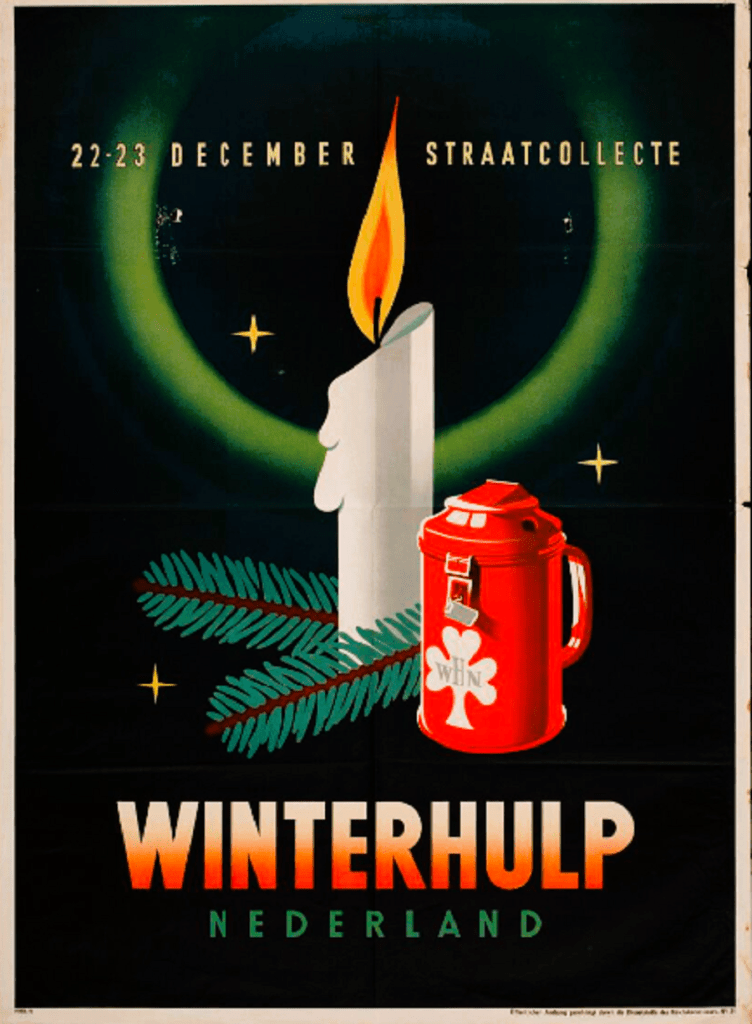
During the German occupation of the Netherlands, the Austrian lawyer and Nazi Arthur Seyss-Inquart was the leader of the Netherlands. In October 1940, he established “Winterhulp Nederland” (Winter Relief Netherlands), modeled after a German example. The German occupiers hoped this initiative would create a favorable impression of the Germans among the Dutch population.
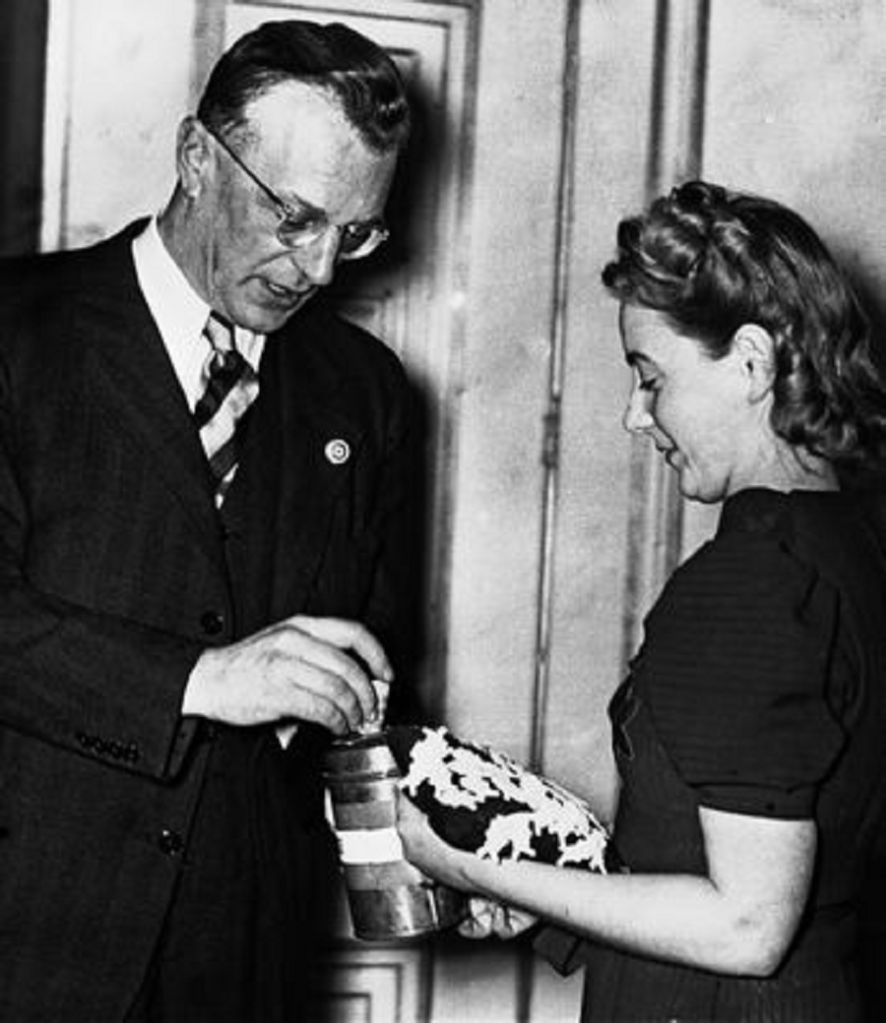
Winterhulp Nederland was a charitable organization that provided food and clothing to poor residents of Amsterdam. However, families with National Socialist sympathies were given preferential treatment. On the other hand, people who criticized the Nazi regime or were Jewish could not count on any support.
The aim of Winterhulp Nederland was to replace existing aid organizations and social institutions. Its income was primarily derived from lotteries and collections. They used propaganda posters to persuade the Dutch to donate money to the Winterhulp collection. At that time, Winterhulp Nederland was the only collection allowed to exist, as all other charities were banned. However, the collections yielded relatively little money. Many Dutch people expressed their anti-German sentiments by refusing to donate.
The leadership was in the hands of businessman Carel Piek, who was not a member of the NSB (National Socialist Movement) but was pro-German. Director-General Piek only had to answer to Reich Commissioner Seyss-Inquart. The founding decree stated, “It is the task of the Foundation to provide assistance and support to needy Dutch citizens living in the occupied Dutch territory, regardless of their background.” However, the phrase “regardless of their background” should not be taken too literally. At the beginning of the war, Jews also received support from Winterhulp, but as the war progressed and the persecution of Jews began, they were excluded from receiving aid from Winterhulp.
Winterhulp was an attempt by the occupiers to establish contact with broad segments of the population and to foster closer cooperation between the Germans and the Dutch.
All Dutch mayors were appointed as local directors. Each province had an office, and there were additional offices in the major cities of Amsterdam, Rotterdam, and The Hague. There were also “circles,” such as in the Gelderse Vallei, and local branches, including one in Maassluis. The headquarters had a departmental structure, with departments for propaganda and information, organization, statistics, procurement, and finance.

This gesture of “social compassion” was primarily intended to emphasize the “good” intentions of the occupier. However, it turned out differently. Among the population, Winterhulp provoked annoyance because this organization replaced private charitable organizations. Many posters were defaced with the well-known slogan, “Not a button from my fly for Winterhulp.” Coercion proved necessary to extract money from the Dutch people. Efforts were made to entice the population with pins in the shapes of flowers, windmills, and fairy tales. Businesses received emotionally charged letters, and collectors went door-to-door with lists. Entrepreneurs were also required to give up 5% of their profits, and the working population was asked to donate 10% of their income tax (see poster above).
Outwardly, great efforts were made to create the impression that Winterhulp was not a National Socialist initiative. Despite this pretense of impartiality, WHN was still regarded as a German initiative. The similarities with the German Winterhilfswerk were too obvious. The German occupier outright called Winterhulp a fiasco. Only NSB members showed enthusiasm for Winterhulp. The average citizen regarded any donation or cooperation with Winterhulp as a form of collaboration.

When prominent NSB members, including Rost van Tonningen, joined the national honorary committee, it became clear to everyone which way the wind was blowing. An important source of income for WHN was the collections, which were generally held once a month throughout the country. Among the collectors were many pro-German individuals and NSB members, who had been encouraged by party leadership to volunteer for this work. Additionally, income was generated from lottery proceeds, deductions from wages and salaries, and profit percentages that companies were required to hand over.
Many people were convinced that part of the collected funds went to Germany or the NSB; however, this was a misconception. The artist Jordaan beautifully captured this belief at the time.

In mid-1941, the Nederlandsche Volksdienst (NVD, Dutch People’s Service) was established. It was intended to eventually oversee Winterhulp and other organizations, taking responsibility for the entire domain of social and community care. Winterhulp positioned itself as a broad and, above all, distinctly Dutch national platform for social care. Much emphasis was placed on the Dutch character of Winterhulp, but the Nazi political orientation of the organization could not be concealed. Partly because of this, its success—and therefore its effectiveness—was limited.
Sources
https://resources.huygens.knaw.nl/socialezekerheid/instellingen_en_personen/show/Winterhulp
https://www.iwm.org.uk/collections/item/object/32652
https://geschiedenislokaalamsterdam.nl/bronnen/winterhulp-nederland
https://nl.wikipedia.org/wiki/Winterhulp_Nederland
https://geheugen.delpher.nl/nl/geheugen/pages/collectie/Oorlogsaffiches+1940-1945/Winterhulp
Donations
Your readership is what makes my site a success, and I am truly passionate about providing you with valuable content. I have been doing this at no cost and will continue to do so. Your voluntary donation of $2 or more, if you are able, would be a significant contribution to the continuation of my work. However, I fully understand if you’re not in a position to do so. Your support, in any form, is greatly appreciated. Thank you. To donate, click on the credit/debit card icon of the card you will use. If you want to donate more than $2, just add a higher number in the box left from the PayPal link. Your generosity is greatly appreciated. Many thanks.
$2.00


 History of Sorts
Leave a comment