
This subject is close to my heart—it makes me emotional. In fact, after enjoying a few of these, it makes me very emotional.
What am I talking about? Beer! But not just any beer—canned beer.
Having a can of beer isn’t just having a drink; it’s embarking on a mini-adventure. First, you chill it to the perfect temperature in the fridge. Then, there’s the moment of truth: opening the can, never knowing exactly how eagerly the beer will escape. But the true artistry lies in the pour.
You carefully calculate the angle of the glass and the speed of the pour to achieve the perfect foam—a delicate crown atop your drink. It’s more than a beverage; it’s a masterpiece in motion.
But how did this humble yet iconic invention come to be?
Canned beer made its debut on January 24, 1935. The Gottfried Krueger Brewing Company, in partnership with the American Can Company, delivered 2,000 cans of Krueger’s Finest Beer and Krueger’s Cream Ale to loyal drinkers in Richmond, Virginia. The response? Overwhelmingly positive—91% of drinkers approved of the innovation, spurring Krueger to move forward with full-scale production.
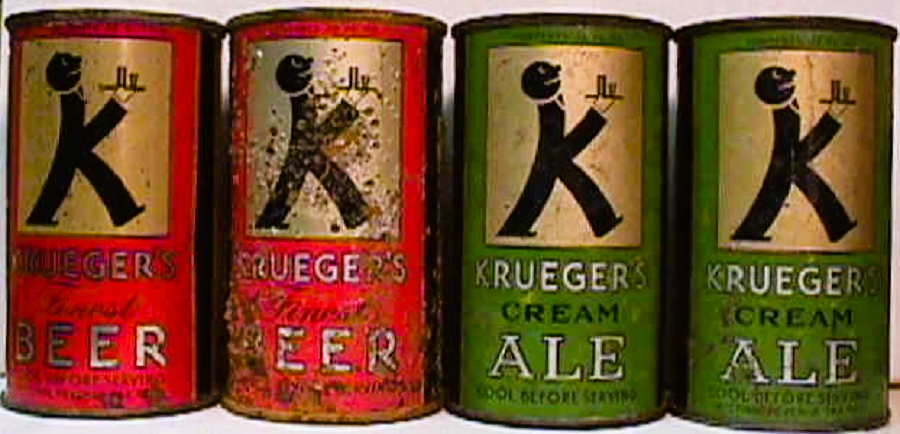
The journey to canned beer, however, wasn’t without challenges. American Can Co. began experimenting with beer cans as early as 1909, but the carbonation—up to 80 pounds per square inch—was too much for the cans to handle, causing them to explode. By 1933, just before the end of Prohibition, they perfected the technology with a “keg-lining” process, coating the interior of cans to withstand the pressure, similar to beer kegs.

Though Krueger had been brewing beer since the mid-1800s, the company faced hardships during Prohibition and labor strikes. Initially, its executives were skeptical of canned beer. But the American Can Co. sweetened the deal by offering to install the equipment at no cost—if canned beer flopped, Krueger wouldn’t owe them a penny.
In 1935, Krueger’s Cream Ale and Krueger’s Finest Beer became the first beers sold in cans, and the reception was phenomenal. Within three months, more than 80% of Krueger’s distributors were handling the new product, and the company began eating into the market share of the “big three” national brewers: Anheuser-Busch, Pabst, and Schlitz. By the end of 1935, over 200 million cans had been produced and sold.
Canned beer offered advantages that bottles couldn’t match. Unlike bottles, cans didn’t require a deposit, making them more consumer-friendly. They were easier to stack, more durable, and chilled faster.
During World War II, canned beer’s popularity skyrocketed. Brewers shipped millions of cans overseas to soldiers, cementing its place as a staple in American culture.
After the war, national brewing companies leveraged the efficiency and distribution power of canned beer to dominate the market, outpacing local breweries that couldn’t compete on cost or scale.
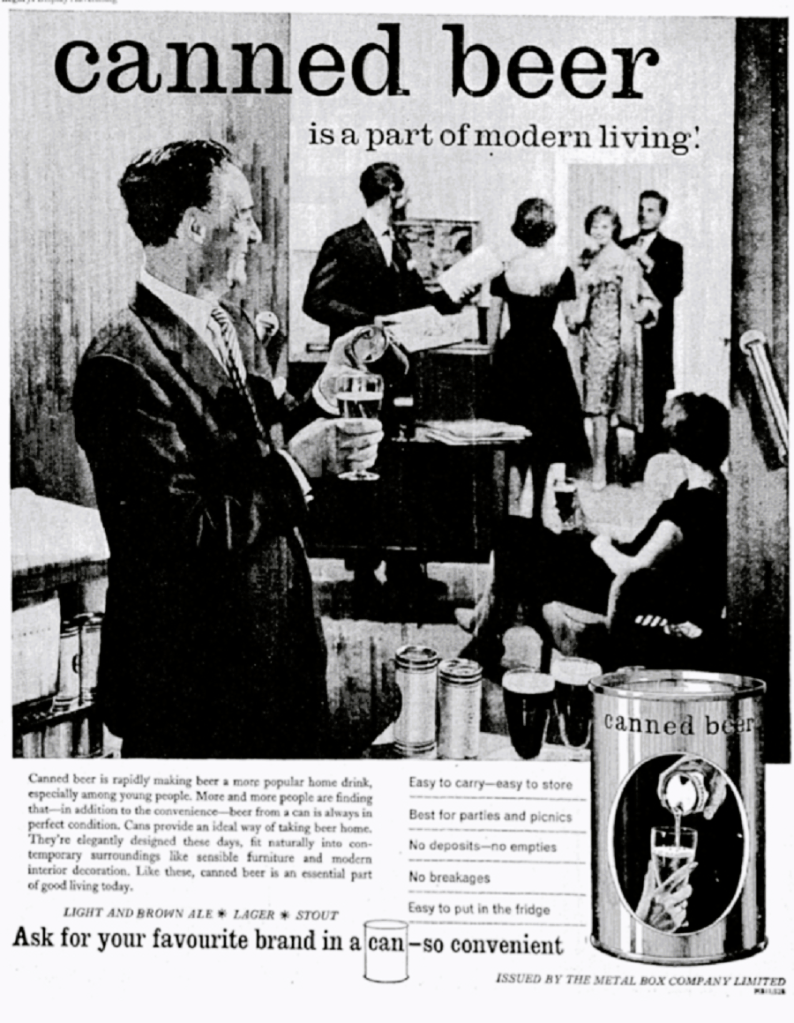
Canned beer isn’t just a convenience; it’s a piece of history that revolutionized the way we enjoy one of life’s simplest pleasures.
Sources
https://brookstonbeerbulletin.com/
https://bcca.com/page/beer-can-history
https://en.wikipedia.org/wiki/Gottfried_Krueger_Brewing_Company
Donations
Your readership is what makes my site a success, and I am truly passionate about providing you with valuable content. I have been doing this at no cost and will continue to do so. Your voluntary donation of $2 or more, if you are able, would be a significant contribution to the continuation of my work. However, I fully understand if you’re not in a position to do so. Your support, in any form, is greatly appreciated. Thank you. To donate, click on the credit/debit card icon of the card you will use. If you want to donate more than $2, just add a higher number in the box left from the PayPal link. Your generosity is greatly appreciated. Many thanks.
$2.00

 History of Sorts
Leave a comment