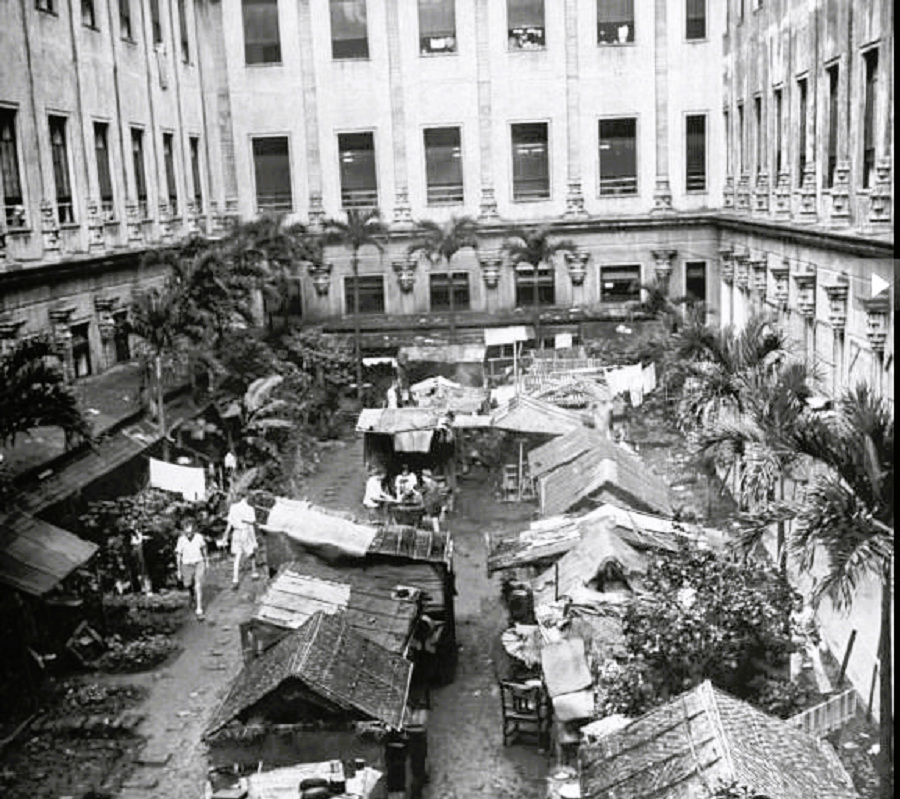
The Santo Tomas Internment Camp, located in Manila, Philippines, was one of the largest civilian internment camps established by the Japanese Imperial Army during World War II. It was used to imprison Allied civilians, mostly Americans, British, Australians, and other nationalities, who were residing in the Philippines when the Japanese invaded in 1941. The camp, housed in the University of Santo Tomas, became a symbol of endurance, suffering, and, ultimately, liberation.
Establishment and Conditions
The Japanese occupation of the Philippines began in December 1941, shortly after the attack on Pearl Harbor. By early 1942, thousands of foreign civilians were rounded up and confined in Santo Tomas, which was transformed into an internment camp. Over 4,000 internees, including women and children, were crammed into the university’s buildings, which were ill-equipped to handle such a large population.
Life in the camp was harsh. Food was scarce, medical supplies were limited, and sanitary conditions deteriorated as more internees were brought in. Rations provided by the Japanese were meager, and internees relied on food smuggled in by sympathetic Filipinos or cultivated in small garden plots. Disease spread rapidly due to overcrowding and malnutrition, and many internees succumbed to starvation or illness. The camp was governed by Japanese officials, with Kempeitai (military police) overseeing operations and punishing those who disobeyed the rules.
Struggles and Survival
Despite the hardships, internees displayed remarkable resilience. They formed committees to manage daily affairs, organized schools for children, and held religious services. Black market trade thrived, and internees found creative ways to supplement their diet. Women played a crucial role in maintaining morale, often caring for the sick and wounded. Cultural activities, music performances, and clandestine news-sharing networks helped keep hope alive.
One of the most difficult periods came in late 1944 when food supplies dwindled as American forces moved closer to liberating the Philippines. Many internees became severely emaciated, surviving on reduced rations and whatever food they could barter or find. The Japanese guards became increasingly brutal, fearing an imminent attack by the Allies.
Liberation by American Forces
On February 3, 1945, American troops led by General Douglas MacArthur launched the Battle of Manila and stormed the Santo Tomas Internment Camp. The operation was met with resistance from the Japanese guards, but after heavy fighting, the internees were freed. The liberation of Santo Tomas was a moment of immense relief and joy, marking the end of years of hardship.
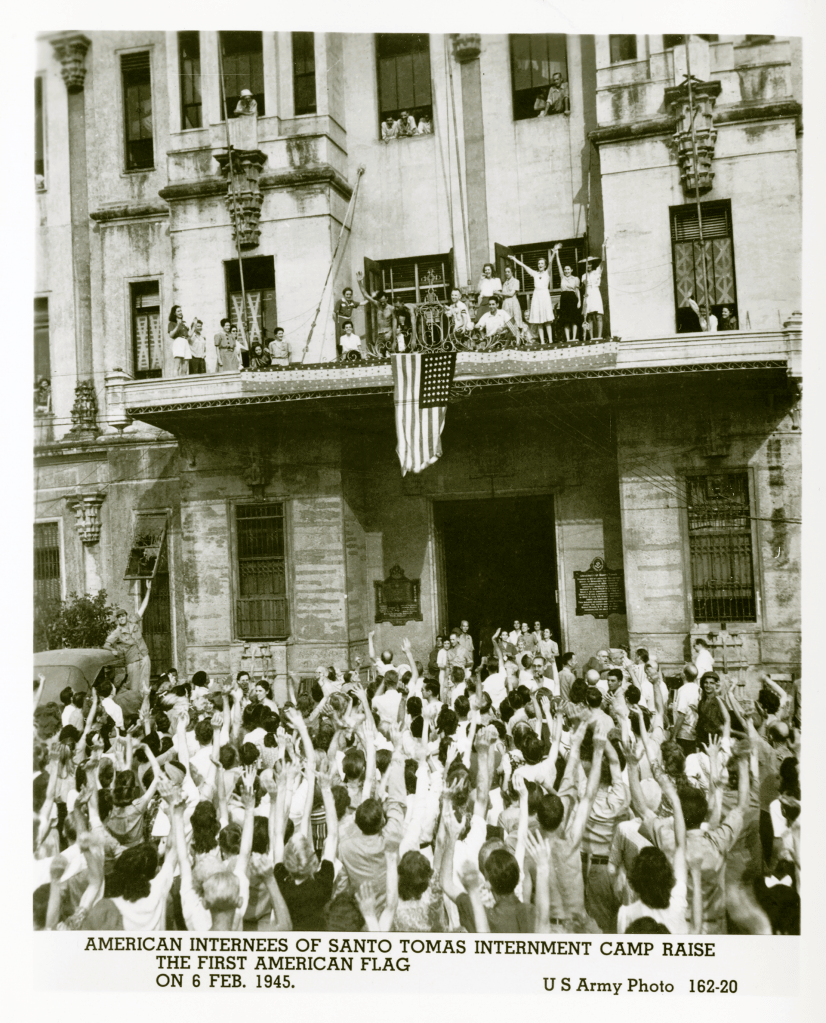
However, the suffering did not immediately end. Many internees required medical treatment due to extreme malnutrition and illnesses. Those who survived were repatriated to their home countries, though the trauma of internment remained with them for the rest of their lives.
The Santo Tomas Internment Camp stands as a testament to the resilience of civilians caught in the chaos of war. Today, the University of Santo Tomas remains a prestigious institution, but remnants of its dark history still linger. Survivors’ accounts, historical records, and memorials ensure that the sacrifices and struggles endured by the internees are not forgotten.
In conclusion, the story of Santo Tomas Internment Camp is an important chapter in World War II history, highlighting the human cost of war and the indomitable spirit of those who lived through it. Remembering this past serves as a reminder of the enduring strength of the human spirit in the face of adversity.
Eyewitness
Marie Adams was a Red Cross worker, approximately fifty years old, who was held there from May 1942 until the camp was liberated in February 1945. Throughout her confinement, she worked in the compound’s hospital, adapting to the increasing medical needs of the camp’s population, even as her own physical condition declined. Four months after the camp was liberated, she wrote a report describing the dire conditions in the camp and how she calmly calculated how to ensure the survival of the most significant number of the internees, as well as her own. Below are some of her experiences.
“Irritability is one of the first symptoms of starvation, and certainly, that symptom was marked among us. We were all cross, irritable, and edgy; we argued about things that were utterly insignificant. We were ready to claw each other’s eyes out—over nothing at all. We were hungry; we were starved. When I went to bed at night, I felt just on the verge of screaming. I ached to the ends of my fingers and toes, with the most horrible ache that I have ever experienced.”
“We were so thoroughly depleted that frequently I would sit on my bed and stare at the sink in the corner of the room, wondering whether it was worthwhile to make the effort to get up and go over to it to wash my hands or whether it wouldn’t be better to wait until lunch-time to do it, because it would save that much energy. . . .”
Sources
https://www.nationalww2museum.org/war/articles/child-prisoners-santo-tomas
https://www.archives.gov/exhibits/eyewitness/html.php?section=6
https://www.cnac.org/emilscott/santotomas01.htm
https://en.wikipedia.org/wiki/Santo_Tomas_Internment_Camp
Donation
Your readership is what makes my site a success, and I am truly passionate about providing you with valuable content. I have been doing this at no cost and will continue to do so. Your voluntary donation of $2 or more, if you are able, would be a significant contribution to the continuation of my work. However, I fully understand if you’re not in a position to do so. Your support, in any form, is greatly appreciated. Thank you. To donate, click on the credit/debit card icon of the card you will use. If you want to donate more than $2, just add a higher number in the box left from the PayPal link. Your generosity is greatly appreciated. Many thanks.
$2.00
 History of Sorts
Leave a comment