
The Holocaust, the systematic genocide perpetrated by Nazi Germany against six million Jews and millions of other victims, remains one of the darkest chapters in human history. While the gas chambers of Auschwitz and Treblinka have become symbols of this horrific event, the Nazis experimented with other methods of mass murder before establishing their infamous extermination camps. Among these early methods was the use of gas vans—mobile killing units that played a pivotal role in the escalation of the Nazi genocide.
The Genesis of Gas Vans
Gas vans were first introduced in late 1941 as part of the Nazi regime’s efforts to carry out the Final Solution, their plan to exterminate the Jewish population. They were developed as an extension of the T4 euthanasia program, which targeted people with disabilities and other individuals deemed “unfit” by the Nazis. The knowledge and technology from that program, which used carbon monoxide to kill victims in stationary gas chambers, were soon applied to larger-scale executions.
Arthur Nebe, an SS officer, played a crucial role in developing this method of killing. As part of Einsatzgruppen (mobile killing squads), Nebe and his subordinates sought more efficient means of mass execution beyond shootings, which were deemed psychologically burdensome for Nazi executioners. The result was the gas van—a mobile execution chamber that allowed the systematic murder of victims through carbon monoxide poisoning.
Design and Function
Gas vans were modified commercial trucks, typically models from German manufacturers such as Opel or Saurer. They were equipped with airtight, hermetically sealed cargo compartments where victims were placed. The exhaust pipes of these vehicles were redirected into the sealed compartments, filling them with lethal carbon monoxide gas.
The method was chilling in its simplicity. Victims—primarily Jews, but also Romani people, political prisoners, and others—were rounded up under the pretense of being relocated or sent to labor camps. They were forced into the gas vans, the doors were locked, and the engine was started. Within minutes, the confined space filled with deadly fumes, suffocating the victims. The vehicles then drove to mass graves, where the corpses were dumped and buried.
Einsatzgruppen and the Use of Gas Vans
The Einsatzgruppen were Nazi paramilitary death squads that operated in Eastern Europe following the German invasion of the Soviet Union in June 1941. These units were responsible for mass shootings and other executions. However, the use of firearms for mass executions proved inefficient and led to significant psychological strain among the killers.
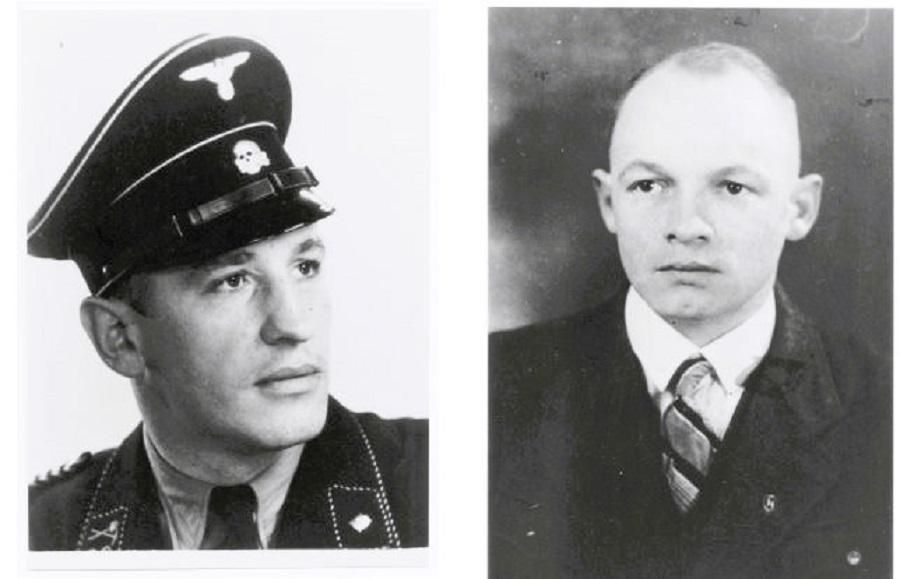
SS–Hauptscharführerr Harry Rübe, alias Johann Rieger.
SS-Unterscharführer Johann Hassler.
To streamline mass murder, Einsatzgruppen units, particularly Einsatzgruppe B under Arthur Nebe, began deploying gas vans in Belarus and other occupied territories. The vans were used extensively in Chelmno, the first extermination camp, where thousands of Jews were murdered before the construction of fixed gas chambers.
The Transition to Death Camps
Although gas vans were a step toward industrialized killing, they were ultimately limited in scale. Each van could murder only a few dozen people at a time, and the process was relatively slow compared to later methods. The logistical inefficiencies of gas vans contributed to the Nazis’ decision to construct extermination camps with permanent gas chambers capable of killing thousands at once.
The gassing mechanism frequently malfunctioned, leading to the frequent use of gas vans to transport prisoners to execution sites, where they were shot by firing squads. Between December 1941 and June 1942, more than 97,000 victims were killed using mobile gas vans.
Chelmno was among the most notorious sites where gas vans were used extensively before the transition to more systematic extermination techniques in places like Auschwitz, Sobibor, and Treblinka.
Legacy and Documentation
The gas vans left behind a grim legacy as precursors to the Holocaust’s larger-scale killing methods. While they were used for only a limited period, they played a critical role in the Nazis’ evolving techniques of mass murder. The evidence of their use was documented during the Nuremberg Trials and in testimonies of surviving witnesses. Nazi officials such as Walter Rauff, one of the key figures in their development, later faced charges related to their role in the atrocities.
The gas vans of the Holocaust were an early and chilling example of the Nazis’ ruthless efficiency in murdering millions. These mobile killing units highlight the step-by-step evolution of genocide—from firing squads to mobile gas chambers, and finally, to the large-scale extermination camps. By remembering the gas vans and the lives they extinguished, we honor the victims and reinforce the importance of never allowing such atrocities to occur again.
Some of the companies involved
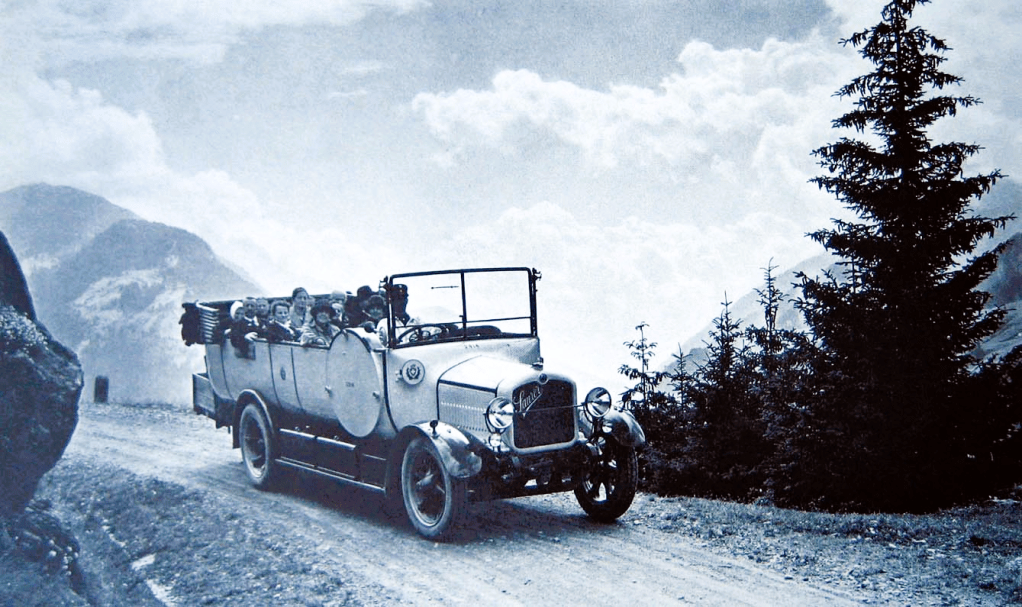
Saurer gas vans were mobile killing units used by Nazi Germany as part of their genocidal operations. These vans were modified Saurer trucks, originally produced by the Swiss company Saurer, and were equipped to murder victims using carbon monoxide poisoning from engine exhaust. The company was based in Arbon, Switzerland, the firm was active between 1903 and 1982. Their vehicles were widely used across mainland Europe.
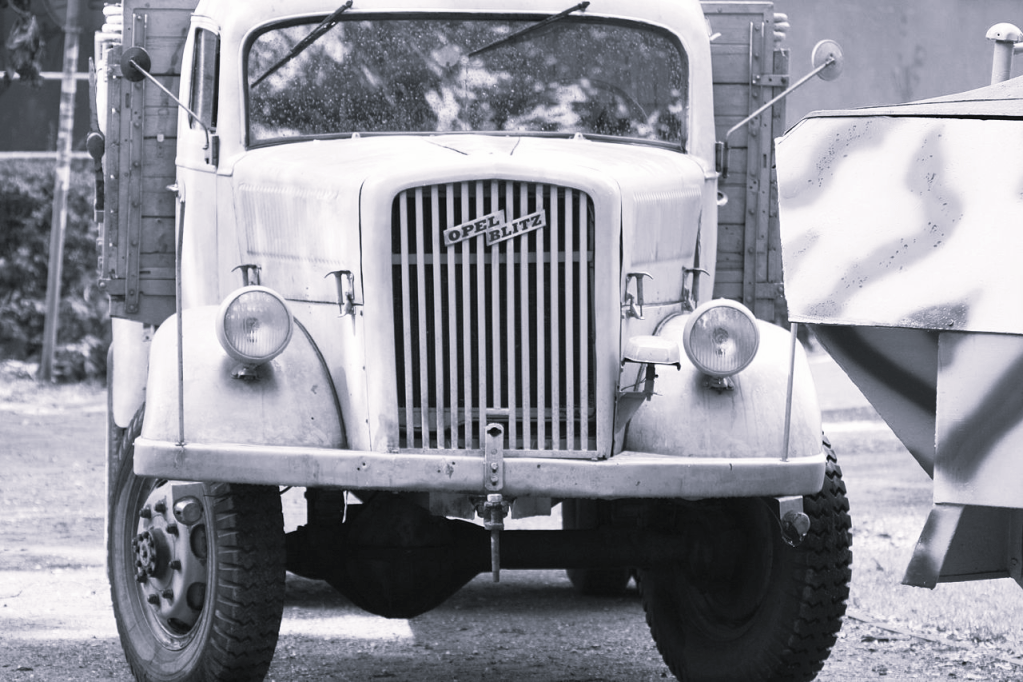
Opel gas vans were among the mobile execution vehicles
Design & Operation
- Base Vehicle: Opel Blitz trucks were among the vehicles modified for this purpose, along with Saurer trucks.
- Modification: The cargo compartment was hermetically sealed and lined with metal to prevent leaks.
- Gassing Mechanism: A hose diverted exhaust fumes (rich in carbon monoxide) into the compartment.
- Capacity: Vans typically held 30–50 victims per execution.
- Execution Process: Victims were forced inside, the doors were sealed, and the engine was started. Death occurred within 10–15 minutes due to carbon monoxide poisoning.
- Disposal: Once victims were dead, the van was driven to mass graves or incineration sites.
In 2022, Opel/Vauxhall generated a total revenue of US$11.8 billion worldwide, contributing to the global automotive market’s total revenue of US$1.7 trillion. The SUV segment, Opel/Vauxhall’s largest in passenger cars, accounted for 43% of the company’s revenue that year.
Additionally, several football clubs have been sponsored by Opel at various points in time, one of them Israeli team Hapoel Haifa

Magirus Deutz, which once manufactured gas vans, now operates under the name Deutz. Despite ongoing economic headwinds and a decline in demand, the company reported profit growth for the first three quarters of 2024.
Unit sales saw a significant drop, with 107,350 units sold from January to September 2024—a 22.0% decrease from the 137,559 units sold in the same period the previous year. The decline affected all regions, with the EMEA region experiencing the sharpest downturn.
Revenue fell 13.4% to €1,305.9 million, primarily due to lower unit sales and a three-week production suspension at its Cologne, Germany, headquarters in August. However, Deutz mitigated the impact through market-oriented pricing, active portfolio management, and a 5.2% increase in service revenue to €379.4 million, resulting in a less severe revenue decline compared to unit sales.
In the 1979/80 season, Magirus Deutz sponsored Bayern Munich football club.

Let that sink in—companies once complicit in the deaths of thousands are still operating today, generating massive profits
sources
https://www.oldfootballshirts.com/en/shirt-sponsors/magirus-deutz-s1736/
https://www.oldfootballshirts.com/en/shirt-sponsors/opel-s918/
https://www.jhi.pl/en/articles/june-26-1942-bbc-informs-about-the-extermination-of-polish-jews,5812
https://pinkas.jewishmuseum.cz/cesty-bez-navratu/belorusko/pojizdne-plynove-komory
https://www.jewishvirtuallibrary.org/gas-vans
https://encyclopedia.ushmm.org/content/en/article/gassing-operations
Please support us so we can continue our important work.
Donation
Your readership is what makes my site a success, and I am truly passionate about providing you with valuable content. I have been doing this at no cost and will continue to do so. Your voluntary donation of $2 or more, if you are able, would be a significant contribution to the continuation of my work. However, I fully understand if you’re not in a position to do so. Your support, in any form, is greatly appreciated. Thank you. To donate, click on the credit/debit card icon of the card you will use. If you want to donate more than $2, just add a higher number in the box left from the PayPal link. Your generosity is greatly appreciated. Many thanks.
$2.00

 History of Sorts
Leave a comment