Introduction

During the dark days of Nazi Germany, dissent was met with ruthless suppression. Among those who dared to resist was a small but determined student group known as the Weiße Rose (White Rose). Led by siblings Hans and Sophie Scholl, along with Christoph Probst and other members, the group sought to awaken the German conscience through nonviolent resistance. Their arrest, trial, and execution in February 1943 remain a harrowing example of courage in the face of tyranny.
The White Rose: A Movement of Conscience
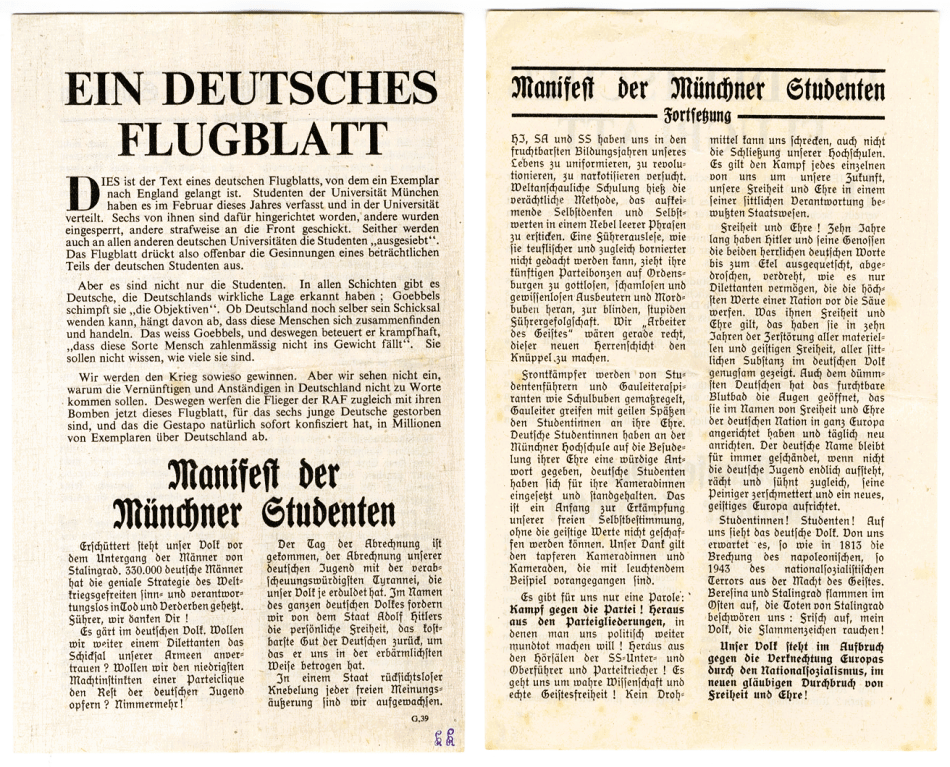
The White Rose was formed in 1942 by students at the University of Munich. Inspired by moral convictions and the horrors they witnessed—including the atrocities of the Eastern Front and the mass murder of Jews—the members of the White Rose believed it was their duty to oppose Hitler’s regime. They printed and distributed leaflets calling for passive resistance and denouncing Nazi crimes. Their powerful words, appealing to intellectuals and ordinary citizens alike, urged Germans to rise against oppression.
The group wrote, printed, and initially distributed their pamphlets throughout the greater Munich region.
Later, secret couriers transported copies to other cities, primarily in southern Germany. In total, the White Rose authored six leaflets, which were reproduced and disseminated in approximately 15,000 copies. These pamphlets condemned the Nazi regime’s crimes and oppression, calling for resistance. In their second leaflet, they explicitly denounced the persecution and mass murder of Jews.
The Arrest: A Fateful Act of Defiance
On February 18, 1943, Hans and Sophie Scholl were caught distributing leaflets at the University of Munich. A janitor, Jakob Schmid, witnessed their actions and reported them to the Gestapo. The siblings were swiftly arrested, and upon searching Hans Scholl’s belongings, the authorities found incriminating material linking Christoph Probst to the movement. He was arrested soon after.

At the time of their arrest, members of the White Rose were on the verge of establishing connections with other German resistance groups, such as the Kreisau Circle and the Schulze-Boysen/Harnack group of the Red Orchestra.
Interrogation by the Gestapo was brutal. Despite their torment, Hans, Sophie, and Christoph refused to betray their fellow members. Sophie, in particular, displayed remarkable composure, defiantly standing by her actions, arguing that the German people deserved to know the truth.The primary Gestapo interrogator, Robert Mohr, initially believed Sophie was innocent
The Trial: A Mockery of Justice
On February 22, 1943, the three students were brought before the notorious Volksgerichtshof (People’s Court), presided over by Judge Roland Freisler, a fanatical Nazi known for his vicious tirades. The trial was a mere formality, meant to deliver a swift and predetermined verdict. The defendants were charged with treason, undermining the war effort, and defaming the Führer.
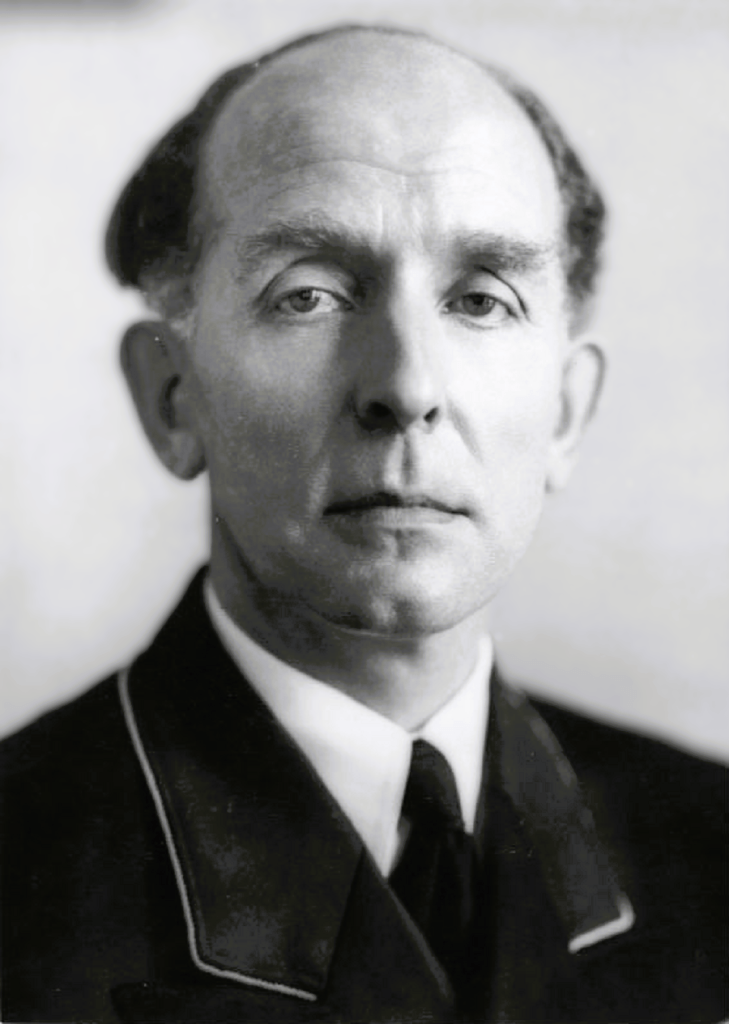
Freisler’s courtroom was a stage for propaganda rather than justice. He berated the defendants, dismissing their arguments with scorn. However, Sophie Scholl did not cower before his fury. She boldly defended their cause, stating:
“Somebody, after all, had to make a start. What we wrote and said is also believed by many others. They just don’t dare to express themselves as we did.”
Despite their eloquence and moral conviction, the verdict was inevitable. The three were sentenced to death.
Execution: The Ultimate Sacrifice
Only a few hours after the trial, Hans, Sophie, and Christoph were taken to Stadelheim Prison in Munich. Their execution was carried out swiftly by guillotine, a method meant to send a clear message of deterrence.
Christoph Probst, a young father of three, was executed first. He reportedly converted to Catholicism in his final hours and accepted his fate with dignity. Sophie Scholl followed, walking to her death with unwavering resolve. Her last words were:
“Die Sonne scheint noch.” (“The sun still shines.”)
Hans Scholl was executed last. As the blade fell, his final cry rang through the halls:
“Es lebe die Freiheit!” (“Long live freedom!”)
Their deaths sent shockwaves through Munich and beyond, turning them into symbols of resistance.

The Aftermath and Legacy
Though the White Rose was crushed, their message lived on. Their final leaflet was smuggled out of Germany and later airdropped by the Allies across the country. Their bravery inspired future resistance movements and became a beacon of hope for those who opposed totalitarianism.
Today, Hans, Sophie, and Christoph are honored in Germany as national heroes. Schools, streets, and institutions bear their names, and their legacy continues to be a lesson in the power of moral courage. Their story is a testament to the idea that even in the darkest times, individuals can make a difference.
The execution of Christoph Probst, Hans Scholl, and Sophie Scholl was meant to silence dissent, but it had the opposite effect. Their bravery exposed the cruelty of the Nazi regime and inspired generations to stand against oppression. As history remembers them, their message remains relevant: standing up for truth and justice is never in vain.
sources
https://en.wikipedia.org/wiki/White_Rose
https://encyclopedia.ushmm.org/content/en/article/white-rose
https://www.britannica.com/topic/White-Rose
Please support us so we can continue our important work.
Donation
Your readership is what makes my site a success, and I am truly passionate about providing you with valuable content. I have been doing this at no cost and will continue to do so. Your voluntary donation of $2 or more, if you are able, would be a significant contribution to the continuation of my work. However, I fully understand if you’re not in a position to do so. Your support, in any form, is greatly appreciated. Thank you. To donate, click on the credit/debit card icon of the card you will use. If you want to donate more than $2, just add a higher number in the box left from the PayPal link. Your generosity is greatly appreciated. Many thanks.
$2.00

 History of Sorts
Leave a comment