
It has become commonplace to blame social media for the rapid spread of misinformation, especially through memes, viral posts, and other digital content. However, the use of propaganda to manipulate public perception is not a new phenomenon. Over a century ago, similar tactics were employed through postcards, cartoons, and newspaper illustrations. In many ways, a meme today serves the same function as a satirical or propaganda postcard of the past—shaping opinions, reinforcing prejudices, and swaying political discourse on a large scale.
One of the most infamous examples of such propaganda in history is the “stab-in-the-back” myth that emerged in Germany after World War I. This conspiracy theory falsely claimed that Germany had not been defeated on the battlefield but had instead been betrayed by internal enemies—specifically, communists, socialists, and, most prominently, Jewish citizens. While Adolf Hitler later exploited this myth to fuel the Nazi agenda, its origins predate his rise to power.
The Origins of the “Stab-in-the-Back” Myth

Even before the Nazis capitalized on this narrative, figures like Friedrich Ebert, Germany’s first democratically elected president, and other political leaders had already pointed fingers at leftist movements and Jewish citizens for Germany’s defeat. This claim ignored the reality that German Jews had served with great loyalty and distinction during the war. In fact, Jewish soldiers fought in numbers disproportionate to their share of the population, a fact strongly emphasized by organizations such as the “Reich Federation of Jewish Front Soldiers,” which sought to counter anti-Semitic accusations.
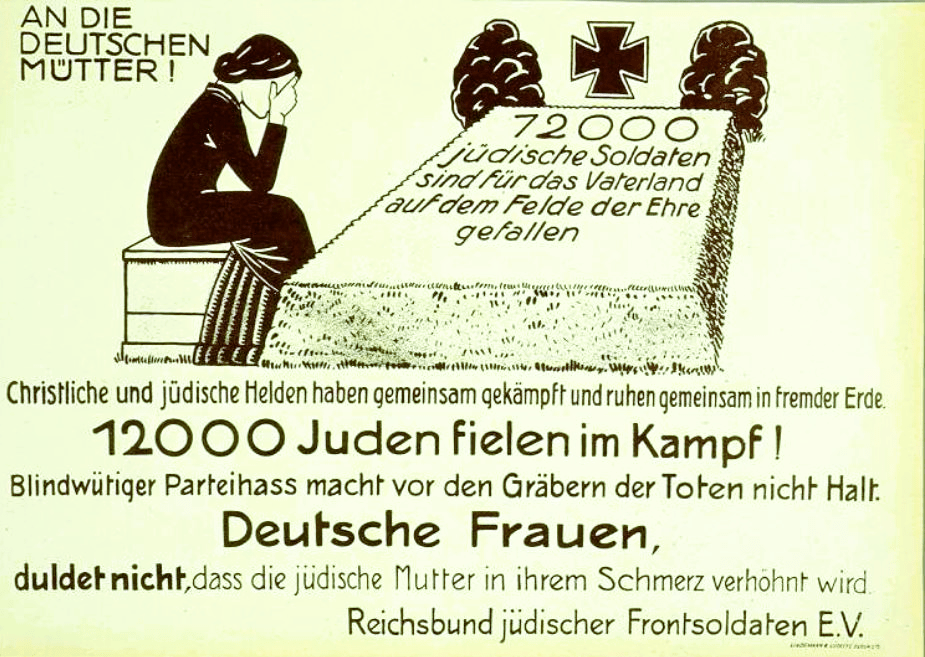
Nevertheless, old prejudices were rekindled and deliberately amplified through propaganda. The “stab-in-the-back” myth coexisted with other baseless conspiracies, including:
- The false claim that Jewish financiers had orchestrated the war to bring Europe to economic ruin and tighten their alleged control over global affairs.
- The accusation that Jewish individuals had prolonged the war to further the Bolshevik Revolution and spread communist ideology across Europe.
- The belief that Jews had exploited wartime hardships for their own financial gain while ordinary Germans suffered.
These fabrications were widely disseminated through propaganda postcards and cartoons, just as misleading or inflammatory content spreads rapidly on digital platforms today.
The Role of Military Leaders in Spreading the Myth
German military leaders played a significant role in promoting this false idea. Among them were General Erich Ludendorff and Field Marshal Paul von Hindenburg, both of whom sought to deflect blame for Germany’s defeat.
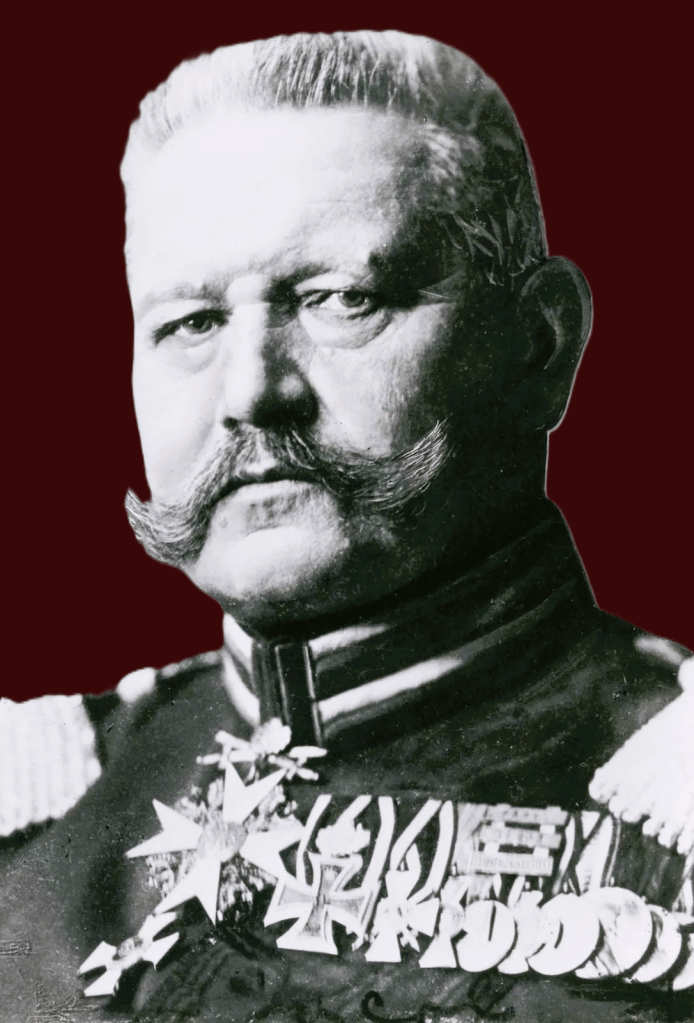
On November 18, 1919, Hindenburg testified before a parliamentary committee investigating the causes of Germany’s collapse in World War I. During his testimony, he claimed that revolutionary forces at home had sabotaged the military effort, leading to Germany’s defeat. This assertion ignored the reality that Germany had been losing the war on multiple fronts due to military failures and dwindling resources. However, Hindenburg’s words gave credibility to the “stab-in-the-back” myth, reinforcing the idea that Germany had been betrayed rather than defeated in fair combat.
Many Germans, already humiliated by the Treaty of Versailles and disillusioned with the new Weimar Republic, accepted this narrative. It contributed to widespread resentment toward the democratic government, which was seen as weak and illegitimate. Right-wing groups, including the Nazi Party, capitalized on these nationalist feelings. They used the myth to attack Weimar politicians, socialists, communists, and, most prominently, Jewish citizens—blaming them for allegedly undermining the German military and causing the nation’s downfall.
How the Myth Took Root
The term “stab-in-the-back” itself is often attributed to General Erich Ludendorff. In the autumn of 1919, during a dinner with General Sir Neill Malcolm, head of the British Military Mission in Berlin, Ludendorff was asked why he believed Germany had lost the war. In response, he listed various excuses, including the idea that the home front had betrayed the army. Malcolm then asked, “Do you mean, General, that you were stabbed in the back?” Ludendorff seized upon the phrase eagerly, repeating, “Stabbed in the back? Yes, that’s it exactly—we were stabbed in the back!”
From that moment, the phrase gained traction among conservatives, nationalists, and former military leaders who sought to deflect blame for the war’s outcome. They painted Weimar politicians, socialists, communists, and particularly Jewish citizens as the culprits who had supposedly undermined Germany from within.
The Path to Nazi Ideology
By the time the Nazis rose to power, the groundwork for this dangerous myth had already been laid. The Nazis amplified and institutionalized it, using it as a core justification for their policies of persecution, militarization, and eventual genocide. The propaganda of the early Weimar years—just like the memes and social media misinformation of today—had conditioned a significant portion of the population to accept lies as truth, with devastating consequences.
This historical parallel serves as a reminder that misinformation, whether spread through postcards a century ago or through digital platforms today, remains a potent force in shaping public perception. The methods have evolved, but the dangers remain the same.

sources
https://www.annefrank.org/en/timeline/193/the-stab-in-the-back-legend/
https://en.wikipedia.org/wiki/Friedrich_Ebert
https://encyclopedia.1914-1918-online.net/article/stab-in-the-back-myth
https://en.wikipedia.org/wiki/Stab-in-the-back_myth
Please support us so we can continue our important work.
Donation
Your readership is what makes my site a success, and I am truly passionate about providing you with valuable content. I have been doing this at no cost and will continue to do so. Your voluntary donation of $2 or more, if you are able, would be a significant contribution to the continuation of my work. However, I fully understand if you’re not in a position to do so. Your support, in any form, is greatly appreciated. Thank you. To donate, click on the credit/debit card icon of the card you will use. If you want to donate more than $2, just add a higher number in the box left from the PayPal link. Your generosity is greatly appreciated. Many thanks.
$2.00

 History of Sorts
Leave a comment