
On March 24, 1941, the first train transport of Dutch artworks took place to the newly established art bunker in the Sint-Pietersberg. The Dutch stored approximately 800 art treasures in the Limburg art bunker, including works by Vermeer, Paulus Potter, and Rembrandt’s “The Night Watch.”
The Dutch kept the artworks during the war in the vault in the Sint-Pietersberg, a storage facility in the Northern Corridor System of the Sint-Pietersberg in the Dutch province of Limburg.

A day after the Netherlands announced pre-mobilization on August 24, 1939, the Rijksmuseum in Amsterdam was closed as a precaution. The government devised measures to protect the national art collection. The Dutch arranged to build special storage facilities in the dune area for Dutch art. Until the bunkers were completed, the artworks were temporarily housed in churches, schools, castles, and town halls in North Holland. However, at the end of 1941, the Germans ordered the dune area to be cleared to construct the Atlantic Wall.
After consulting with Otto Schumann, the commander of the Ordnungspolizei in the Netherlands, the Dutch decided to build a new above-ground art bunker in the state forests near Paasloo—the Paasloo art bunker. Additionally, the Rijksgebouwendienst agreed to carve out a vault of 360 m³ in the Sint-Pietersberg near Maastricht, 35 meters underground. Between December 15, 1941, and March 1, 1942, the Dutch workers did the excavation work. The first transport was on March 24 and consisted of a long series of train wagons, each carrying a truck loaded with paintings. In total, 800 valuable artworks were kept safe in the Sint-Pietersberg, including Johannes Vermeer”s “The Little Street” and Paulus Potter”s “The Bull.” Among these treasures was Rembrandt’s “The Night Watch.” Due to the size of this painting, the canvas had to be stored rolled up inside a cylinder.
The bunker was accessible through the existing marl mines (marl was a soft, crumbly mixture of clay, sand, and limestone, often with shell fragments, and used as a soil conditioner or in cement manufacture) and along the Van Schaïk Tunnel. Its official name was Rijksbewaarplaats nr. 9, but it was better known as “the vault.” The walls were only 50 cm thick, but the 33-meter-thick marl layer above provided sufficient protection.
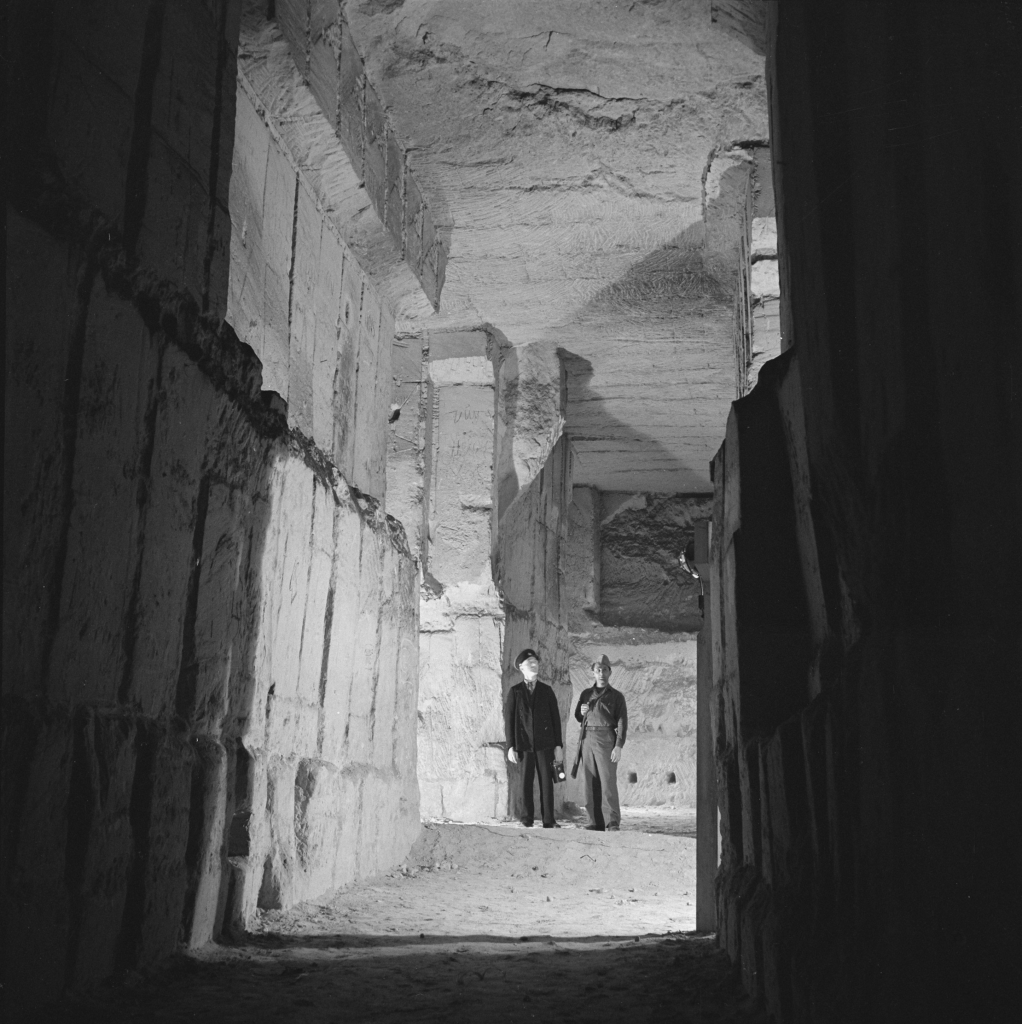
Rembrandt’s “The Night Watch” remained stored in the vault in a rolled-up state for three years. The canvas was placed on a unique frame and rotated slightly each day to prevent it from sticking together. Additionally, the artworks were guarded 24 hours a day by police officers and museum staff.
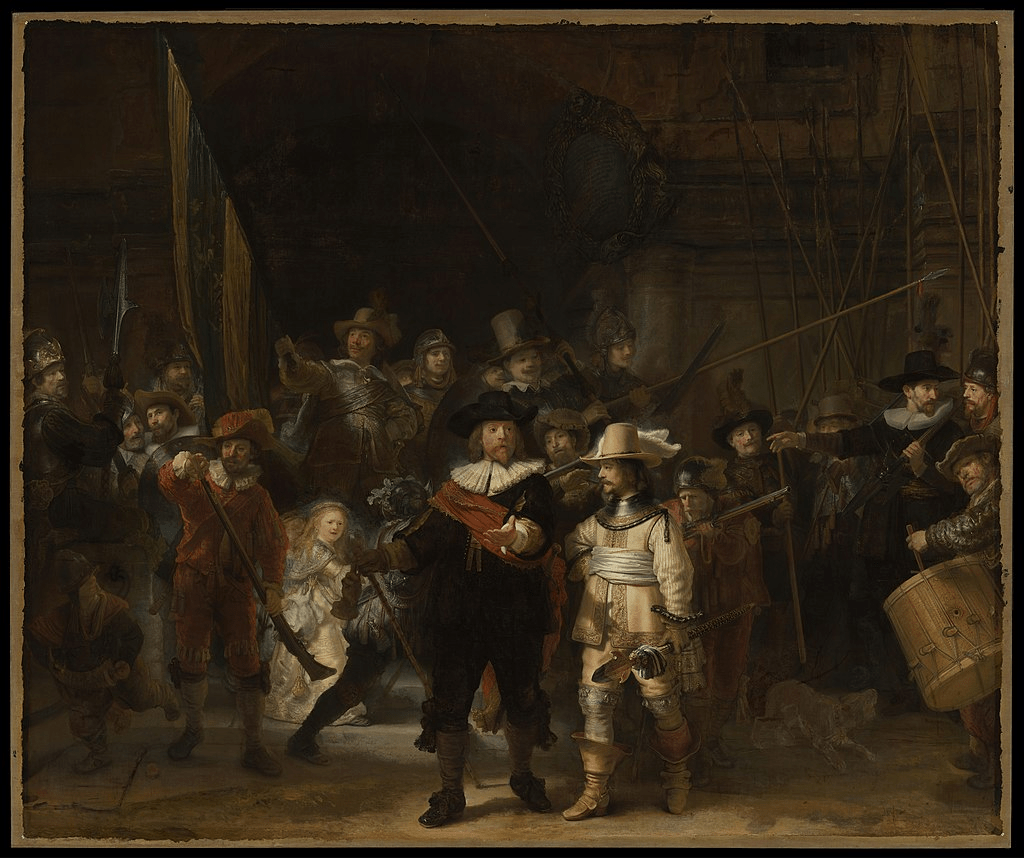
The vault contained 750 paintings in total, including 43 by Rembrandt, 24 works by Jan Steen, and 14 paintings by Frans Hals.
After 1945
The first artworks were returned to the Rijksmuseum on June 25, 1945. During the Cold War, the vault remained available as a national repository for art treasures. It was fully restored between 1998 and 2005 and has been open to the public ever since.
Sources
https://kunstvensters.com/2017/05/15/waar-bleef-de-nachtwacht-tijdens-de-tweede-wereldoorlog/
https://anderetijden.nl/artikel/6696/De-Nachtwacht
https://www.liberationroute.com/nl/pois/939/art-treasures-in-the-caves
Donation
Your readership is what makes my site a success, and I am truly passionate about providing you with valuable content. I have been doing this at no cost and will continue to do so. Your voluntary donation of $2 or more, if you are able, would be a significant contribution to the continuation of my work. However, I fully understand if you’re not in a position to do so. Your support, in any form, is greatly appreciated. Thank you. To donate, click on the credit/debit card icon of the card you will use. If you want to donate more than $2, just add a higher number in the box left from the PayPal link. Your generosity is greatly appreciated. Many thanks.
$2.00
 History of Sorts
Leave a comment