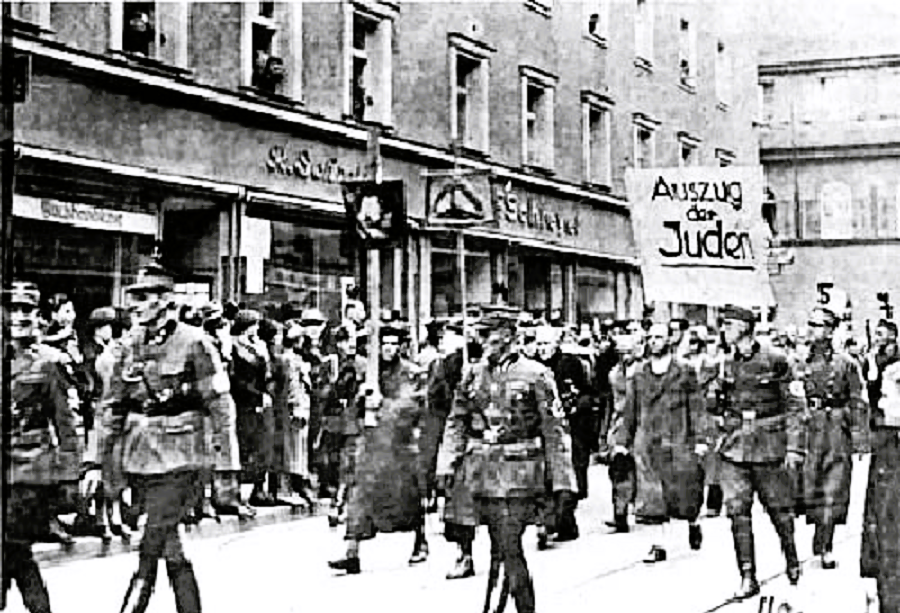
The Law Concerning Jewish Tenants (“Gesetz über die Mietverhältnisse mit Juden”) of 30 April 1939 was a significant piece of Nazi legislation that furthered the regime’s systematic persecution of Jewish citizens in Germany. This law was part of a broader campaign to isolate, disenfranchise, and ultimately remove Jews from German society. By targeting Jewish housing rights, the Nazi government aimed to disrupt Jewish communities, strip them of economic stability, and prepare them for the forced deportations and extermination that would follow in the coming years.
Context and Background
By 1939, Nazi Germany had already enacted numerous laws aimed at segregating and marginalizing Jews. The Nuremberg Laws of 1935 stripped Jews of their citizenship and forbade marriages between Jews and non-Jews. Other regulations barred Jews from various professions, public spaces, and schools. The Law Concerning Jewish Tenants was another step in this trajectory, aimed at pushing Jews out of their homes and consolidating their exclusion from German society.
Provisions of the Law
The Law Concerning Jewish Tenants significantly curtailed the rights of Jewish renters. Under this law:
- Eviction Without Legal Recourse: Landlords were granted the legal right to evict Jewish tenants with little to no justification. While ordinary tenants in Germany enjoyed strong legal protections against eviction, Jewish tenants were now vulnerable to forced removal without the usual legal safeguards.
- State Control Over Jewish Housing: The government could reassign Jewish tenants to designated “Jewish houses” (Judenhäuser), often overcrowded and in poor condition. These measures facilitated the segregation of Jews into specific areas, further isolating them from the rest of the population.
- Non-Jewish Housing Prioritization: Housing authorities were instructed to prioritize non-Jewish tenants, meaning that Jewish families were forced to move out of desirable or strategically important housing locations.
- Preparation for Deportation: The law also served as a prelude to the later mass deportations. By concentrating Jews in specific housing units, the Nazi regime found it easier to later round up and deport Jewish individuals to ghettos and concentration camps.
Impact on Jewish Communities
The law had immediate and devastating effects on Jewish life in Germany. Families that had lived in their homes for generations were suddenly rendered homeless or forced into substandard housing conditions. The psychological and social impact was severe, as Jews lost their last semblance of security in a rapidly deteriorating political landscape.
Beyond the immediate effects, the law contributed to the Nazis’ larger genocidal plan. By uprooting Jewish communities, the regime made it easier to later implement forced deportations to concentration camps, where millions of Jews were murdered during the Holocaust.
Broader Implications and Legacy
The Law Concerning Jewish Tenants of 30 April 1939 was one of many laws that exemplified the Nazis’ methodical approach to the persecution and eventual extermination of European Jewry. It demonstrated how legal frameworks could be weaponized to strip away rights, making state-sponsored violence and genocide easier to carry out.
After World War II, the horrors of the Holocaust led to new international human rights standards, including the Universal Declaration of Human Rights (1948), which affirmed the right to housing and protection from discrimination. The legacy of laws like the one passed in 1939 serves as a sobering reminder of the dangers of state-sanctioned discrimination and the importance of vigilance in protecting human rights.
The Law Concerning Jewish Tenants of 30 April 1939 was a crucial part of Nazi Germany’s anti-Jewish policies, designed to uproot and segregate Jewish citizens in preparation for their eventual deportation and extermination. By legally enabling landlords to evict Jewish tenants and forcing them into segregated housing, the law deepened Jewish suffering and accelerated the Nazis’ broader goal of eliminating Jews from German society. Its legacy underscores the importance of legal protections for minority groups and the need for ongoing efforts to prevent discrimination and persecution.
Below is the translation of the law.
The Reich Government has Government has enacted the following law which is hereby promulgated:
Article 1 Abatement of the Tenancy Protection Provisions
A Jew cannot invoke the protection of the tenancy laws where the landlord in giving notice to vacate the premises can furnish him with a certificate from the communal authorities that his shelter is assured for the time subsequent to the expiration of the tenancy. This does not apply where the landlord is also a Jew.
Article 2 Premature Dissolution of Lease
A lease may be dissolved, where only one of the parties to it is a Jew, by the other party at any time within the legal term of giving notice, notwithstanding that the lease is signed for a specified time, or that the stipulated time of giving notice is longer than that fixed by law. The landlord, however, may not give notice for vacating the premises earlier than the term agreed upon, where he does not furnish certificate from the communal authorities that the shelter of the tenant has been assured elsewhere subsequent to the vacating of the premises.
Article 3 Sub-Leases
Sub-leases may be concluded only between Jews and Jews. Permission to sublet is not necessary where the house owner is also a Jew.
Article 4 Billetting
- Where the communal authority so requires, a Jew shall be required to receive Jews as tenants or as sub-tenants in premises which he occupies as owner or on the basis of a tenancy, or has rented from another Jew. Where he refuses to make an appropriate agreement with the new tenant, the communal authority may fix the terms of such an agreement with binding force on both parties. The amount of the rental and the compensation to the owner for the sub-lease shall be determined by the communal authority, and where it is not the controlling rent authority, in concurrence with the competent rent control authority.
- The commune is entitled to receive fees for establishing agreements and sub-leases.
- A tenancy, or sub-lease entered into under (1) may be dissolved by the owner or the sub-tenant only with the consent of the communal authority.
Article 5 New Tenancies
Jews may rent to others new or vacant premises only upon the consent of the communal authority. The provisions of Article 4 shall apply to such premises respectively.
Article 6 Application to Cases of Limited Ownership
Where the application of Articles 1-5 depends on the premise that the lessor is a Jew, the owner of the parcel of land, or the person entitled to its use shall be considered the lessor, notwithstanding he cannot sign a lease, or has not signed the lease because of limitations upon his power over such property.
Article 7 Mixed Marriages
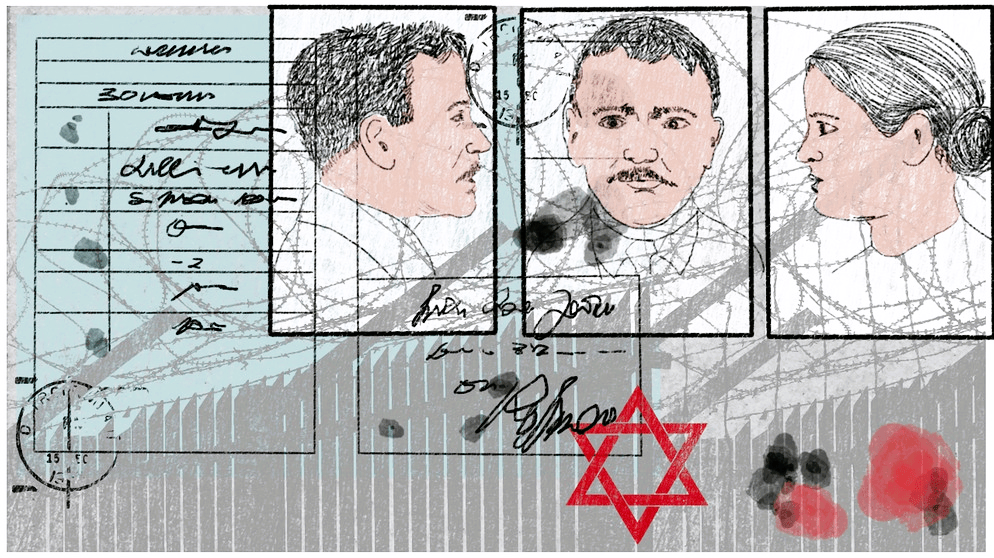
Where the application of this law depends on the premise that the lessor or the lessee is a Jew, the following shall apply in cases of a mixed marriage of a lessee or a lessor:
- Where the wife is a Jew, and where there are offsprings from the marriage, even where the marriage is no longer valid, the provisions of the law do not apply.
- Where the husband is a Jew and there are no offspring, the provisions shall apply, no matter where the wife or the husband is the tenant or the lessor.
- This does not apply to offsprings who are considered as Jews.
Article 8 Right of Disposal [Verfuegungsrecht]
- Where the right of disposal of a parcel of land (property or right to use) [Nutzungsrecht] is transferred by a Jew to a non-Jew, after the effective date of this law, the provisions of this law shall apply as before the transfer, though a giving of notice to vacate before the time fixed is not permissible. This applies also to further transfers of the right of disposal.
- The provision of (1) shall not apply to premises which the beneficial owner shall desire to occupy himself, or to premises which shall not be claimed for use of Jewish tenants by the communal authority. A certificate from the communal authority is sufficient proof that claim to these premises has been relinquished.
Article 9 Term of Vacating Premises
- Where a Jew is forced to vacate premises under the provisions of this law, an extension of the time limit for vacating may be granted to him only where he can furnish a certificate from the communal authorities that other shelter cannot be found for him, owing to obstacles, or where the immediate vacating of the premises cannot be undertaken without serious danger to the health of one of the persons affected. The term fixed may be extended in accordance with the same premises stated above.
- The provision of (1) shall respectively apply insofar as the person forced to vacate has not terminated the lease, where the obligation to vacate has not been pronounced in a judgment, or where the premises for the granting of a time extension do not occur until after the judgment has been pronounced. The local court having jurisdiction over matters of vacating shall render a decision on the extension of time on the application of the person required to vacate. Where a time extension is granted and no judgment to vacate has been rendered so far, the decision shall contain also the statement that after the expiration of such extension the premises shall be vacated; this decision shall be the equivalent of an executable order of dispossession.
- An immediate appeal against a decision refusing to grant an extension of time is permissible, even in such cases where only a decision against time extension is being protested by the tenant.
- Until the premises are vacated, both parties to the renting agreement shall be held to observe the same rules and regulations as before the termination of the agreement.
- The procedure under (2) shall be subject to the same court costs and lawyer’s fees as the procedure for temporary stay of distraint. For the estimate of costs Article 10 (1) shall apply correspondingly.
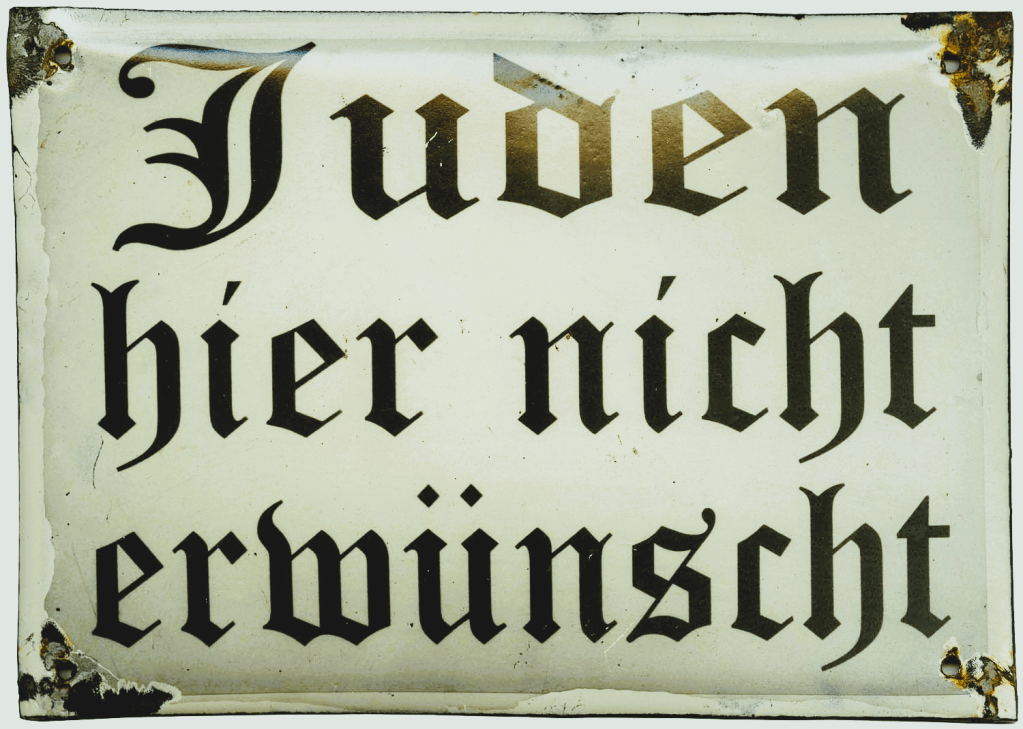
Article 10 Order of Definition
1. Who shall be considered a jew, shall be determined by the definition given in Article 5 of the First Regulation under the Reich Citizenship Law of 14 November 1935 (RGBl I, 1333).
2. The definition of Jewish enterprises under Article 1 of the Third Regulation under the Reich Citizenship Law of 14 June 1938 (RGBl I, 627) shall be followed except insofar as Article 9 applies. A change in the ownership of a Jewish enterprise shall be considered as a change of the right of disposal in the sense of Article 8.
Article 11 Treatment of Pending Legal Actions affecting Leases
1. Where a legal action against a Jew or the marriage partner of a Jew is pending when this law takes effect, the court may stay the proceedings on the application of the plaintiff, in order to make it possible for him to give the notice required under the provisions of this law. Where the plaintiff has given notice to terminate the lease, he may petition for the reopening of the case and change the plea from termination to dispossession. Where the legal action is terminated by the quitting of the tenant, or his acknowledgment of the obligation to vacate, the court costs shall be voided; the costs out of court shall be borne by the tenant.
2. Where the tenant retracts the legal action for lease termination, the court costs shall be voided and the costs out of court shall be borne by each of the contending parties for himself.
Article 12 General Reporting Requirement
1. The communal authority may issue orders for reports on premises rented to Jews, or on premises which may be used for the shelter of Jews in accordance with the provisions of this law.
2. Whoever shall not, either wilfully or through negligence make such obligatory report, shall be punishable by a fine up to 150 Reichsmarks or by custody.
Article 13 Claims for Indemnity
No claims shall be made for indemnity against orders issued by the communal authority in accordance with the provisions of this law.
Article 14 Exceptions; Authorization
1. The effectiveness of this law in the Ostmark and in the Sudeten German Territories shall be reserved to a later date.
2. The Reich Minister of Justice and the Reich Minister of Labor with the concurrence of the Reich Minister of the Interior shall be authorized to issue instructions for the administration and the enforcement of this law, as well as introduce the appropriate provisions in Austria and in the Sudeten German Territories.
Berlin, 30 April 1939
The Fuehrer and Reich Chancellor
Adolf Hitler
The Reich Minister of Justice
Dr Guertner
The Reich Minister of Labor
His Deputy: Dr Krohn
The Deputy of the Fuehrer
R.Hess

The Reich Minister of the Interior
Frick
Sources
https://avalon.law.yale.edu/imt/1419-ps.asp
https://www.alfredlandecker.org/en/article/judenh%C3%A4user-in-berlin
https://zwangsraeume.berlin/en/context
Please support us so we can continue our important work.
Donation
Your readership is what makes my site a success, and I am truly passionate about providing you with valuable content. I have been doing this at no cost and will continue to do so. Your voluntary donation of $2 or more, if you are able, would be a significant contribution to the continuation of my work. However, I fully understand if you’re not in a position to do so. Your support, in any form, is greatly appreciated. Thank you. To donate, click on the credit/debit card icon of the card you will use. If you want to donate more than $2, just add a higher number in the box left from the PayPal link. Your generosity is greatly appreciated. Many thanks.
$2.00


 History of Sorts
Leave a reply to tzipporahbatami Cancel reply