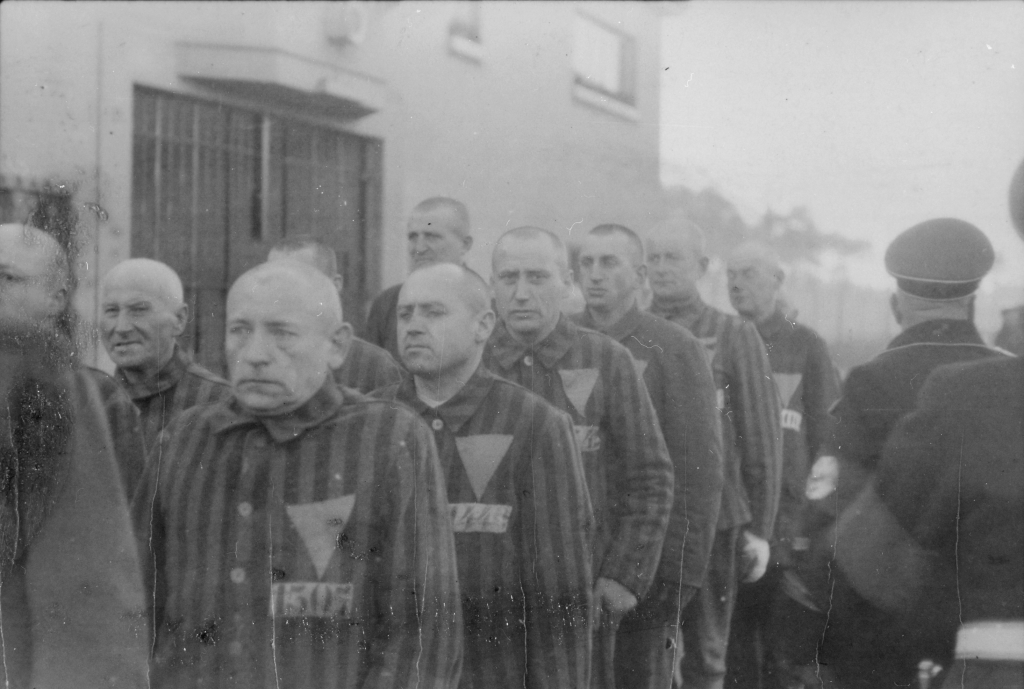
The Sachsenhausen concentration camp, located in Oranienburg, Germany, was one of the key sites in the Nazi system of terror. Established in 1936, it became a training ground for SS officers and a model for other camps. Over the course of its operation, Sachsenhausen held more than 200,000 prisoners—including political opponents, Jews, Roma, Soviet prisoners of war, and others—many of whom perished due to forced labor, execution, disease, and starvation. As the war neared its end and Allied forces closed in, the camp was evacuated, and on April 22, 1945, Soviet and Polish troops liberated Sachsenhausen. The liberation marked the end of one of the darkest chapters in modern history, though the trauma and horror of what occurred within its walls would echo for decades.
The Final Days of the Camp
As the Soviet Red Army approached from the east in April 1945, the Nazi SS began evacuating the camp. Approximately 33,000 prisoners were forced to march in what would later be known as the “death marches.” Weak, starving, and subjected to brutal treatment, thousands of prisoners died during this forced relocation. Those who remained—around 3,000 sick and dying prisoners—were left behind. They were the ones liberated by the Soviet 47th Army and the 2nd Polish Army on April 22.
A Polish officer who participated in the liberation later recalled:
“We found skeletons in striped uniforms, too weak to even lift their heads. The stench of death was everywhere. Some tried to stand and salute, others simply cried. I had never seen human beings in such a state.”
Another liberator, Soviet soldier Ivan Stepanovich, described the eerie silence as they entered the gates:
“There was no resistance, only horror. Bodies lay in piles. Survivors stared at us with hollow eyes. It took us hours to understand what we were seeing. This was not war—it was something worse.”
Survivors’ Accounts
For the survivors, liberation was a surreal and often confusing moment. Some had long given up hope; others were too weak to comprehend what was happening. Former prisoner Boris Tichonow, a Soviet soldier captured in 1941, later wrote in his memoir:
“When the Red Army arrived, I thought I was dreaming. I hadn’t eaten properly in weeks. I had forgotten what it felt like to hope. But seeing our own soldiers made something stir inside me again.”
Another survivor, Egon Erwin Kisch, described the camp as a “factory of death” and recounted how his fellow inmates died “not just from bullets, but from hunger, filth, and despair.”
In the weeks following liberation, Soviet medical personnel and aid workers attempted to care for the survivors. Many, however, were beyond help. The humanitarian crisis was immense, and even the liberators were overwhelmed by the scope of the atrocity.
Historical Significance
The liberation of Sachsenhausen was a key moment in exposing the crimes of the Nazi regime to the world. It became one of the early pieces of evidence in the Nuremberg Trials, as Soviet investigators collected testimonies and documented the conditions of the camp. Although the Soviets later used Sachsenhausen themselves to detain political prisoners during the early Cold War, its Nazi-era history remained a powerful symbol of totalitarian brutality.
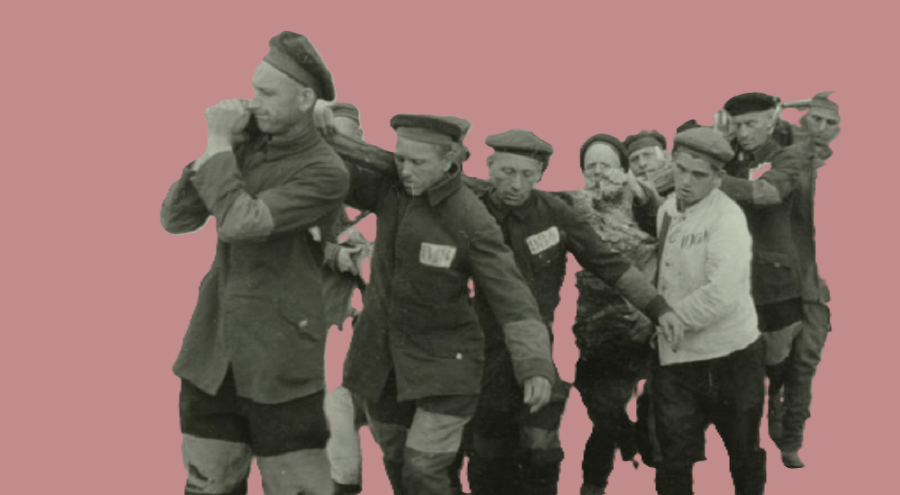
The liberation also underscored the resilience of the human spirit. Despite unimaginable suffering, some survivors managed to rebuild their lives, testify to the atrocities, and contribute to the preservation of memory. Their stories continue to educate future generations about the perils of hatred, authoritarianism, and indifference.
Martin Small, a Polish Jew deported to Sachsenhausen in 1944, later described the camp’s final days before the Red Army arrived:
“We heard gunfire in the distance, and the SS guards began disappearing. The next morning, there were no roll calls. Just silence. I remember looking around and wondering—am I already dead?”
He recalled that a fellow prisoner whispered, “The Russians are coming,” as they clung to hope they hardly believed in.
Miklós Nyiszli, a Hungarian-Jewish doctor forced to work under Josef Mengele at Auschwitz before being transferred to Sachsenhausen, recounted his liberation in a brief but poignant memoir excerpt:
“There was no strength left in us to cheer. We only wept. I saw men crawl to the gate and kiss the muddy boots of our liberators. We did not need language to understand—we were free.”
A particularly moving account comes from Andrzej Czech, a Polish political prisoner, who spoke years later in a filmed interview:
“They [the Soviet soldiers] looked just as stunned as we did. They handed out bread and cigarettes, and one of them gave me his coat. I hadn’t felt warmth in months. I remember falling asleep on the ground, holding that coat.”
Liberator Private Yuri Belyakov of the Red Army described the sights he encountered at Sachsenhausen:
“We saw warehouses full of shoes, glasses, teeth. At first, we didn’t understand. Then we opened the infirmary—people barely alive, lying side by side. One man grabbed my hand and said, ‘I am a man. Remember that.’ I still hear him.”
Helga Grebing, a German historian who later interviewed dozens of Sachsenhausen survivors, wrote in a 1995 retrospective:
“What haunted them most wasn’t just the hunger or the pain—it was the world’s silence for so long. They wanted to be seen. They wanted someone to know what had happened.”
A survivor named Shlomo Erel, who later testified during war crime proceedings, summed up the moment in few, powerful words:
“Freedom came like a stranger. I didn’t know whether to trust it.”
sources
https://encyclopedia.ushmm.org/content/en/article/sachsenhausen
https://en.wikipedia.org/wiki/Sachsenhausen_concentration_camp
https://hmd.org.uk/resource/22-april-1945-liberation-of-sachsenhausen-concentration-camp
Please support us so we can continue our important work.
Donation
Your readership is what makes my site a success, and I am truly passionate about providing you with valuable content. I have been doing this at no cost and will continue to do so. Your voluntary donation of $2 or more, if you are able, would be a significant contribution to the continuation of my work. However, I fully understand if you’re not in a position to do so. Your support, in any form, is greatly appreciated. Thank you. To donate, click on the credit/debit card icon of the card you will use. If you want to donate more than $2, just add a higher number in the box left from the PayPal link. Your generosity is greatly appreciated. Many thanks.
$2.00
 History of Sorts
Leave a comment