
On October 26, 1944, British soldiers from the 51st Highland Division turned onto the Boslaan in Vught. As they passed through the wooded heath, the sight of barbed wire and watchtowers came into view, marking the entrance to Konzentrationslager Herzogenbusch—better known as Camp Vught. Though the grounds were nearly deserted, the abandoned barracks, workshops, and prison bunkers left no doubt: this was a place where prisoners had been confined only recently.
The Concentration and Transit Camp Vught operated from January 13, 1943, to September 16, 1944, under the administration of the SS—unlike other camps in the Netherlands. Around 32,000 people were detained here, including Jews and political prisoners. Most prisoners were transferred from Vught to Camp Westerbork. The first prisoners arrived at Konzentrationslager Herzogenbusch on January 13, 1943. The camp served as both a labor and transit camp for Jews and a prison for political prisoners, “asocials,” and hostages.
Originally designed to hold 15,000 prisoners, Vught eventually housed around 32,000 people, not only Dutch nationals but also Belgians, French, and individuals from 33 other countries. For many, it was a temporary stop. The Jewish detainees, who had been led to believe that Vught would serve as a permanent labor camp, were eventually deported.

A significant transport of political prisoners occurred on May 24, 1944, when they were sent to Dachau. On D-Day, June 6, 1944, new prisoners arrived from Oranjehotel, the prison in Scheveningen. This transfer was linked to the Allied landings in Normandy. The following months would prove decisive for Camp Vught.

As the Allies advanced on three fronts—east, south, and west—Nazi Germany’s control of the Netherlands began to weaken. Within Vught, the situation grew increasingly dire. The camp started to serve as a place for executions, especially targeting political prisoners. As historian Ad van Liempt writes, the Nazis exacted “revenge on the resistance” by executing prisoners without trial. In the summer of 1944, at least 329, and possibly up to 400, prisoners were shot at Vught’s firing range.
Among the most notorious events were the Deppner Executions, a series of killings of resistance fighters at the camp between late July and early September 1944. The executions were carried out under the orders of SS officer Erich Deppner, who was never held accountable. In total, at least 450 people lost their lives during this period.
As the liberation of Paris in late August 1944 and Brussels and Antwerp in early September suggested that an Allied invasion of the Netherlands was imminent, panic spread on September 5, 1944—a day later dubbed “Dolle Dinsdag” (Mad Tuesday). Although there was no invasion at that time, the rumors led to the retreat of German military units and Dutch National Socialists.
In response, the leadership of Camp Vught ordered an evacuation. On the night of September 5-6, 1944, 2,221 male prisoners from the Schutzhaftlager were sent to Sachsenhausen. The next day, a second transport of 650 women and 580 men departed, with the women bound for Ravensbrück. The hostages left behind were tasked with dismantling the camp and were later either released or transferred to Camp Amersfoort, where they eventually gained their freedom.
Evacuation of Camp Vught
The evacuation of Camp Vught, driven by the advancing Allied troops, reached its peak on September 5-6, 1944. Fearing imminent liberation, the last prisoners were hurriedly transported to other camps or executed within the camp.
Liberation
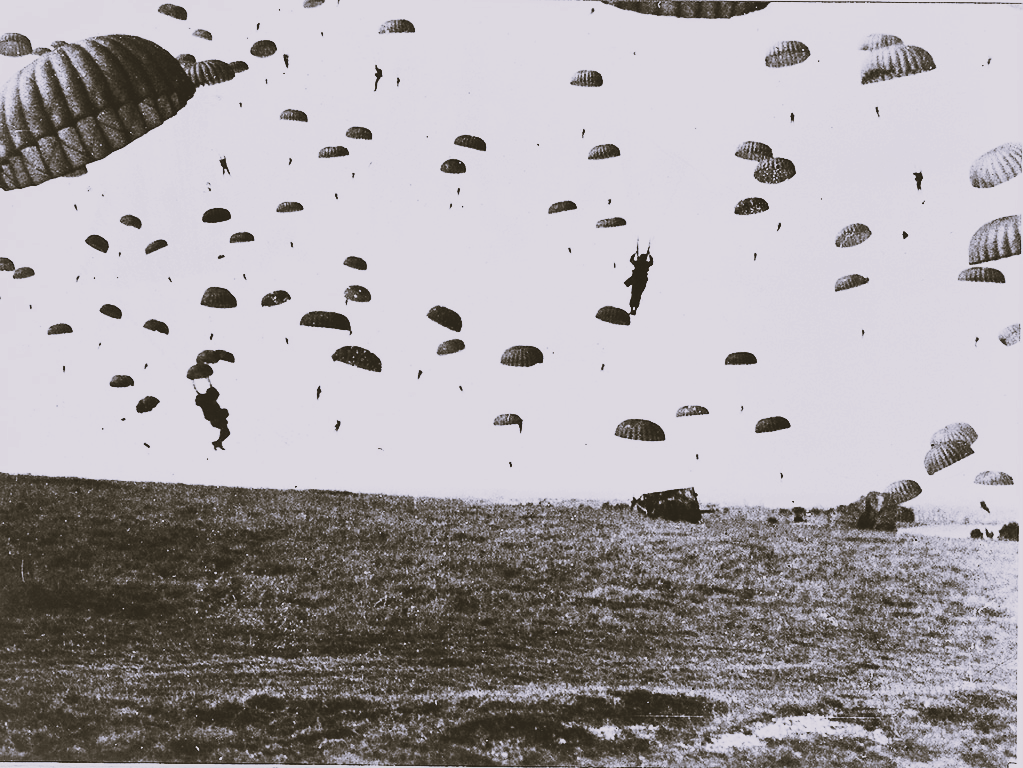
The Allied invasion, part of Operation Market Garden, took place later in September 1944, with airborne landings near Eindhoven, Nijmegen, and Arnhem. On October 25, 1944, ‘s-Hertogenbosch was liberated, and the following day, a part of Vught and the camp itself was also freed.
German Civilian Evacuees
In November 1944, the camp was repurposed to house German civilian evacuees from areas near the border that had fallen to the Allies. These civilians, mostly Catholics from the Selfkant area and parts of Cleves, numbered around 6,000. They remained in the camp until May 1945, despite the poor conditions caused by the camp’s partial dismantling. A church was set up for the evacuees in one of the former barracks.
Internment Camp
After liberation, the camp was quickly converted into an internment camp for suspected collaborators. Initially, it housed Dutch citizens arrested during the liberation of the South Netherlands. As civilian evacuees began returning home in May 1945, the camp was repurposed almost entirely for internment. It became one of the largest such facilities in the country.
The Custody and Residence Camp Vught operated until January 1949, nearly three times as long as the original concentration camp. While the layout remained mostly unchanged, new Catholic and Protestant churches were built, and some internees were put to work in surrounding areas.
sources
https://www.oorlogsbronnen.nl/artikel/kamp-vught-op-de-grens-van-oorlog-naar-vrijheid
https://encyclopedia.ushmm.org/content/en/article/herzogenbusch-main-camp-vught
https://www.nmkampvught.nl/multi/english/
https://www.liberationroute.com/stories/184/operation-market-garden
Please support us so we can continue our important work.
Donation
Your readership is what makes my site a success, and I am truly passionate about providing you with valuable content. I have been doing this at no cost and will continue to do so. Your voluntary donation of $2 or more, if you are able, would be a significant contribution to the continuation of my work. However, I fully understand if you’re not in a position to do so. Your support, in any form, is greatly appreciated. Thank you. To donate, click on the credit/debit card icon of the card you will use. If you want to donate more than $2, just add a higher number in the box left from the PayPal link. Your generosity is greatly appreciated. Many thanks.
$2.00
 History of Sorts
Leave a comment