
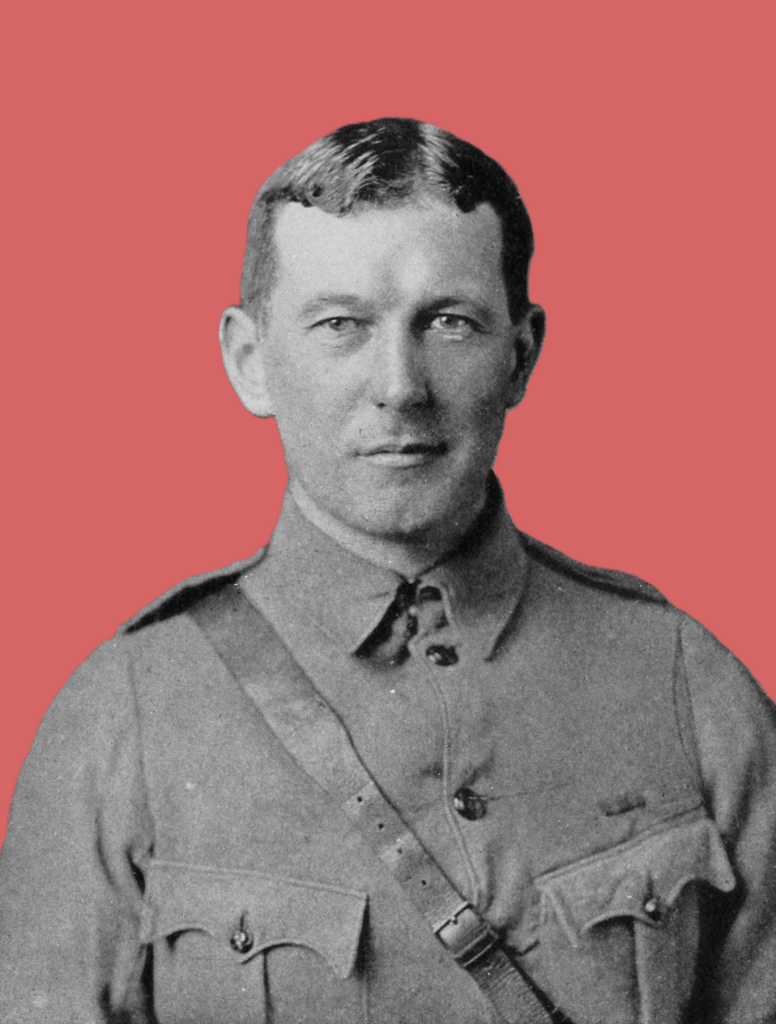
In the quiet fields of northern Belgium, where red poppies bloom between rows of white crosses, a poem was born from the grief and valor of World War I. In Flanders Fields, written by Lieutenant Colonel John McCrae, has become one of the most enduring war poems in the English language—a testament to loss, duty, and remembrance.
In Flanders Fields
By Lieutenant Colonel John McCrae (1915)
In Flanders fields the poppies blow
Between the crosses, row on row,
That mark our place; and in the sky
The larks, still bravely singing, fly
Scarce heard amid the guns below.
We are the Dead. Short days ago
We lived, felt dawn, saw sunset glow,
Loved and were loved, and now we lie
In Flanders fields.
Take up our quarrel with the foe:
To you from failing hands we throw
The torch; be yours to hold it high.
If ye break faith with us who die
We shall not sleep, though poppies grow
In Flanders fields.
A Poem Born on the Battlefield
John McCrae was a Canadian physician and soldier. He wrote In Flanders Fields in May 1915, during the Second Battle of Ypres, shortly after witnessing the death of a close friend and fellow soldier. The poppies mentioned in the poem were among the first flowers to bloom on the devastated battlefields of Flanders, fed by the churned soil and the blood of the fallen.
The poem’s structure—a trio of five-line stanzas written in iambic tetrameter—belies the emotional weight it carries. The first stanza paints a tranquil yet sobering image: poppies growing between the graves of soldiers, larks singing above the chaos of war. In the second stanza, the dead themselves speak, a haunting reminder of the lives lost. The final stanza is a call to action, urging the living to carry on the fight and honor the dead by not letting their sacrifice be in vain.
Symbolism and Legacy
Perhaps no symbol of remembrance is as globally recognized as the red poppy, thanks in large part to this poem. The poppy became a symbol of both mourning and resolve, and it continues to be worn on Remembrance Day (Veterans Day in the U.S.) in many countries around the world.
The poem’s final lines—”Take up our quarrel with the foe… If ye break faith with us who die / We shall not sleep”—have been interpreted as both a call to arms and a solemn reminder of the duty the living owe to the fallen.
Why In Flanders Fields Still Matters
Over a century later, In Flanders Fields remains as relevant as ever. It does not glorify war, but it honors the courage and sacrifice of those who fought. It speaks not only to history, but to the human cost of conflict—urging us to remember, to reflect, and to strive for peace even as we honor those who served.
Whether read in a classroom, recited at a memorial, or worn as a poppy on the lapel, McCrae’s poem continues to resonate. Its voice—quiet, firm, and full of dignity—asks us never to forget.
sources
https://www.poetryfoundation.org/poems/47380/in-flanders-fields
https://en.wikipedia.org/wiki/In_Flanders_Fields
Donation
Your readership is what makes my site a success, and I am truly passionate about providing you with valuable content. I have been doing this at no cost and will continue to do so. Your voluntary donation of $2 or more, if you are able, would be a significant contribution to the continuation of my work. However, I fully understand if you’re not in a position to do so. Your support, in any form, is greatly appreciated. Thank you. To donate, click on the credit/debit card icon of the card you will use. If you want to donate more than $2, just add a higher number in the box left from the PayPal link. Your generosity is greatly appreciated. Many thanks.
$2.00


 History of Sorts
Leave a comment