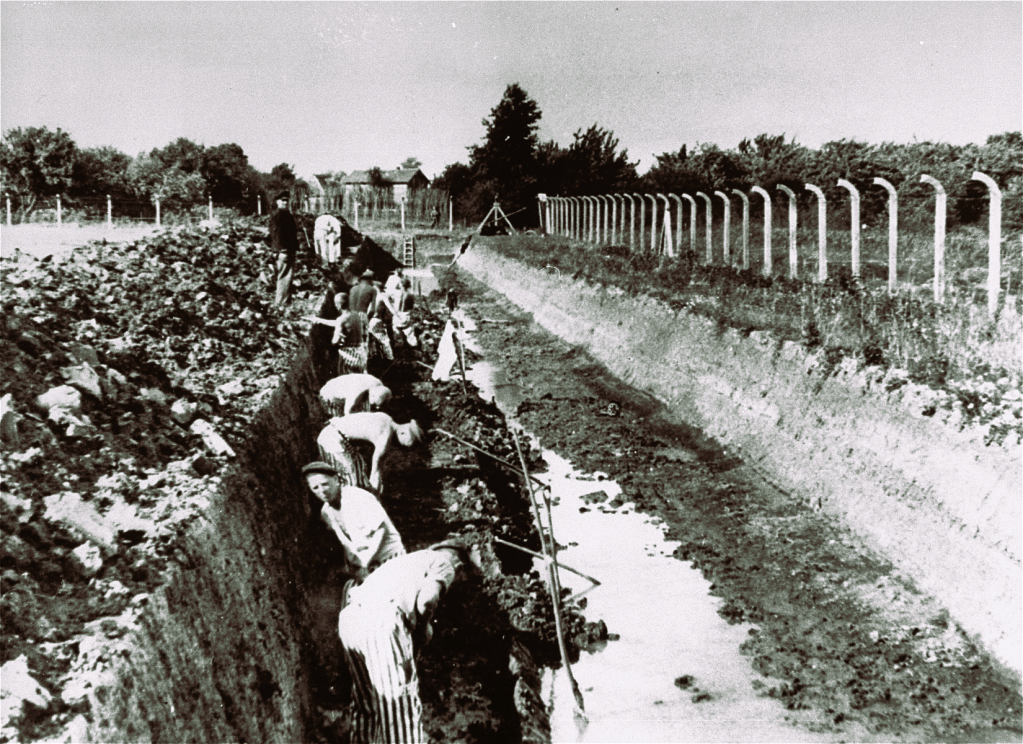
Neuengamme concentration camp was a significant and harrowing part of the Nazi concentration camp system during World War II. Located near Hamburg, Germany, Neuengamme was established December 13, 1938, and initially served as a satellite camp of Sachsenhausen. By 1940, it became an independent main camp (Hauptlager), and it was the largest concentration camp in northwest Germany. Here’s an overview of its history and conditions:
1. Purpose and Function
Neuengamme began as a forced labor camp intended to exploit prisoners for economic gain. Initially, prisoners were involved in the production of bricks, which were vital for Adolf Hitler’s grand architectural plans for the expansion of Hamburg and other cities. Over time, the camp’s functions expanded, and it became a central hub for various forced labor projects, including armaments production.
2. Camp Structure and Facilities
The camp complex grew to include over 85 subcamps spread across northern Germany, which supplied forced labor to industries, construction sites, and other projects. These subcamps held prisoners who worked in brutal conditions, with minimal food, inadequate shelter, and little to no medical care.
3. Prisoner Demographics
Initially, the camp housed political prisoners, but the population quickly grew to include individuals persecuted by the Nazi regime, such as Jews, Romani people, Soviet prisoners of war, resistance fighters, homosexuals, and others. In total, more than 100,000 prisoners were interned at Neuengamme and its subcamps during its existence.
4. Living Conditions
The living conditions at Neuengamme were notoriously harsh. Prisoners were forced to work long hours in grueling conditions, subjected to brutal treatment by SS guards, and given inadequate food and shelter. Disease, starvation, and exhaustion were rampant, contributing to the camp’s high mortality rate. Additionally, medical experiments were conducted on some prisoners, adding to the suffering.
5. Death Toll and Atrocities
It is estimated that approximately 42,900 prisoners were murdered at Neuengamme and its subcamps due to overwork, mistreatment, disease, and executions.

As the war came to an end, the camp’s administration attempted to cover up its crimes by evacuating prisoners and destroying records. The infamous “Cap Arcona” incident is tied to Neuengamme’s history, where thousands of prisoners died in May 1945 when Allied forces mistakenly bombed ships carrying evacuated inmates in the Baltic Sea.
6. Liberation and Aftermath
The camp was evacuated in April 1945 as Allied forces approached. Prisoners were forced on death marches or placed on ships like the Cap Arcona. British forces eventually reached the site of Neuengamme on May 4, 1945, by which time it had been largely emptied. The camp and its horrors were later investigated, and war crimes trials were conducted for some of the perpetrators.
7. Memorial and Legacy
Today, Neuengamme serves as a memorial and museum dedicated to remembering the victims and educating the public about the atrocities committed there. The site hosts exhibitions, educational programs, and commemorative events to honor the memory of those who suffered and died. The memorial stands as a powerful reminder of the consequences of hate, intolerance, and unchecked power.
Neuengamme’s history is a stark testament to the brutality of the Nazi concentration camp system and highlights the importance of remembrance and education to prevent future atrocities.

The White Buses Campaign
In March 1945, all Danish and Norwegian prisoners held in Germany were gathered at the Neuengamme concentration camp. This action was a concession from Heinrich Himmler, the Reichsführer of the SS, to Count Folke Bernadotte, vice-president of the Swedish Red Cross. On April 20, 1945, over 4,000 prisoners were transported to Sweden and liberated through the humanitarian effort known as the White Buses.
Death Marches
Simultaneously, the evacuation of Neuengamme began, leading to what became known as the death marches. Thousands of prisoners were forced to travel, often on foot or in overcrowded freight trains under horrific conditions, to collection camps such as Wöbbelin (housing 5,000 prisoners), Sandbostel (9,000 prisoners), and Bergen-Belsen (8,000 prisoners). At these camps, prisoners were abandoned without food, medical care, or adequate sanitation, leaving them to endure catastrophic conditions and inevitable death. During this time, the SS worked to obliterate all evidence of their crimes at Neuengamme.
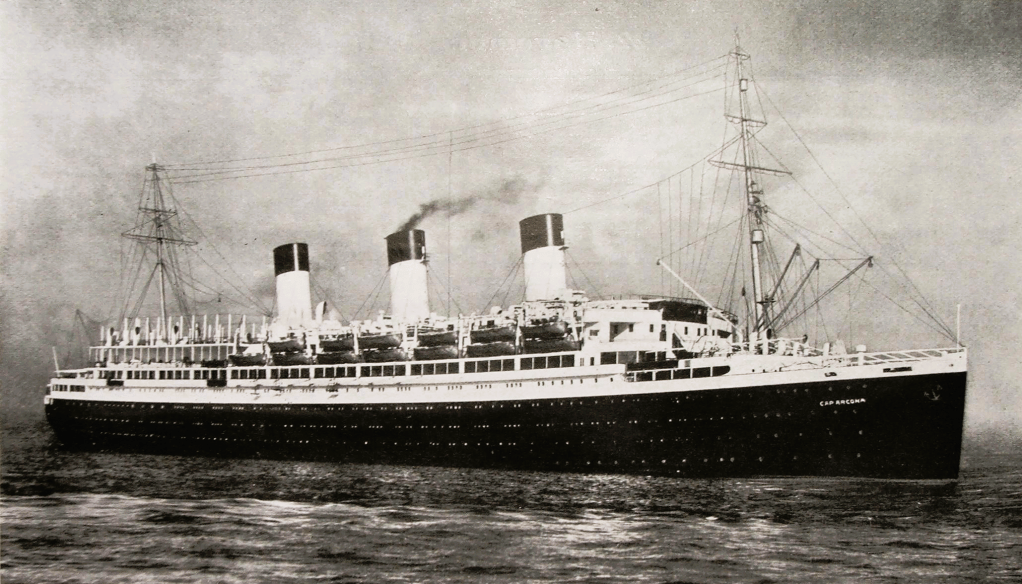
When the collection camps became severely overcrowded, Karl Kaufmann, the Nazi Gauleiter of Hamburg, commandeered three ships, including the Cap Arcona, to house more than 9,000 prisoners. Packed tightly into the ships’ holds, many prisoners succumbed to hunger, thirst, and disease.
The Cap Arcona Incident
The Cap Arcona was originally a glamorous ocean liner launched in 1927, serving as one of Germany’s premier passenger ships. Renowned for its elegance, the vessel symbolized German engineering prowess during the interwar period. However, the outbreak of World War II transformed the ship’s role. By 1940, it had been requisitioned by the German Navy and served various purposes, including as a troop transport and later as a floating barracks.
As the Third Reich faced imminent collapse in early 1945, the Nazis began hastily evacuating concentration camps to cover up their atrocities. Tens of thousands of prisoners were transferred to northern Germany, where the Cap Arcona and other ships, including the Thielbek and Athen, were moored in the Bay of Lübeck. These ships were meant to serve as temporary holding facilities for the prisoners. Some sources suggest the Nazis planned to scuttle the ships, killing all aboard, to prevent their liberation by advancing Allied forces.
The British Attack and Its Consequences
On May 3, 1945, the British Royal Air Force (RAF) launched an air raid targeting German vessels in the Bay of Lübeck. Intelligence reports had suggested that the ships were carrying German troops and military equipment for a potential counteroffensive. Unaware that the vessels were filled with concentration camp prisoners, the RAF dispatched fighter-bombers to destroy the fleet.
The Cap Arcona was struck multiple times by rockets and incendiary bombs, setting the ship ablaze. Most of the prisoners on board, already weakened by months of starvation and mistreatment, were trapped below decks and unable to escape. Those who managed to jump into the icy waters faced additional horrors—many drowned, while others were shot by SS guards stationed on smaller boats to prevent escapes. Similar fates befell the prisoners aboard the Thielbek and Athen.
The death toll was catastrophic. Approximately 5,000 of the 7,000 prisoners on the Cap Arcona perished, along with nearly 2,000 more from the other vessels. Only a small number of survivors lived to recount the horror, and they often faced disbelief or indifference.
The Aftermath
The Cap Arcona incident underscores the chaos and moral collapse that characterized the final days of the Nazi regime. Although the RAF airmen were unaware of the prisoners on board, the tragedy highlights the devastating consequences of wartime intelligence failures and the Nazis’ calculated cruelty. The British were criticized for not verifying the nature of the targets, but responsibility ultimately lay with the German authorities who orchestrated the prisoners’ transport under such conditions.
In the aftermath, the Allies struggled to document and publicize the incident. The horrific scenes at liberated concentration camps like Bergen-Belsen and Auschwitz overshadowed the tragedy at sea. Consequently, the Cap Arcona disaster remains a lesser-known episode of World War II, even as historians and survivors’ families have worked to preserve its memory.
Legacy and Reflection
The Cap Arcona incident offers profound lessons about the human cost of war, the importance of accurate intelligence, and the moral obligations of combatants. It also serves as a somber reminder of the lengths to which oppressive regimes will go to conceal their crimes and dehumanize their victims. In modern times, commemorations and memorials in Lübeck and other areas honor those who perished, ensuring that their suffering is not forgotten.
As history continues to unfold, it is vital to revisit such events not only to mourn the lives lost but also to understand the broader implications of war, complicity, and humanity’s capacity for both cruelty and resilience. The tragedy of the Cap Arcona stands as a haunting chapter in the annals of human conflict, urging future generations to remember and learn.
Sources
https://www.tracesofwar.com/sights/460/Concentration-Camp-Neuengamme.htm
https://www.cbsnews.com/news/surviving-cap-arcona-world-war-2-bombing-60-minutes/
https://arolsen-archives.org/en/stories/cap-arcona/
https://encyclopedia.ushmm.org/content/en/article/neuengamme
https://www.kz-gedenkstaette-neuengamme.de/en/history/concentration-camp/
Donation
Your readership is what makes my site a success, and I am truly passionate about providing you with valuable content. I have been doing this at no cost and will continue to do so. Your voluntary donation of $2 or more, if you are able, would be a significant contribution to the continuation of my work. However, I fully understand if you’re not in a position to do so. Your support, in any form, is greatly appreciated. Thank you. To donate, click on the credit/debit card icon of the card you will use. If you want to donate more than $2, just add a higher number in the box left from the PayPal link. Your generosity is greatly appreciated. Many thanks.
$2.00
 History of Sorts
Leave a comment