
On the morning of May 10, 1940, the Netherlands awoke to the thunder of German bombers overhead and the sound of artillery fire along its borders. After months of tense neutrality, the small, strategically located country found itself swept into the maelstrom of World War II. The invasion of the Netherlands marked a critical moment in the war, showcasing Nazi Germany’s military strategy and the tragic vulnerability of smaller European nations in the face of Blitzkrieg tactics.

Prelude to Invasion
Prior to the invasion, the Netherlands had declared neutrality, as it had done during World War I. The Dutch hoped to stay out of the growing conflict between Nazi Germany and the Allied powers. However, Germany saw the Netherlands as a geographical gateway to France and a potential threat to its military plans if the Allies first moved through Dutch territory.
Hitler’s generals included the Netherlands in “Fall Gelb” (Case Yellow), a broader campaign designed to quickly conquer Belgium, the Netherlands, Luxembourg, and France. For Germany, seizing the Netherlands offered several advantages:
Control of vital airfields close to Britain.
A better position to flank the French Maginot Line.
Psychological and strategic domination over Western Europe.
The Invasion Begins
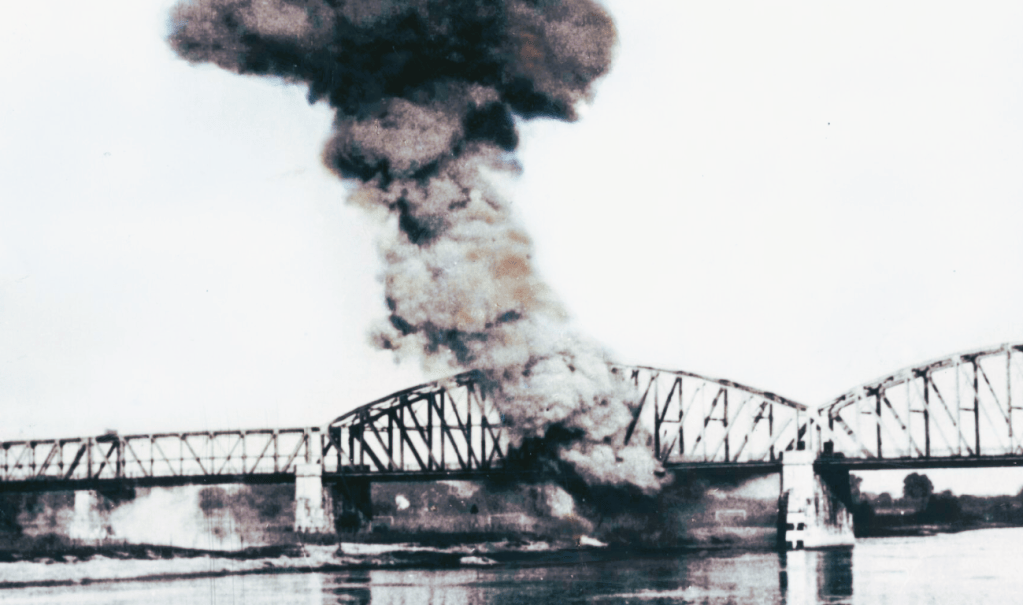
At around 4:00 AM on May 10, 1940, German forces launched a surprise attack by land, air, and sea. The Dutch military, though brave, was outmatched. German paratroopers were dropped behind enemy lines, capturing key bridges and airfields. One of the most infamous targets was the city of Rotterdam.

The German Luftwaffe (air force) unleashed a devastating aerial assault that overwhelmed Dutch defenses. The Netherlands, having invested little in modern military technology during its neutrality, struggled to counter the sheer speed and coordination of the German Blitzkrieg.
The Bombing of Rotterdam
The most tragic episode of the invasion occurred on May 14, when the German Luftwaffe bombed the heart of Rotterdam, killing nearly 900 civilians and leaving tens of thousands homeless. The Germans planned this attack and intended to have it break Dutch resistance—and it worked.
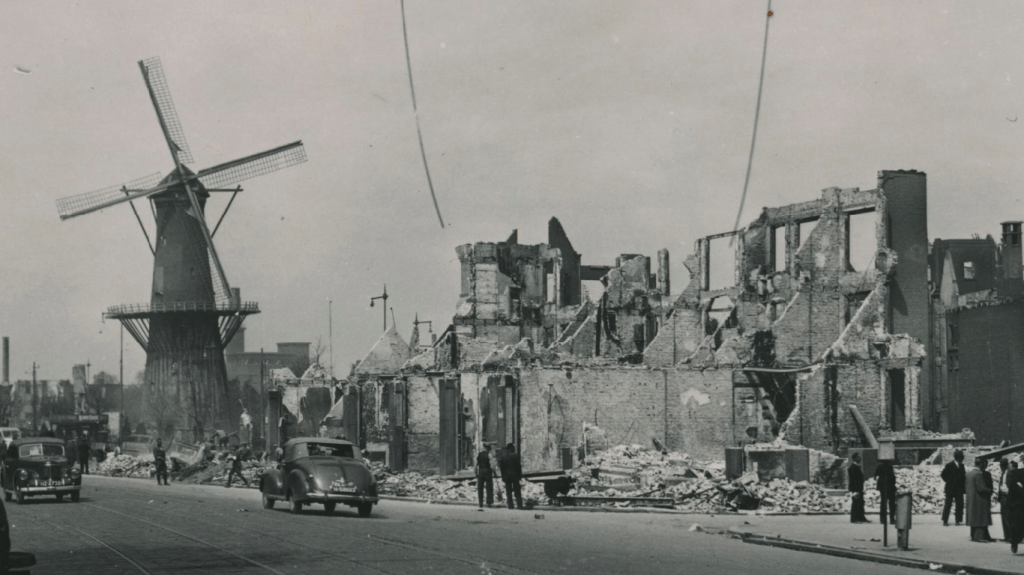
Faced with overwhelming force and the threat of further devastation, the Dutch government surrendered later that day. Only the province of Zeeland continued fighting briefly alongside French troops before succumbing.
Aftermath and Occupation
The swift German victory took just five days. Queen Wilhelmina and the Dutch government fled to London, where they formed a government-in-exile. The German occupation of the Netherlands would last until 1945, bringing with it years of repression, forced labor, and the persecution of Jews, culminating in the deportation and murder of over 100,000 Dutch Jews, including Anne Frank.
The invasion of the Netherlands demonstrated the brutal efficiency of Germany’s early-war strategy and highlighted the high cost of underestimating the threat posed by Nazi expansionism.
Legacy
Today, the May 10, 1940 events are remembered across the Netherlands as a dark but pivotal chapter in the nation’s history. Memorials, museums, and educational programs keep the memory of the invasion alive, reminding future generations of the value of peace and the consequences of war.
The German invasion resulted in approximately 2,300 Dutch military and 3,000 civilian deaths, while German forces suffered around 2,200 casualties. In contrast, an estimated 30,000 Dutch civilians died during the final months of the war, most due to starvation during the “Hunger Winter.” Overall, it is estimated that between 205,000 and 300,000 Dutch citizens, including my grandfather and one of my uncles, died during World War II, the majority of whom were Dutch Jews murdered in concentration camps. Additionally, another 30,000 or so were killed in the Dutch East Indies, nowadays called Indonesia.
Sources
https://ww2db.com/country/netherlands
https://en.wikipedia.org/wiki/German_invasion_of_the_Netherlands
Donation
Your readership is what makes my site a success, and I am truly passionate about providing you with valuable content. I have been doing this at no cost and will continue to do so. Your voluntary donation of $2 or more, if you are able, would be a significant contribution to the continuation of my work. However, I fully understand if you’re not in a position to do so. Your support, in any form, is greatly appreciated. Thank you. To donate, click on the credit/debit card icon of the card you will use. If you want to donate more than $2, just add a higher number in the box left from the PayPal link. Your generosity is greatly appreciated. Many thanks.
$2.00
 History of Sorts
Leave a comment