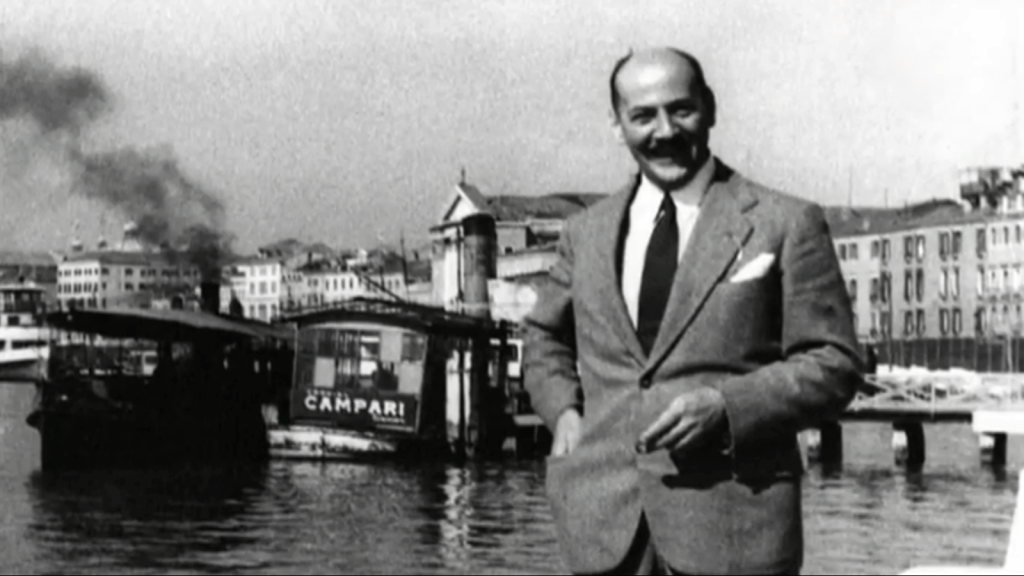
To be honest, I’m not entirely convinced of his nobility, he had many flaws. Nonetheless, his actions were remarkable, especially considering his family background.
When people hear the name Göring, it usually conjures images of Hermann Göring, the notorious Nazi leader and one of Adolf Hitler’s closest confidants. Yet few know about his younger brother, Albert Göring, whose life took a drastically different — and morally courageous — path.
Albert Göring lived in the shadow of his infamous surname, yet his actions stood in bold opposition to the Third Reich. While his brother orchestrated Nazi atrocities, Albert quietly worked to undermine the regime, saving lives and defying the very system his family name had come to represent.
Early Life: Brothers of Contrasting Paths
Albert Göring was born on March 9, 1895, in Freising, Bavaria, into a well-off German family. His father, Heinrich Göring, was a prominent jurist and colonial governor. The Göring family had five children, with Hermann and Albert being the most prominent.
Despite their shared upbringing, the brothers could not have been more different. While Hermann was a decorated WWI pilot with authoritarian leanings and a love for grandeur, Albert was artistic, soft-spoken, and empathetic. He developed an early disdain for militarism and nationalism — values that would later define Hermann’s rise to power.
A Dissident in the Belly of the Beast
Albert’s story becomes remarkable during the rise of the Nazis in the 1930s and throughout World War II. Despite his brother’s high position as commander of the Luftwaffe and second-in-command to Hitler, Albert chose the path of resistance.
Albert Göring worked as an executive at Skoda Works in Czechoslovakia (then under German occupation). Instead of enforcing Nazi policies, he used his influence to help Jews, dissidents, and other persecuted people escape the Nazi grip.

Ways He Resisted the Nazis
- Falsifying Documents: Albert issued fake work orders and travel permits to help Jewish individuals and anti-Nazi activists flee occupied territories.
- Direct Intervention: On several occasions, he physically intervened to secure the release of prisoners from the Gestapo.
- Open Defiance: He reportedly once ordered workers to sabotage production of arms and machinery meant for the German war effort.
- Leveraging His Name: Albert made use of the Göring name — one of the most powerful in the Reich — to pull strings. Ironically, this same name that struck fear across Europe opened doors for him to save lives.
In a widely reported incident, Albert joined a group of Jews forced to clean the streets. A Gestapo officer recognized him and ordered his release. He used incidents like these to mock and shame the regime and highlight its cruelty.
The Shadow of Hermann
The relationship between Albert and Hermann Göring is both fascinating and tragic. Despite their ideological differences, Hermann reportedly protected Albert at times, perhaps out of fraternal loyalty or guilt.
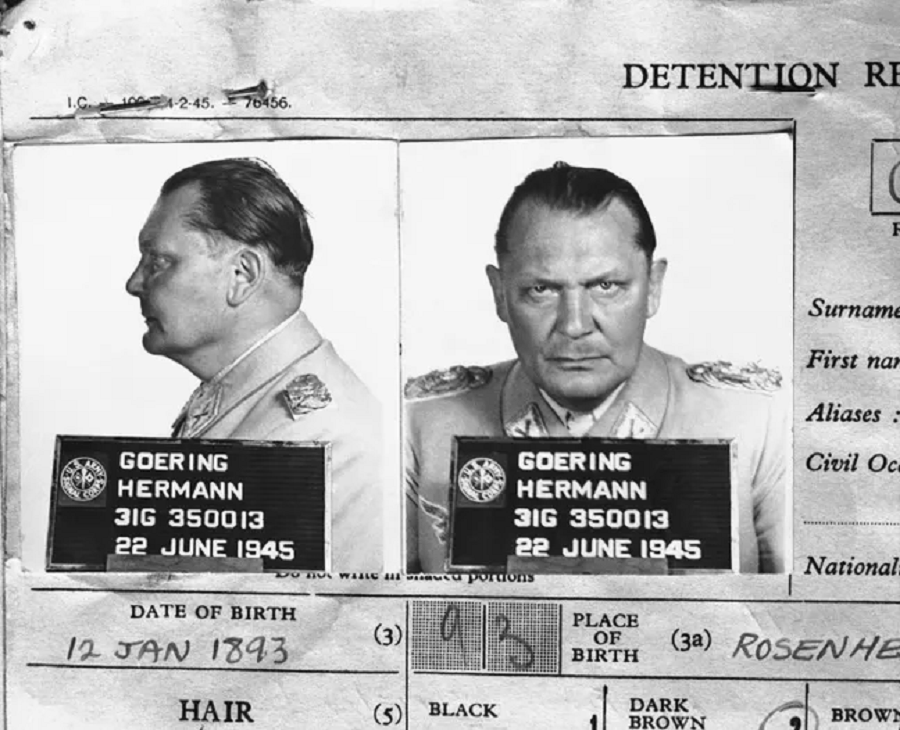
This protection allowed Albert to operate with a level of impunity not afforded to others. However, this also made Albert’s life extraordinarily complicated. Many questioned whether he was genuinely anti-Nazi or simply exploiting privilege. Only after the war would his true motives become more widely recognized.
After the War: From Suspect to Forgotten Hero
When the war ended, Albert Göring was arrested by Allied forces due to his family name. He was initially treated as a war criminal. Ironically, his surname — which had saved so many — became a liability.
Eventually, multiple testimonies from Holocaust survivors, resistance members, and political prisoners emerged, confirming Albert’s heroic actions. He was exonerated, but the stigma of his surname never truly left him.
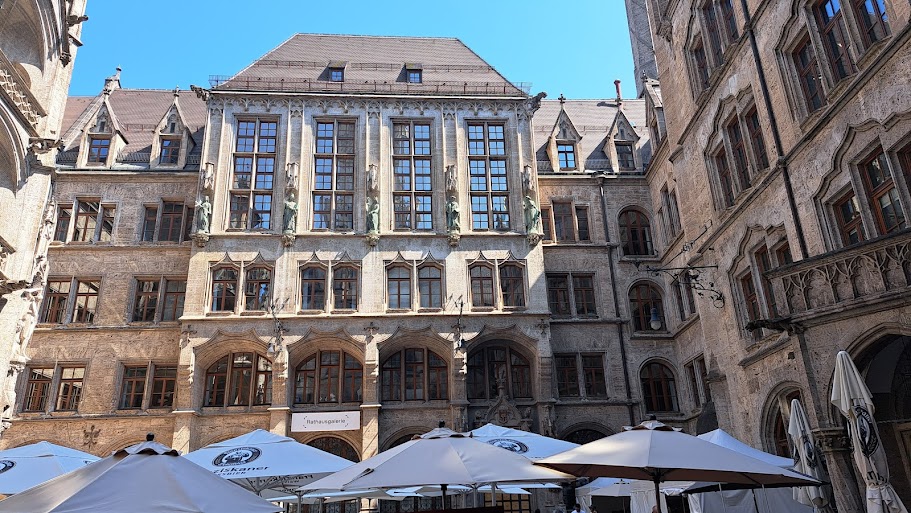
Albert Göring died in 1966, largely forgotten and in relative obscurity. He never received the recognition or honors afforded to other resistors. He spent his later years unemployed and impoverished in Munich.
Albert’s Quiet Resistance
The story of Albert Göring remains largely unknown—overshadowed by the sheer scale of his brother Hermann Göring’s crimes. While Hermann was one of the most powerful figures in the Nazi regime, Albert stood in stark contrast. Testimonies from survivors and a report buried in British archives until recently reveal that Albert Göring risked everything to save lives during the Holocaust.
Despite the threat to his career, fortune, and life, Albert used his family name and connections to protect both Jews and Gentiles. He is credited with many acts of compassion, large and small. Survivors still recall the day he joined a group of Jews who were being publicly humiliated by Nazi orders, scrubbing the streets on their knees. Albert removed his jacket, knelt beside them, and scrubbed as well.
An SS officer inspected his identification, only to realize with alarm that this man was Hermann Göring’s brother. Fearing retribution, the officer halted the punishment immediately.
Albert’s influence extended further. He intervened to save his Jewish former boss, Oskar Pilzer—an Austrian lawyer and film producer—who had been arrested by the Nazis. Albert not only secured Pilzer’s release but also helped him and his family escape Germany. Similar efforts were made on behalf of many other dissidents.
When Albert became export director at the Škoda Works in Czechoslovakia, his resistance deepened. He maintained ties with the Czech underground and encouraged small acts of sabotage against the Nazi war machine. He even forged his brother’s signature on transit documents to help dissidents escape. When caught, he used Hermann’s name to secure his release.
Albert also arranged for trucks to collect laborers from concentration camps—only for them to be released at remote locations en route. He used every ounce of his privilege to undermine the regime from within.
Karel Sobota, Albert’s assistant in the Škoda export department and a fellow resistor, later recalled how Albert never gave the Nazi salute—even in the presence of high-ranking officers. A single refusal like this could have led to imprisonment or even worse consequences. Sobota described an incident in which a senior SS officer barged into Albert’s office unannounced. Albert demanded he wait outside, then spent nearly 40 minutes chatting with Sobota about the weather before finally allowing the officer back in—an act of defiance and dignity.
After the war, Albert Göring was interrogated during the Nuremberg Trials. Many people he had helped testified on his behalf, leading to his release. Czech authorities later arrested him, but once the full scope of his resistance became clear, he was freed again.
In 2010, Edda Göring—daughter of Hermann—told The Guardian:
“He could certainly help people in need himself financially and with his personal influence, but, as soon as it was necessary to involve higher authority or officials, then he had to have the support of my father, which he did get.”

After his final release, Albert returned to Germany, only to be ostracized due to his last name. He lived modestly, working occasionally as a writer and translator. In the final years of his life, he relied on a government pension. Knowing that the pension would transfer to a spouse upon death, Albert married his housekeeper in 1966 to ensure her financial security. He died one week later, with little public recognition of his wartime efforts.
Although Albert spent his final years in Munich, he died in a hospital in Neuenbürg, Baden-Württemberg.
Albert Göring was not a saint. He divorced his ailing wife of 16 years while she was on her deathbed, and he later pursued a relationship with Mila, a former Czech beauty queen. They had a daughter, Elizabeth—his only child.
Still, despite his flaws, his humanitarian actions during one of history’s darkest chapters are undeniable. His courage saved countless lives and deserves to be recognized.
For decades, Albert Göring’s story remained in the shadows, while his brother’s infamy dominated the historical record. Aside from a brief article by writer Ernst Neubach in Aktuell magazine during the 1960s, few paid attention to Albert’s quiet heroism. That began to change at the turn of the 21st century, with the release of new books and documentaries shedding light on his life.
British author James Wyllie’s 2006 book The Warlord and the Renegade examined the contrasting lives of the two brothers. Australian author William Hastings Burke followed with Thirty-Four, and German historian and Holocaust survivor Arno Lustiger included Albert in his 2011 book Rettungswiderstand (“Resistance to Save”).
Burke’s Thirty-Four detailed Albert’s humanitarian work, prompting The Jewish Chronicle to call for his recognition at Yad Vashem. However, the memorial later declined, stating that although there were “indications that Albert Goering had a positive attitude to Jews and that he helped some people,” they lacked “sufficient proof, i.e., primary sources, showing that he took extraordinary risks to save Jews from danger of deportation and death.”
Albert Göring’s story has since been the subject of several documentaries. The most comprehensive was The Real Albert Goering, produced by 3BM TV and broadcast in the UK in 1998. Burke later adapted his book into a film, and in 2014, Véronique Lhorme’s Le Dossier Albert Göring aired on French TV.
In January 2016, German broadcaster Das Erste aired Der gute Göring (“The Good Göring”), a docudrama starring Barnaby Metschurat as Albert and Francis Fulton-Smith as Hermann. That same month, BBC Radio 4 broadcast The Good Goering, a documentary by journalist Gavin Esler.
Though belated, recognition of Albert Göring’s legacy continues to grow. He may have shared a name with one of the most reviled men of the 20th century, but his actions proved that even in the heart of evil, some chose to resist.
Legacy: A Complicated Hero
Albert Göring’s life is one of paradox and courage. Here was a man who, born into privilege and proximity to power, chose the morally dangerous path of resistance. He risked — and at times nearly lost — his life to defy the monstrous machine his brother helped build.
His story forces us to reconsider assumptions about family, loyalty, and resistance. It also reminds us that even within regimes of horror, there are islands of humanity, often hidden in plain sight.
In recent years, books, documentaries, and articles have begun to shed light on Albert Göring’s life. Filmmakers and historians are now revisiting his legacy to ensure his bravery is neither forgotten nor overshadowed by the infamy of his surname.
Final Thoughts
Albert Göring was not a perfect man, but he was a brave and moral one in an era of overwhelming evil. His story is a testament to the power of individual conscience and the quiet resistance that can occur even in the most unlikely places.
In a world quick to paint people in black and white, Albert’s life stands as a reminder that heroism can wear unexpected faces — even the face of a Göring.
Sources
https://www.theguardian.com/lifeandstyle/2010/feb/20/albert-goering-hermann-goering-brothers
https://en.wikipedia.org/wiki/Albert_G%C3%B6ring
https://www.bbc.co.uk/mediacentre/proginfo/2016/04/the-good-goring
https://collections.yadvashem.org/en/movies/12401692
Please support us so we can continue our important work.
Donation
Your readership is what makes my site a success, and I am truly passionate about providing you with valuable content. I have been doing this at no cost and will continue to do so. Your voluntary donation of $2 or more, if you are able, would be a significant contribution to the continuation of my work. However, I fully understand if you’re not in a position to do so. Your support, in any form, is greatly appreciated. Thank you. To donate, click on the credit/debit card icon of the card you will use. If you want to donate more than $2, just add a higher number in the box left from the PayPal link. Your generosity is greatly appreciated. Many thanks.
$2.00


 History of Sorts
Leave a comment