In 1964, Heineken, one of the world’s most renowned beer companies, ventured into a groundbreaking project that fused sustainability, innovation, and corporate social responsibility. This initiative, led by Heineken’s visionary chairman Alfred “Freddy” Heineken, sought to address two pressing global issues: housing shortages in underprivileged regions and the environmental problem of waste from discarded beer bottles. The result was the WOBO, or World Bottle, a unique glass beer bottle designed to double as a building material. Although the project faced obstacles that ultimately limited its implementation, Heineken’s effort remains a shining example of forward-thinking design and corporate responsibility.
The Birth of an Idea: Observing a Dual Crisis
Freddy Heineken’s inspiration for the WOBO arose during a visit to Curaçao, a Dutch Caribbean island. Struck by the severe housing shortages and the abundance of discarded beer bottles littering the area, Heineken saw an opportunity to turn waste into a resource. He envisioned a beer bottle that could serve as a brick for constructing small homes or shelters, addressing both environmental and social challenges in one innovative solution.
To bring this idea to life, Heineken collaborated with the Dutch architect John Habraken, a pioneer in user-centered and sustainable design. Together, they developed the WOBO, a beer bottle with a unique, brick-like shape that could interlock when stacked. This design offered a novel way to repurpose what would otherwise be waste, while simultaneously creating an accessible building material for areas in need.
The WOBO: A Marriage of Form and Function
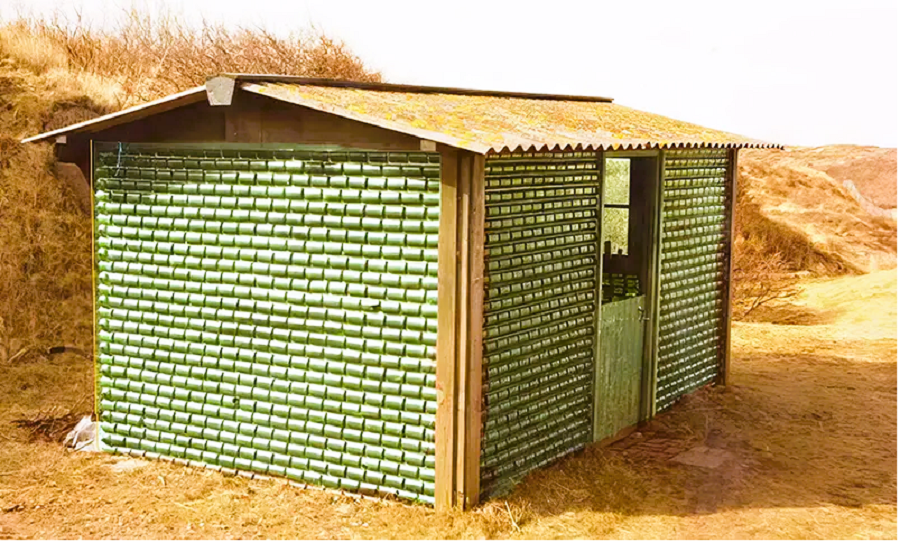
The WOBO bottles were designed with practicality and sustainability in mind. Unlike traditional round beer bottles, the WOBO had flat sides that allowed them to interlock like bricks. The bottles came in two sizes—one shorter and one longer—enabling versatility in construction, similar to the variety of shapes used in traditional masonry.

The bottles were also designed with grooves that would allow mortar to hold them together securely. Made from sturdy glass, they could bear significant weight, making them suitable for constructing walls. By creating a product that served a dual purpose—beer packaging and building material—Heineken took an innovative step toward integrating recycling into everyday life.
Challenges in Implementation
Despite the ingenuity of the WOBO, the project faced several challenges that limited its widespread adoption.
- Cost and Logistics: Manufacturing the WOBO was more expensive than producing standard beer bottles. Additionally, the unconventional shape made bottling, transportation, and storage more complex, increasing logistical costs for the company.
- Market Resistance: The WOBO concept was ahead of its time. In the 1960s, the global conversation about sustainability and recycling was not as prominent as it is today, and there was limited consumer interest in the idea of housing constructed from beer bottles.
- Regulatory and Practical Hurdles: While the WOBO demonstrated feasibility in a controlled environment, adapting it for large-scale construction projects posed practical and regulatory challenges. The durability of the glass and the structural integrity of buildings constructed with WOBOs would have required extensive testing and certifications to meet building standards.
A Legacy of Innovation
Although the WOBO never achieved mainstream success, its legacy endures as a landmark in sustainable design and corporate innovation. In 1965, a small shelter constructed from approximately 1,000 WOBOs was completed in Curaçao, demonstrating the practical application of the concept. This shelter still stands today, serving as a tangible reminder of the project’s potential and as a conversation piece about the possibilities of environmentally conscious design.
Freddy Heineken’s vision for the WOBO also marked an early step in corporate social responsibility. The project reflected a shift in how businesses could use their resources and influence to address global challenges. By reimagining a product as ubiquitous as a beer bottle, Heineken underscored the potential for innovation to drive sustainable solutions.
Lessons and Implications
The WOBO project offers valuable lessons for contemporary businesses and designers. First, it highlights the importance of thinking beyond the product to consider its lifecycle and environmental impact. The WOBO was one of the earliest examples of circular economy thinking, where waste is minimized by reusing resources in innovative ways.
Second, the project demonstrates the challenges of implementing bold ideas ahead of their time. While Freddy Heineken’s vision may have been too progressive for the 1960s, it paved the way for modern discussions on sustainability, recycling, and eco-friendly architecture.
Finally, the WOBO underscores the potential for corporations to play a proactive role in addressing global challenges. By leveraging their resources, creativity, and influence, businesses can drive meaningful change, even if the solutions they propose are not immediately scalable.
Heineken’s 1964 effort to build homes with beer bottles stands as a testament to the power of innovation and the pursuit of sustainability. The WOBO project was more than a practical attempt to repurpose waste—it was a bold vision for a better, more resourceful world. Although the project faced insurmountable challenges in its time, its spirit of creativity and responsibility continues to inspire designers, architects, and businesses today. Freddy Heineken’s vision for the WOBO reminds us that even small ideas can have a lasting impact, shaping the way we think about the intersection of design, sustainability, and social good.
sources
https://www.heinekencollection.com/en/stories/the-story-behind-the-wobo
Donation
Your readership is what makes my site a success, and I am truly passionate about providing you with valuable content. I have been doing this at no cost and will continue to do so. Your voluntary donation of $2 or more, if you are able, would be a significant contribution to the continuation of my work. However, I fully understand if you’re not in a position to do so. Your support, in any form, is greatly appreciated. Thank you. To donate, click on the credit/debit card icon of the card you will use. If you want to donate more than $2, just add a higher number in the box left from the PayPal link. Your generosity is greatly appreciated. Many thanks.
$2.00
 History of Sorts
Leave a comment