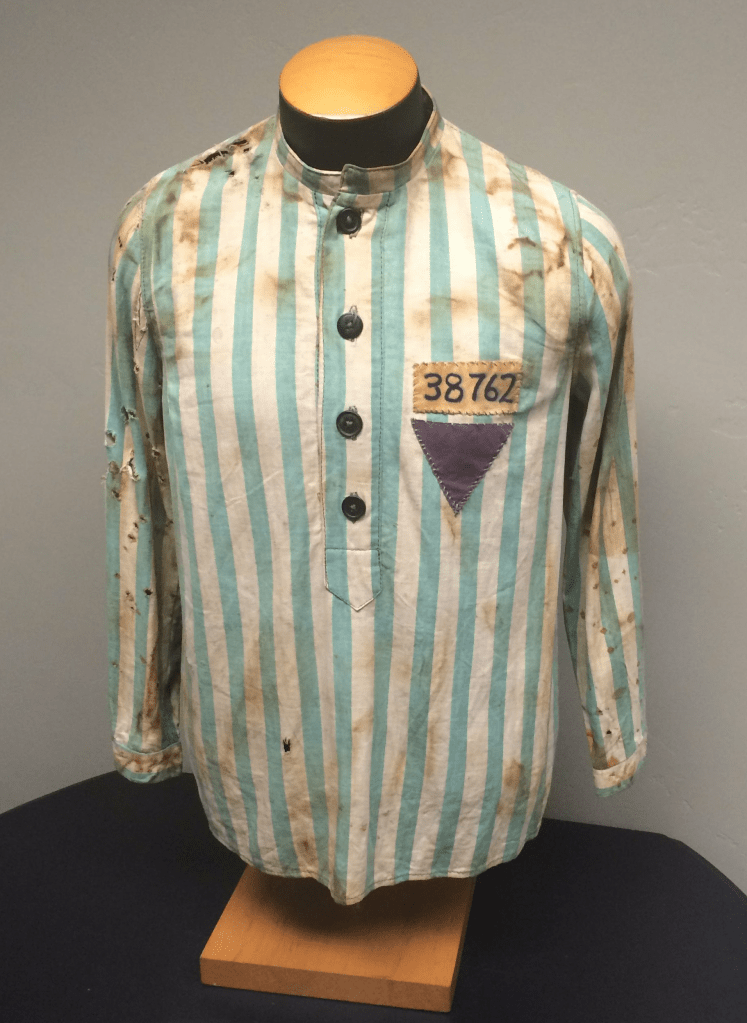
Jehovah’s Witnesses, known in early 20th-century Germany as the Bibelforscher (“Bible Students”), held convictions—refusing military service, political involvement, and allegiance to secular powers—that directly conflicted with the Nazi totalitarian state. Their religious neutrality and international ties led to widespread persecution from 1933 to 1945, making them one of the most persistently targeted religious groups under Nazi rule.
Historical Background and Legal Suppression
In early 1933, regional German authorities began suppressing Jehovah’s Witnesses by breaking up their meetings, raiding offices, and banning literature. By April 1, 1935, the Reich and Prussian Interior Minister officially ordered the dissolution of the Watchtower Society in Germany
Compulsory military service, reintroduced in March 1935, intensified the conflict: Witnesses’ refusal to be conscripted or perform war-related duties triggered arrests, trials, and detention in both prisons and concentration camps
Scope and Scale of Persecution
Estimates vary among scholars, but consensus shows the scale was significant: Out of approximately 25,000–30,000 Jehovah’s Witnesses active in Germany in 1933, about 20,000 continued practicing during the Nazi period
By 1939, some 6,000 had been imprisoned or sent to camps, while over 3,000 had become concentration camp inmates—including individuals from neighboring countries
Between 2,000 and 5,000 Witnesses died in custody, with at least 250 executed for refusing military service
Another source places the death toll around 1,000 German Witnesses plus 400 from other countries, with about 273 executed by military courts
The Holocaust Memorial Day Trust estimates approximately 1,500 murdered, of whom about 250 were executed
Some sources cite up to 11,300 imprisoned and 2,500–5,000 deaths
Despite variations, the numbers clearly reflect extensive and sustained persecution.
Identification and Treatment in Camps
In concentration camps, Jehovah’s Witnesses were identified by the purple triangle badge (with the abbreviation IBV for Internationale Bibelforscher-Vereinigung)
. This served to isolate them from other prisoners—both to undermine their evangelism efforts and to label them “enemies of the state”
Christian Science Monitor
libapp.shadygrove.umd.edu
. They were sometimes exploited as relatively “trustworthy” domestic workers, but remained steadfast in refusing military or ideological compliance
Acts of Resistance and Moral Defiance
Jehovah’s Witnesses were offered a chance to escape punishment: if they signed a declaration renouncing their faith and pledging loyalty to Hitler and the Reich, they could avoid longer sentences. However, the vast majority refused, even in face of beatings, torture, or public execution
.One striking example: August Dickmann, a conscientious objector, was publicly executed on September 15, 1939, at Sachsenhausen camp — the first such execution in the war — ordered by Heinrich Himmler and carried out in front of fellow prisoners to intimidate them
Rather than breaking the group’s morale, this act galvanized their resolve

Survivor Testimonies
Personal narratives vividly illustrate this resilience:
Simone Arnold Liebster, persecuted as a teenager, recalled:
“They arrested my Dad… They closed our bank account and refused my mum a working card, telling her that there was neither work nor help for vermin.”
Holocaust Memorial Day Trust
Magdalena Kusserow-Reuter refused to renounce her faith after six months of solitary confinement:
“I said, ‘Never, never!’ … How could I? I was thinking of my brothers.” She spent three more years in Ravensbrück camp
Walda Beckmann (oral history interview) recounted multiple imprisonments between 1933 and 1945, participating covertly in printing and distributing Der Wachturm, and organizing secret meetings while under Gestapo surveillance
Bohumil Müller, leader of Czechoslovak Jehovah’s Witnesses, was imprisoned in Mauthausen. He later described how the SS segregated Witness prisoners to prevent solidarity and how guards were instructed to kill any who met
Richard Rudolph, a double-persecution survivor under both Nazis and later East German communists, spent nearly nine years in Nazi camps for his conscientious objection and religious affiliations; his experiences were documented in survivor interviews
Legal Advocacy and the “Declaration of Facts”
In June 1933, the Witnesses produced the Declaration of Facts, distributed widely (over 2.1 million copies), and sent to high-ranking officials including Hitler. It proclaimed their political neutrality, protested discrimination, and attempted to align some ethical common ground with Nazi ideals. However, it backfired—fueling further repression
Scholarly Interpretations
Historians like Sybil Milton highlight how the Witnesses’ moral defiance challenged the perception of passive compliance under Nazism:
“Their courage and defiance in the face of torture and death punctures the myth of a monolithic Nazi state ruling over docile and submissive subjects.”
Michael Berenbaum also noted that although small in number, Jehovah’s Witnesses played a significant role as conscientious resisters
Aftermath and Legacy
Post-war, Jehovah’s Witnesses were among the first to resume congregational life, their organizational structure having endured repression. Their persecution is now officially commemorated, and the purple triangle appears in memorial displays alongside other symbols of Nazi victim groups
In modern Germany, since 2017, they have held the same legal status as major religious denominations
Jehovah’s Witnesses in Nazi Germany demonstrated extraordinary moral fortitude. Their refusal to comply with state rituals, military service, and ideological conformity made them prime targets of Nazi persecution. Yet, through imprisonment, public executions, and ideological suppression, they maintained their faith and community cohesion. Survivor testimonies from Simone Arnold Liebster, Magdalena Kusserow-Reuter, Walda Beckmann, Bohumil Müller, and Richard Rudolph offer powerful, personal perspectives that deepen our understanding of their resistance. Their story offers a vital lesson in conscience, religious freedom, and human resilience under oppression.
sources
https://encyclopedia.ushmm.org/content/en/article/nazi-persecution-of-jehovahs-witnesses?
https://www.csmonitor.com/1996/1106/110696.feat.feat.1.html?
https://en.wikipedia.org/wiki/Richard_Rudolph_(concentration_camp_survivor)
https://en.wikipedia.org/wiki/Bohumil_M%C3%BCller
Please support us so we can continue our important work.
Donation
Your readership is what makes my site a success, and I am truly passionate about providing you with valuable content. I have been doing this at no cost and will continue to do so. Your voluntary donation of $2 or more, if you are able, would be a significant contribution to the continuation of my work. However, I fully understand if you’re not in a position to do so. Your support, in any form, is greatly appreciated. Thank you. To donate, click on the credit/debit card icon of the card you will use. If you want to donate more than $2, just add a higher number in the box left from the PayPal link. Your generosity is greatly appreciated. Many thanks.
$2.00

 History of Sorts
Leave a comment