
The story of Dutch art dealer Jacques Goudstikker (1897–1940) unfolds like a World War II drama—complete with a daring escape from the Nazis, a tragic accident, an opera singer, and the plundering of a world-class art collection. Goudstikker was one of Amsterdam’s leading Jewish art dealers, renowned for his connoisseurship and scholarly expertise, and his gallery housed one of Europe’s finest collections of Old Master paintings.
Jacques Goudstikker was born in Amsterdam, the son of art dealer Eduard Goudstikker. After attending the city’s commercial school, he pursued further studies in art history under Wilhelm Martin at Leiden and William Vogelsang at Utrecht.
In 1919, he joined his father’s gallery in Amsterdam and soon transformed it into a besloten vennootschap (private limited company), with himself as director and principal shareholder. Goudstikker modernized the business with a bold, international vision: publishing catalogues in French rather than Dutch and introducing Italian Renaissance paintings to Dutch audiences—an unprecedented move at the time. One landmark example was his exhibition of The Madonna and Child by Francesco Squarcione.
This cosmopolitan approach marked a radical break with prevailing Dutch tastes. As late as 1906, Adriaan Pit, then-director of the Rijksmuseum, had famously declared: “We have become chauvinistic with regard to the field of art. This worship of our old school of painting, which started thirty years ago, is still alive and appears not to let us appreciate any foreign art.” Goudstikker’s gallery challenged this insularity, opening the Dutch art world to a broader, European perspective.
The Goudstikker Collection, built over generations, featured masterpieces of Northern Baroque, Italian Renaissance, and later European schools. Displayed in Goudstikker’s opulent Amsterdam gallery, the collection was admired across the European art world.
In 1937, Goudstikker married Viennese opera singer Désirée von Halban Kurz, daughter of the celebrated soprano Selma Kurz. They had a son, Edo, and by 1939—with war looming—Jacques sought U.S. visas for his family. Those visas expired on May 9, 1940, just as German forces invaded the Netherlands. On May 13, as the Nazis entered Amsterdam, the family fled aboard the SS Bodegraven, gaining passage in part because a guard recognized Désirée from a concert she had given to the troops.
Tragedy struck two days later. On the night of May 15, while crossing the English Channel, Jacques fell through an open hatch on the ship’s deck and died. He was buried hastily in Falmouth, England, while Désirée and Edo continued on to Canada and eventually the United States. In his pocket was the small black notebook where he had meticulously inventoried his collection—an invaluable record that would later prove essential in tracing its fate.
Within weeks of his death, the Nazis looted the Goudstikker Gallery. Hermann Göring, Hitler’s deputy, seized around 800 of the most valuable works for his personal residences. The gallery and Goudstikker’s country estate were transferred in a forced sale to Göring’s associate Alois Miedl, who continued to operate under the Goudstikker name. This plunder remains one of the largest single art thefts committed by the Nazis.
After the war, Allied forces recovered more than 200 paintings, which were turned over to the Dutch government. Despite repeated pleas from the family, the works were absorbed into the national collection and not returned.
It was not until the 1990s—following a renewed investigation into postwar restitution practices—that Goudstikker’s descendants reopened the case. Backed by a team of lawyers and art historians, they succeeded in reclaiming 200 works in 2006, in one of the largest restitutions of Nazi-looted art ever achieved. Still, more than 1,000 works from the collection remain missing.
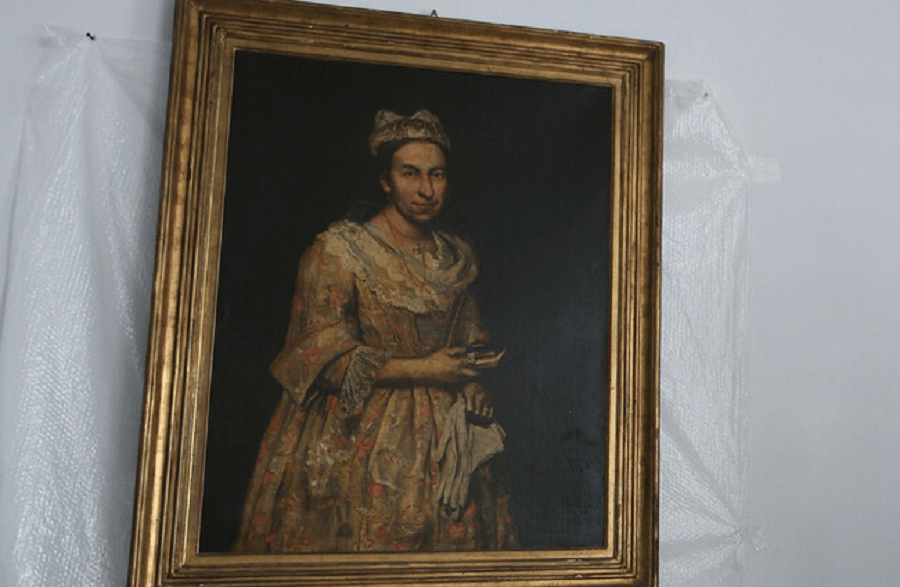
The Recovery of Portrait of a Lady by Giuseppe Vittore
The history of art is often intertwined with the turbulence of human events. Wars, revolutions, and political upheavals have repeatedly displaced cultural treasures, sending them into exile, hiding, or the hands of those who sought to profit from their beauty. One striking example is the recent recovery of Portrait of a Lady by the Italian Baroque painter Giuseppe Vittore Ghislandi, better known as Fra Galgario. The painting, believed to depict Contessa Colleoni, not only exemplifies the refinement of early eighteenth-century portraiture but also carries a narrative of loss, theft, concealment, and eventual rediscovery that stretches across centuries and continents.
The Artist and the Painting
Giuseppe Vittore Ghislandi (1655–1743) was among the most distinguished portraitists of late Baroque Italy. Born in Bergamo, he trained in Venice and Milan before becoming a member of the Order of the Minims in 1702, at which point he acquired the name Fra Galgario. His work is marked by psychological insight and an elegant restraint, qualities that distinguished him from the grand theatricality often associated with Baroque painting. Portrait of a Lady, painted in the early 1700s, is one of his finest examples. Its sitter, thought to be a member of the prominent Colleoni family, is rendered with grace, composure, and meticulous detail, embodying both aristocratic dignity and subtle individuality.
Nazi Looting and Displacement
The painting’s serene elegance belies its turbulent history. In the 1930s, Portrait of a Lady belonged to Jacques Goudstikker, a prominent Dutch-Jewish art dealer in Amsterdam. When the Nazis invaded the Netherlands in 1940, Goudstikker was forced to flee, leaving behind a collection of over 1,400 works of art. His gallery was plundered, and his possessions were acquired by high-ranking Nazi officials, including Hermann Göring. Fra Galgario’s portrait became part of this vast, looted cultural legacy, one of thousands of artworks scattered across Europe as a consequence of Nazi occupation.
For decades, the painting’s whereabouts were unknown. Like many works seized during the war, it vanished from public record, presumably lost or hidden within private collections. Families, museums, and governments have since struggled to recover such works, leading to ongoing debates over restitution and justice for victims of cultural theft.
Rediscovery in Argentina
The story took a dramatic turn in August 2025, when Dutch journalists and investigators identified Portrait of a Lady in an unexpected place: a real estate listing. A photograph of a coastal property in Mar del Plata, Argentina, showed the distinctive Fra Galgario painting hanging on the wall of a private home. The house belonged to Patricia Kadgien, the daughter of Friedrich Kadgien, a Nazi official who had fled to South America after World War II.
The investigation began when Dutch journalist Peter Schouten visited Kadgien’s home while researching her father’s past.
“When we tried to speak with her, there had been a lot of news stories in the Netherlands about him about ten years ago,” Schouten told Argentina’s Radio Rivadavia.
Finding no one at the door, he noticed a for sale sign. Later, while checking real estate listings, he saw a photo of the house’s interior. In it, he recognized a painting of interest.
“I sent the information to Holland, where institutions confirmed it was authentic,” Schouten said.
Attempts to contact Kadgien went unanswered, and soon afterward the property listing was removed.
Argentine authorities, alerted to the discovery, intervened swiftly. Patricia Kadgien and her husband were placed under house arrest, charged with concealing stolen art, and the painting was seized for safekeeping.
The rediscovery was hailed as a triumph of persistence and international cooperation. For over 80 years, the portrait had remained in obscurity, only to resurface by chance in the age of online property listings. Its recovery underscores the often-unexpected pathways by which lost art can reemerge into the light of history.
Significance and Legacy
The recovery of Portrait of a Lady is significant for several reasons. On one level, it restores a masterpiece of Italian portraiture to the global cultural record. On another, it highlights the ongoing impact of Nazi looting, a crime that extended far beyond material theft to the erasure of cultural heritage and personal legacy. The painting’s return also serves as a reminder of the resilience of justice, even if delayed. While many looted artworks remain missing, the rediscovery of Fra Galgario’s portrait provides hope that others too may one day be found and restituted.
The journey of Giuseppe Vittore’s Portrait of a Lady is emblematic of art’s entanglement with history’s darkest chapters. Once a symbol of aristocratic refinement in eighteenth-century Italy, it became a silent witness to war, theft, and displacement. Its recovery in Argentina, more than eight decades after its confiscation, restores not only a painting but also a piece of human memory and dignity. As scholars, institutions, and governments continue the work of restitution, the case of Fra Galgario’s portrait reminds us that art, though vulnerable, endures—and that its survival can illuminate both the resilience of culture and the importance of justice.
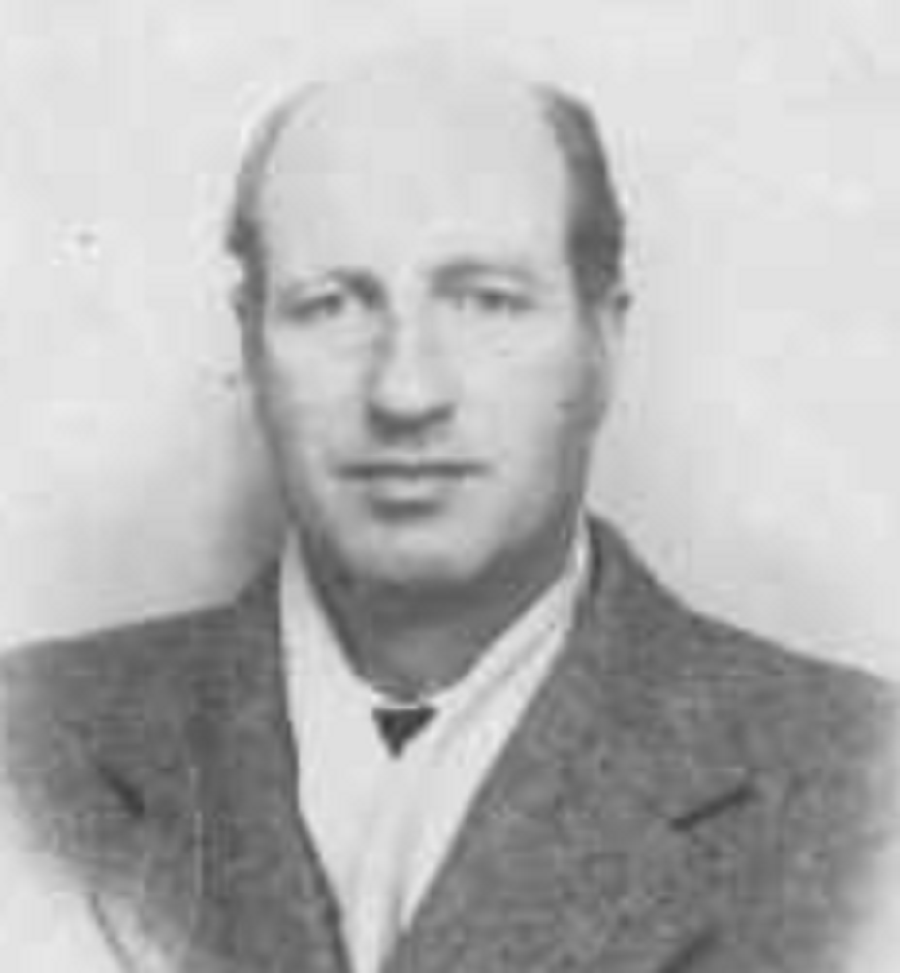
Kadgien began his career as a lecturer in foreign exchange at the Department of Economic Affairs. He later became a financial advisor to Adolf Hitler and Hermann Göring.He was reportedly responsible for transferring large sums of Nazi plunder—estimated at several millions—to South America. Allied intelligence nicknamed him “The Snake” and pursued him for years, though they were ultimately unable to capture him.
While living in Argentina, Kadgien married and had two daughters, Patricia and Alicia.
He died in 1978 at his residence in Mar del Plata, at the age of 70 or 71.
sources
https://en.wikipedia.org/wiki/Friedrich_Kadgien
https://historiek.net/archief-kunsthandel-goudstikker-online-beschikbaar/46556/
https://en.wikipedia.org/wiki/Jacques_Goudstikker
Please support us so we can continue our important work.
Donation
Your readership is what makes my site a success, and I am truly passionate about providing you with valuable content. I have been doing this at no cost and will continue to do so. Your voluntary donation of $2 or more, if you are able, would be a significant contribution to the continuation of my work. However, I fully understand if you’re not in a position to do so. Your support, in any form, is greatly appreciated. Thank you. To donate, click on the credit/debit card icon of the card you will use. If you want to donate more than $2, just add a higher number in the box left from the PayPal link. Your generosity is greatly appreciated. Many thanks.
$2.00

 History of Sorts
Leave a comment