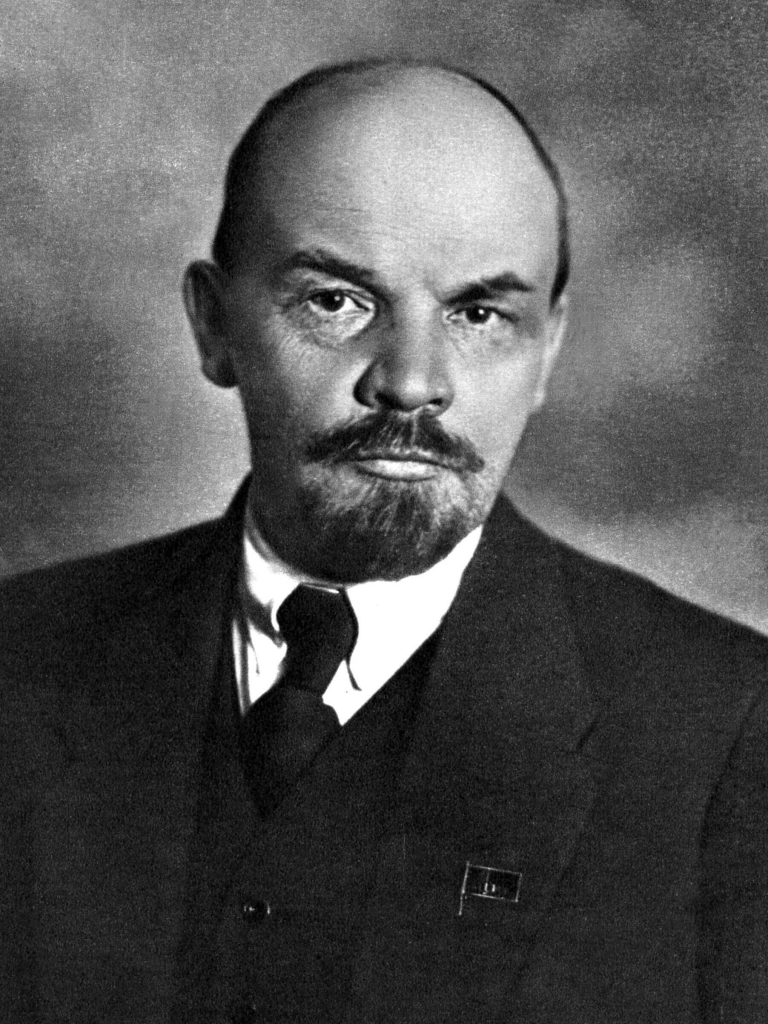
On November 17, 1917—just weeks after the Bolsheviks seized power—Vladimir Lenin delivered one of his most explicit defenses of suppressing opposition newspapers. In the document “Draft Decree on Freedom of the Press” and accompanying statements, Lenin justified what he called a temporary abolition of press freedom, framing it as a revolutionary necessity rather than a departure from socialist principle. His arguments rested on three interconnected claims: the press as an instrument of class power, the revolutionary contingency of the moment, and the promise of future democratic freedoms after the new order was secure.
- The Press as a Weapon of the Bourgeoisie
Lenin’s central argument was that newspapers were not neutral vehicles of information but tools of class rule. In his view, the capitalist class had used the press to shape public consciousness, sabotage the revolution, and “spread slanders” against the workers’ government. Because the means of mass communication had long been controlled by wealthy interests, Lenin claimed that formally guaranteeing press freedom would simply protect the power of the old ruling class.
He argued that counter-revolutionary newspapers were “weapons” in an active struggle, not peaceful instruments of opinion. In revolutionary conditions—when the new state was still fragile—the Bolsheviks believed that allowing hostile papers to operate meant permitting those with financial power to organize resistance, support rival armed groups, and undermine public order. Thus, Lenin described the decree not as censorship for its own sake, but as disarmament of a political enemy.
- Emergency Conditions and the Necessity of Suppression
Lenin insisted that the Bolsheviks were not restricting the press on principle but responding to the extraordinary circumstances of 1917. Russia was in the midst of war, economic breakdown, and near-civil war; the Provisional Government had just collapsed, and rival political forces were attempting to reorganize.
The decree that Lenin defended on November 17 allowed the government to shut down newspapers that engaged in:
“calls for open resistance” to Soviet authority
“appeals for crimes” that could disrupt the socialist transformation
“calumny” that could incite counter-revolution
To Lenin, these were not normal political disagreements; they were existential threats to a revolution under siege. He argued that no revolutionary government could survive while giving full civil liberties to those trying to overthrow it. The removal of press freedom was positioned as a matter of self-preservation.
- The Measures Were “Temporary”—but Only Conditioned on the Revolution’s Safety
A distinctive feature of Lenin’s November 17 defense is his repeated emphasis that the restrictions were temporary and conditional. He explicitly stated that they would be lifted once the new socialist order was secure from counter-revolutionary danger.
According to Lenin, genuine freedom of the press would one day require:
socialization of printing facilities and paper
the end of private ownership of the means of publication
state guarantees of access for workers’ and peasants’ organizations
Only then, he argued, could freedom of the press be meaningful and not merely a legal fiction favoring those with wealth.
Thus, Lenin characterized the Bolshevik policy as a transition: the old “bourgeois” freedom of the press had to be dismantled before a new, more egalitarian form could arise. He suggested that allowing old elites to wield their press power during the transition would sabotage the possibility of achieving that very future freedom.
- A Revolutionary, Not Liberal, Understanding of Freedom
Lenin’s justification also rested on a fundamental ideological departure from liberal political theory. Where liberalism viewed press freedom as an inherent right, Lenin saw it as a class instrument whose social content mattered more than its formal existence. Under capitalism, he argued, the working class had never enjoyed genuine freedom of expression because it lacked access to publishing resources.
Therefore, suppressing bourgeois newspapers was, in his view, a step toward freeing the press from capitalist control, not a contradiction of socialist ideals. By framing the issue this way, Lenin presented the temporary abolition of press freedom as a means to create the conditions for a more authentic form of democratic communication.
Conclusion
Lenin’s defense of the November 17, 1917 restrictions on the press reflects both the ideological framework of Bolshevism and the acute political instability of the early Soviet period. He portrayed the suppression of opposition newspapers as a temporary emergency measure, necessary to protect the revolution from its enemies and to dismantle the material basis of bourgeois power. At the same time, his argument revealed a deeper belief that the liberal concept of press freedom was inseparable from capitalist domination—and that only by restricting bourgeois media could the working class ultimately achieve real freedom of expression.
Whether Lenin truly intended the measures to be temporary remains a subject of historical debate, particularly given the long-term censorship practices of the Soviet state. But in November 1917, his justification drew heavily on the language of necessity, transition, and the promise of a future socialist democracy that could flourish only after the revolution’s survival was assured.
So many similarities with some political leaders in 2025
https://www.britannica.com/biography/Vladimir-Lenin
https://www.bbc.co.uk/history/historic_figures/lenin_vladimir.shtml
 History of Sorts
Leave a comment