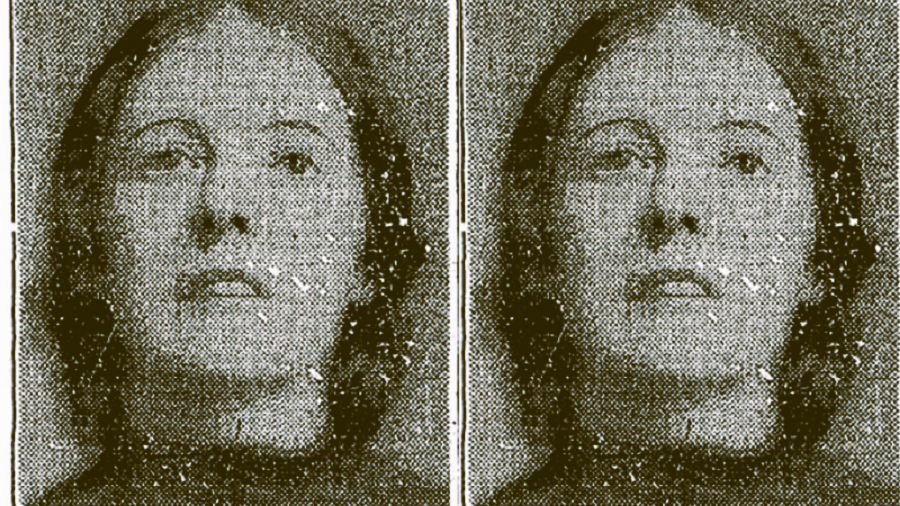
The 1930s were a period of profound upheaval in Europe. The rise of fascism and Nazism was altering the political landscape, and many countries were drawn into the vortex of ideologies that would define much of the 20th century. While much of the world’s attention was focused on the German threat under Adolf Hitler, the Soviet Union’s rise, and the growing tensions between European powers, a small but disturbing trend was emerging within the neutral Irish state: the presence of pro-Nazi sympathizers. One of the most notable, though largely forgotten, figures in this movement was Lia Clarke, an Irishwoman whose advocacy for Nazi Germany and anti-Semitic propaganda left a dark mark on the country’s political history during the prelude to World War II.
Who Was Lia Clarke?
Lia Clarke was an Irish woman who became infamous for her pro-Nazi sentiments and her active involvement in spreading Nazi propaganda within Ireland during the 1930s. Her name remains relatively obscure, partly due to the fact that her ideas were part of a small, fringe movement that was overshadowed by the broader political developments in Ireland and the world. Nevertheless, Clarke’s actions are worth revisiting today to understand how extremist ideologies sometimes infiltrate even neutral, isolated nations like Ireland.
Born in Ireland, Clarke became active in the country’s far-right political circles during a time when Europe was deeply divided by political and economic crises. Though there were many shades of political ideology in Ireland at the time — ranging from republicanism to conservatism to socialism — Clarke gravitated toward a dangerous and extreme worldview that aligned her with Nazi Germany, which was expanding its power and influence under Hitler’s rule. This affinity for fascism, particularly the Nazi model, was not unique to Ireland, as similar movements were cropping up throughout Europe. However, Clarke’s case stands out for several reasons: she was a woman in a deeply patriarchal political landscape, and she managed to become a spokesperson for Nazi ideas in a country that had largely remained neutral during the early years of World War II.
The Context of Ireland in the 1930s
To understand why someone like Lia Clarke might have been drawn to Nazi ideology, it is essential to consider the broader political environment in Ireland during the 1930s. The Irish Free State, established in 1922 after the War of Independence, was a country still finding its identity. The civil war of the previous decade had left deep divisions, and the country was grappling with economic difficulties, political fragmentation, and its role on the international stage.
In many ways, Ireland was a nation caught between two opposing forces: the desire for economic stability and sovereignty and the political influence of larger European powers, particularly Britain. The country’s leadership under Éamon de Valera was firmly neutral during World War II, and while Ireland was far removed from the conflict, political movements within the country mirrored those seen across Europe. These movements included everything from communism to conservatism, as well as the appeal of fascist ideology, which gained traction in several countries due to the perceived failures of liberal democracy and the economic difficulties of the time.
In this context, it is no surprise that some in Ireland looked to Nazi Germany for inspiration. Hitler’s rise to power was, in part, based on his ability to unite a fractured nation with a strong nationalist message, and the idea of an authoritarian, centralized state appealed to some Irish groups. Additionally, Hitler’s anti-British stance resonated with Irish nationalists who had long struggled against British influence. However, while these nationalist sentiments were understandable, they also laid the groundwork for more dangerous ideologies to take root.
The Irish Christian Front and Its Pro-Nazi Agenda
Lia Clarke was most prominently associated with the Irish Christian Front, an anti-Semitic and pro-fascist organization that emerged during the 1930s. The Irish Christian Front, led by the priest Fr. Denis Fahey, was primarily focused on opposing communism and what its members viewed as the Jewish control of international finance and politics. While the movement was not exclusively pro-Nazi, it certainly admired many aspects of Nazi Germany, including its anti-Semitic policies and its commitment to a nationalist, authoritarian state.
The Irish Christian Front operated largely under the radar but had a small but vocal membership that supported the Nazi regime. They held rallies, distributed literature, and even sought to gain political influence within Ireland. Clarke, who was an active participant in the Front, used her position to promote Nazi ideals. She attended meetings, gave speeches, and, most notoriously, engaged in the distribution of pro-Nazi propaganda. Clarke’s rhetoric was focused on promoting fascist ideas, including the belief in a hierarchical society based on race, a hatred of communism, and an endorsement of the Nazi worldview.
In addition to her involvement in the Irish Christian Front, Clarke was known to have written articles and given speeches praising Adolf Hitler’s vision for Germany. She admired his strong stance against Britain, his militaristic nationalism, and his economic policies that emphasized autarky (economic self-sufficiency). In these writings and speeches, Clarke echoed many of the themes that were central to Nazi ideology, including the idea that the Jews were responsible for the ills of the world and that Europe needed strong, authoritarian leadership to restore order and prosperity.
The Role of Women in the Far-Right Movements of the 1930s
Lia Clarke’s role as a woman within the Irish pro-Nazi movement is noteworthy. While far-right political movements, including Nazi ideology, were generally dominated by men, Clarke broke with that tradition by becoming a public advocate for fascism. She was a rare example of a female supporter of Nazi ideology during this period, and her visibility in this context is particularly striking because women were often relegated to traditional roles in fascist organizations.
In Nazi Germany, for example, women were expected to focus on motherhood and maintaining the home. However, in Ireland, women like Clarke took a more active role in promoting far-right ideas. Women were instrumental in disseminating propaganda, organizing rallies, and forming political networks that sought to challenge the dominant political order. This reflected the broader role of women in fascist movements, where they were often recruited for their ability to influence society on a cultural and domestic level.
The Decline of Clarke’s Influence and the War Years
Lia Clarke’s influence began to fade with the outbreak of World War II, particularly after the scale of Nazi atrocities became evident to the wider public. The horrors of the Holocaust and the devastation wrought by Hitler’s regime turned much of the world against the Nazis, and Clarke’s brand of pro-Nazi rhetoric became increasingly unpopular. In Ireland, as in much of Europe, there was a growing realization of the dangers posed by Nazi ideology.
Though Clarke continued her activities into the early years of the war, her movement and the organizations with which she was associated lost much of their support. The Irish government, which had been neutral during the early years of the conflict, had no tolerance for open sympathizers of Nazi Germany, especially after the full scope of the regime’s war crimes came to light.
Lia Clarke’s actions represent a disturbing and often overlooked aspect of Ireland’s political history during the 1930s and 1940s. Her involvement in spreading Nazi propaganda serves as a reminder that extremist ideologies can take root even in countries that are geographically and politically isolated. Clarke’s legacy is one of a small but vocal minority who tried to steer Ireland toward a dangerous alignment with Nazi Germany.
While Ireland largely remained neutral during the war, the presence of figures like Lia Clarke demonstrates how fascist ideas can find traction even in the most unlikely of places. It also serves as a reminder that even in times of national struggle or isolation, it is critical to recognize and resist dangerous ideologies that seek to undermine democratic principles and human rights.
Lia Clarke’s role in pro-Nazi propaganda is a dark chapter in Irish history, one that serves as a cautionary tale about the allure of authoritarianism and the destructive power of extremist ideas. While her influence may have been limited, her story reminds us that history is shaped by individuals and movements, some of which we would do well to remember and study in order to prevent similar ideologies from taking root in the future.
Sources
https://politics.ie/threads/lia-clarke-who-precisely-was-she.133184/
Donation
Your readership is what makes my site a success, and I am truly passionate about providing you with valuable content. I have been doing this at no cost and will continue to do so. Your voluntary donation of $2 or more, if you are able, would be a significant contribution to the continuation of my work. However, I fully understand if you’re not in a position to do so. Your support, in any form, is greatly appreciated. Thank you. To donate, click on the credit/debit card icon of the card you will use. If you want to donate more than $2, just add a higher number in the box left from the PayPal link. Your generosity is greatly appreciated. Many thanks.
$2.00

 History of Sorts
Leave a comment