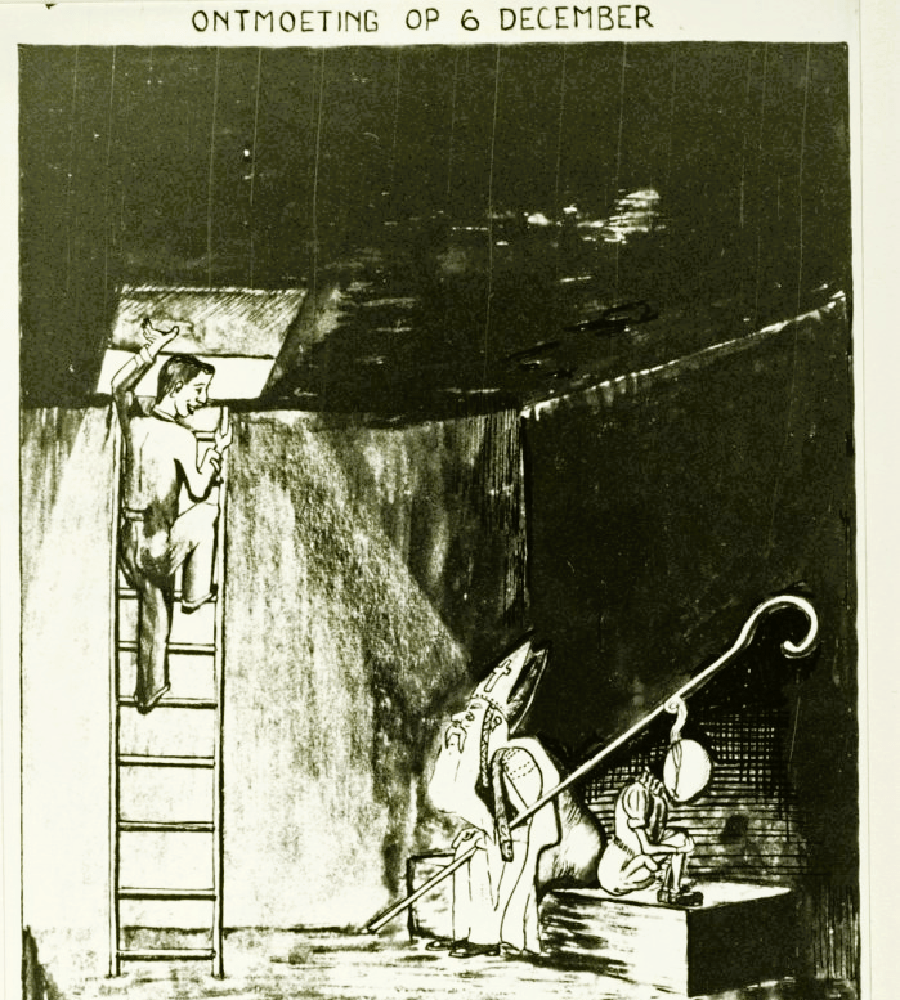
Sinterklaas, also known as Saint Nicholas, is a beloved tradition in the Netherlands and parts of Belgium, celebrated annually on December 5th (Sinterklaasavond or Pakjesavond) and leading up to that date. It is also observed in other regions with Dutch heritage. The tradition centers around Sinterklaas, a figure akin to Santa Claus, who is based on the historical Saint Nicholas, the patron saint of children.
The Sinterklaasrazzia of 1944 refers to a dramatic Nazi operation conducted during World War II in the Netherlands. On December 5, 1944, Sinterklaas Day, the Nazi authorities organized a surprise raid in Rotterdam and its surrounding areas. This operation was aimed at capturing Dutch men to force them into labor service for the German war effort.
Background and Context
By late 1944, the tide of the war had turned against Nazi Germany. Allied forces had liberated much of France and Belgium and were advancing through the southern Netherlands. However, areas such as Rotterdam remained under German occupation. Faced with increasing manpower shortages on the Eastern and Western fronts, the Nazi regime sought to conscript laborers for military and industrial purposes. This led to the practice of large-scale razzias, or raids, aimed at rounding up able-bodied men for forced labor.
Rotterdam, a major port city, had already suffered tremendously during the war. The 1940 bombing of the city by German forces had left much of its center in ruins, and its population was subjected to harsh occupation policies, food shortages, and fear. By late 1944, the Dutch Hunger Winter had begun, exacerbating the suffering of civilians. It was in this dire context that the Sinterklaasrazzia took place.
The Raid
On the morning of December 5, 1944, German forces launched a meticulously planned operation. They cordoned off neighborhoods in Rotterdam and nearby Schiedam, ensuring that no one could escape. The timing of the operation, coinciding with Sinterklaas celebrations, was deliberate, as the occupiers sought to exploit the element of surprise. Many families, expecting to spend the day celebrating the beloved holiday, were caught completely off guard.
German soldiers went door to door, forcing men between the ages of 17 and 40 to assemble in designated areas. Resistance was futile, as the occupiers had planned the operation with ruthless efficiency, deploying soldiers and vehicles to prevent escapes. Women, children, and the elderly were left behind, witnessing the traumatic separation of their loved ones. Over 50,000 men were ultimately rounded up during the razzia.

The Aftermath
The captured men were transported under harsh conditions to labor camps in Germany and other occupied territories. Many were subjected to grueling work in factories, railroads, and mines under deplorable conditions. Malnutrition, illness, and mistreatment were common, and survival was far from guaranteed.
The impact of the Sinterklaasrazzia reverberated throughout Rotterdam and the Netherlands. Families were torn apart, and the psychological toll on those left behind was immense. The razzia also further eroded the already strained relationship between the Dutch population and the Nazis, fueling resistance efforts and deepening resentment.
For those who survived forced labor and returned after the war, reintegration into society was often challenging. Many carried physical and emotional scars from their experiences, and the loss of years spent in servitude haunted them and their families.
Legacy and Commemoration
Today, the Sinterklaasrazzia is remembered as one of the darkest episodes of the German occupation of the Netherlands. It underscores the brutality of wartime policies and the profound suffering inflicted on civilians. In Rotterdam, memorials and commemorative events serve to honor the victims and educate future generations about this tragic event.
The Sinterklaasrazzia also serves as a reminder of the resilience of the Dutch people. Despite immense hardship, the spirit of resistance persisted, and the country eventually emerged from the war determined to rebuild and reclaim its independence.
The Sinterklaasrazzia of 1944 stands out not only for its timing but also for its devastating impact on Dutch society. Occurring on a day typically associated with joy and generosity, the razzia brought fear, loss, and sorrow to thousands of families. Remembering this dark chapter is essential to honoring those who suffered and ensuring that such atrocities are never forgotten. In doing so, the Sinterklaasrazzia becomes more than a historical event—it becomes a testament to the enduring human spirit in the face of adversity.
sources
https://geschiedenislokaal023.nl/bronnen/sinterklaasrazzia
https://anderetijden.nl/programma/1/Andere-Tijden/aflevering/166/De-Sinterklaasrazzia
Donation
Your readership is what makes my site a success, and I am truly passionate about providing you with valuable content. I have been doing this at no cost and will continue to do so. Your voluntary donation of $2 or more, if you are able, would be a significant contribution to the continuation of my work. However, I fully understand if you’re not in a position to do so. Your support, in any form, is greatly appreciated. Thank you. To donate, click on the credit/debit card icon of the card you will use. If you want to donate more than $2, just add a higher number in the box left from the PayPal link. Your generosity is greatly appreciated. Many thanks.
$2.00
 History of Sorts
Leave a comment