
A bit of forgotten Movie history on the 122nd birthday of one of Hollywood’s greatest Cary Grant.
Cary Grant’s near-casting as James Bond is one of the most revealing “what-ifs” in film history, because it shows how the Bond franchise defined itself by not choosing the most obvious star.
By the late 1950s, Ian Fleming’s James Bond novels were successful, but they had not yet become a cinematic institution. When producers Albert R. “Cubby” Broccoli and Harry Saltzman acquired the film rights, they faced a central problem: how to convince audiences that a relatively obscure British spy series could compete with Hollywood’s biggest attractions. Their initial solution was simple—attach a global star. Cary Grant, at the time, was one of the most famous and bankable actors in the world.
Grant was not a random choice. Fleming himself had long imagined Bond as a suave, dark-haired gentleman with effortless charm, and he openly cited Grant as a visual and stylistic model for the character. Grant’s screen persona—cool under pressure, ironic, impeccably dressed, and capable of violence without losing elegance—aligned almost perfectly with Fleming’s conception of Bond. In many ways, Grant already was James Bond before the role existed on screen.
Broccoli and Saltzman formally approached Grant in the early stages of planning Dr. No (1962), the first Bond film. Grant expressed interest and seriously considered the role, which alone indicates how tentative and experimental the Bond project still was. However, the discussions quickly revealed a fundamental mismatch between Grant’s career priorities and the producers’ long-term vision.
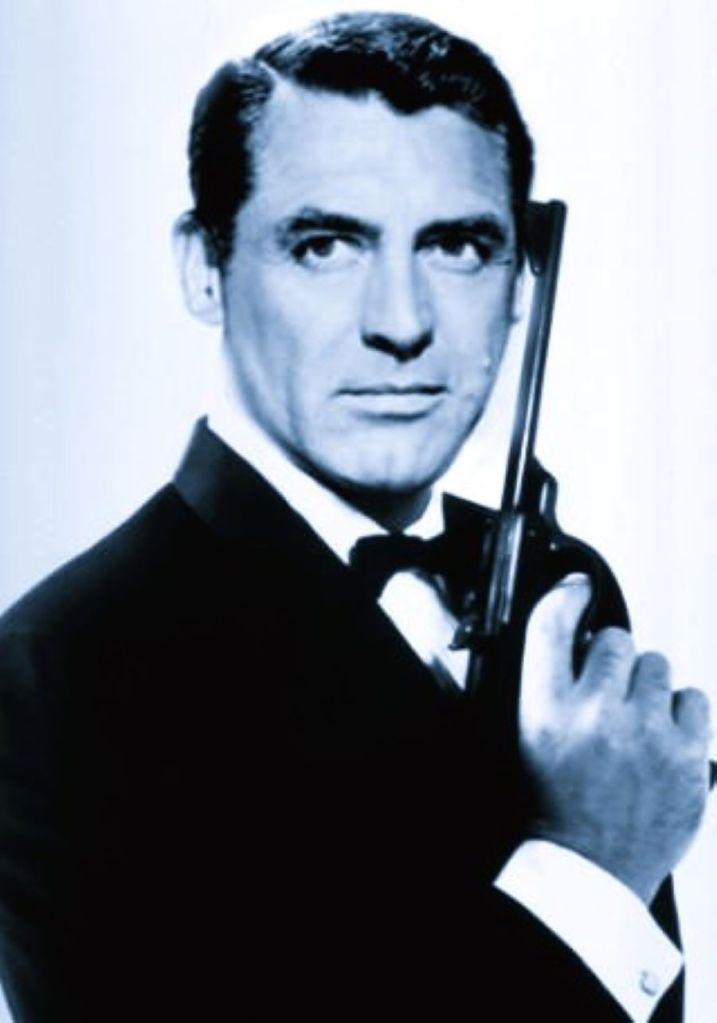
Grant was in his late fifties and nearing semi-retirement. He was selective, protective of his image, and uninterested in committing to a demanding, multi-film contract. He reportedly made it clear that he would only be willing to appear in a single Bond film. For Broccoli and Saltzman, this was a deal-breaker. They were not trying to make one prestige spy movie; they were trying to launch a franchise. Bond, they believed, needed continuity—a face that audiences could follow across many films, not a one-off star performance.
This decision marks a crucial turning point in Bond history. Instead of building the series around an established celebrity, the producers chose to build the celebrity around the series. Grant’s refusal indirectly pushed them toward a younger, less famous actor who could grow with the role. That search ultimately led to Sean Connery, a Scottish actor with limited international recognition but immense physical presence and latent charisma.
Ironically, Cary Grant’s influence did not disappear with his absence. Connery’s Bond adopted many Grant-like qualities: dry wit, tailored sophistication, and an amused detachment from danger. In this sense, Grant became the franchise’s invisible template rather than its first star.
Cary Grant was asked to play James Bond because he represented the ideal of what Bond was imagined to be. He did not play Bond because the franchise needed something more enduring than a perfect first impression. By choosing longevity over instant glamour, the Bond producers ensured that James Bond would outlast any single actor—even one as legendary as Cary Grant.
Sources
https://www.onthisday.com/articles/the-name-is-bond-cary-bond
https://en.wikipedia.org/wiki/Cary_Grant
 History of Sorts
Leave a comment