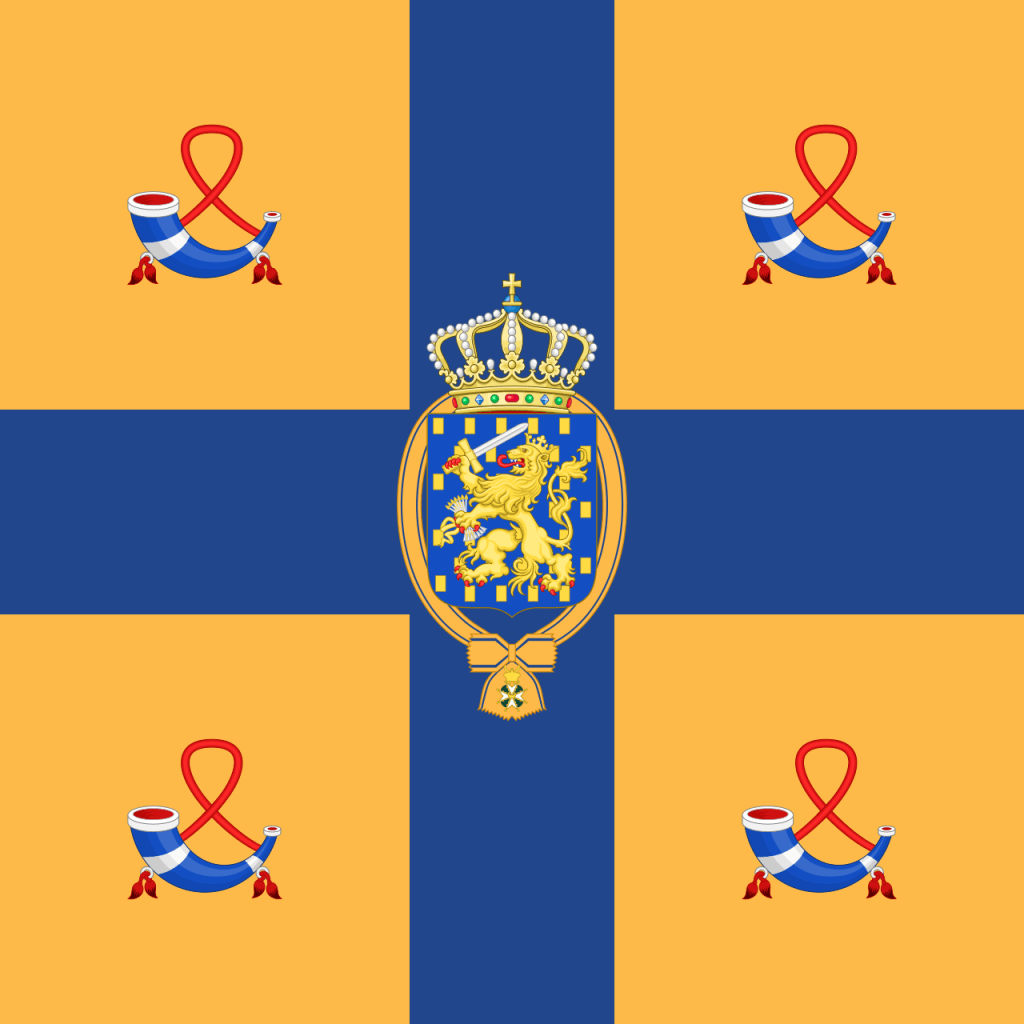
The modern monarchy of the Kingdom of the Netherlands was formally established on 16 March 1815, when William I of the Netherlands proclaimed himself king, transforming the earlier principality into a kingdom. This event occurred during a critical moment in European history following the collapse of the Napoleonic Empire. The creation of the monarchy was closely tied to the political reorganization of Europe carried out by the Congress of Vienna (1814–1815), which sought to restore stability and balance of power after the Napoleonic Wars.
Before 1815, the territory that would become the Netherlands had experienced a sequence of dramatic political transformations. For centuries, the Dutch provinces formed the Dutch Republic, officially the Republic of the Seven United Netherlands, which emerged from the Eighty Years’ War against Spain in the late sixteenth century. Although formally republican, the republic was dominated by the hereditary office of stadtholder, usually held by members of the House of Orange-Nassau.
The republic collapsed in 1795 during the French Revolutionary expansion, leading to the creation of the Batavian Republic, a French-aligned state. Later, Napoleon Bonaparte reorganized the region into the Kingdom of Holland under his brother Louis Bonaparte, and eventually annexed it directly into the First French Empire. After Napoleon’s defeat in 1813–1814, the Dutch regained independence and invited the exiled Orange dynasty to return.
Proclamation of the Kingdom in 1815
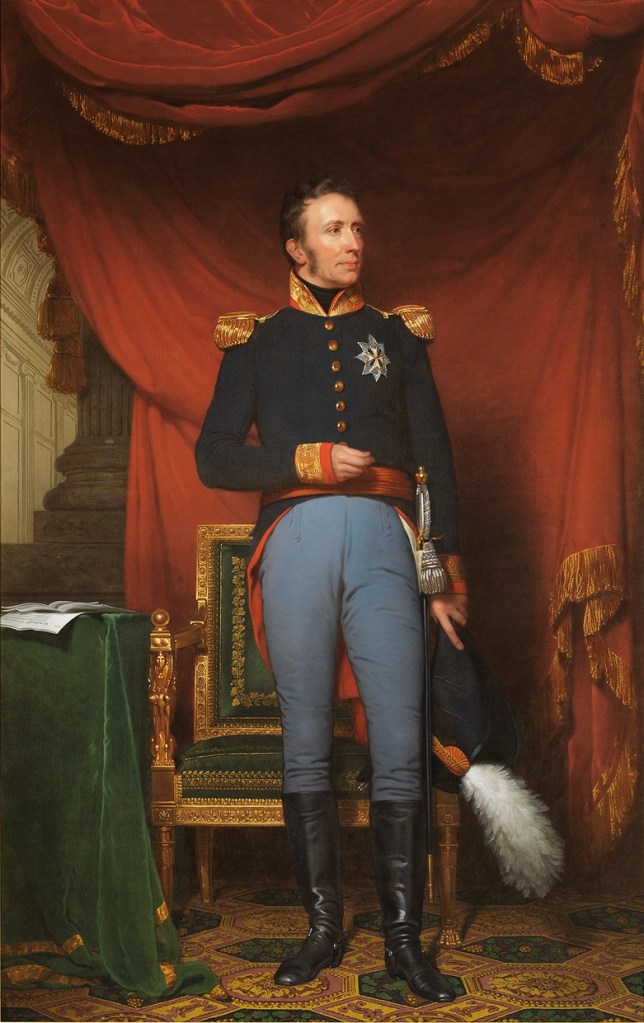
Initially, William I of the Netherlands returned as Sovereign Prince in 1813. However, the European powers decided that a stronger state in the Low Countries was necessary to serve as a buffer against future French expansion. As a result, the northern Netherlands were united with the southern provinces (modern Belgium) to form a larger kingdom.
On 16 March 1815, William formally assumed the title King of the Netherlands, creating the constitutional monarchy that continues to exist today. Just two months later, European armies defeated Napoleon definitively at the Battle of Waterloo, fought in present-day Belgium.
The new kingdom was known as the United Kingdom of the Netherlands, comprising the northern Dutch provinces, the southern Belgian territories, and the Grand Duchy of Luxembourg, which William ruled in personal union.
The House of Orange-Nassau
The monarchy is held by the House of Orange-Nassau, a dynasty that had long played a central role in Dutch political life. The family’s prominence began with William the Silent, leader of the Dutch revolt against Spanish rule in the sixteenth century. Over time, the Orange family became symbolic defenders of Dutch independence and unity.
The kings and queens of the Netherlands from this house include:
William I of the Netherlands (1815–1840)
William II of the Netherlands (1840–1849)
William III of the Netherlands (1849–1890)
Wilhelmina of the Netherlands (1890–1948)
Juliana of the Netherlands (1948–1980)
Beatrix of the Netherlands (1980–2013)
Willem-Alexander of the Netherlands (2013–present)
A distinctive feature of the Dutch monarchy is the tradition of voluntary abdication. Several monarchs, including Wilhelmina, Juliana, and Beatrix, chose to abdicate in favor of their heirs rather than rule until death.
The Belgian Secession and the Early Kingdom
The union of the northern and southern provinces proved unstable. Religious, economic, and cultural differences between the predominantly Protestant north and largely Catholic south led to rising tensions. In 1830, these conflicts erupted into the Belgian Revolution, resulting in the independence of Belgium and the establishment of a separate monarchy under Leopold I of Belgium.
Although the Netherlands initially resisted the separation, international pressure eventually forced recognition of Belgian independence in 1839. This significantly reduced the size and strategic importance of the Dutch kingdom but stabilized its internal political structure.
Constitutional Evolution
Initially, the Dutch monarchy exercised considerable executive authority. However, the political upheavals across Europe in 1848 prompted a major constitutional reform under Johan Rudolph Thorbecke, a liberal statesman and constitutional architect.
The Dutch Constitution of 1848 transformed the Netherlands into a parliamentary constitutional monarchy. Key reforms included:
Ministerial responsibility to parliament rather than the monarch
Expanded parliamentary authority
Greater civil liberties
Limitations on royal political power
After these reforms, the king or queen retained a symbolic and ceremonial role, while real executive authority shifted to elected governments.
The Monarchy in the Twentieth Century
The twentieth century profoundly shaped the Dutch monarchy, particularly during global conflicts.
During World War II, Wilhelmina of the Netherlands became a powerful symbol of resistance against the Nazi Germany occupation. She fled to London and led the Dutch government-in-exile, broadcasting messages to occupied citizens and maintaining national morale.
After the war, Wilhelmina abdicated in favor of her daughter Juliana of the Netherlands, who presided over a period of reconstruction and decolonization. During Juliana’s reign, the Netherlands granted independence to Indonesia (1949) and later Suriname (1975).
Modern Constitutional Role
Today, the monarchy functions as a constitutional institution within a democratic parliamentary system. The monarch’s duties include:
Formally appointing ministers and the prime minister
Signing legislation and royal decrees
Representing the Netherlands in diplomatic and ceremonial roles
Acting as a symbolic unifying figure for the nation
However, these duties are largely procedural, as political authority rests with the elected parliament and government.
The current monarch, Willem-Alexander of the Netherlands, ascended the throne in 2013 following the abdication of Beatrix of the Netherlands. His reign continues the Orange-Nassau dynasty’s more than two-century-long rule over the modern kingdom.
Cultural and National Significance
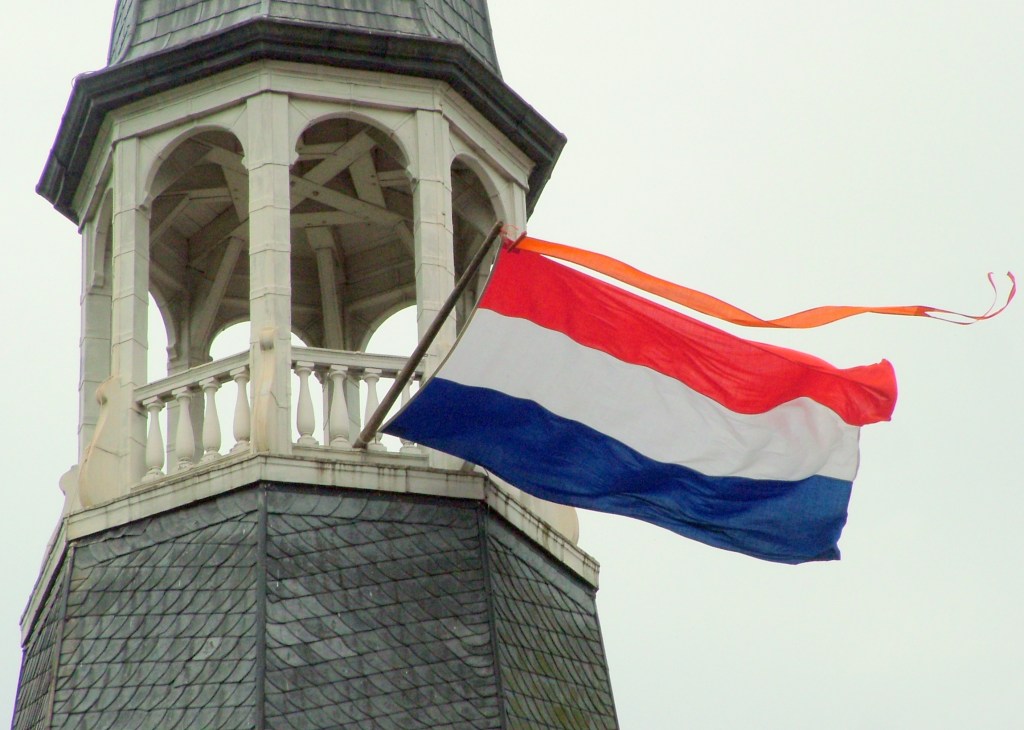
The Dutch monarchy occupies an important symbolic role in national identity. Events such as King’s Day (Netherlands), celebrated annually on the monarch’s birthday, reflect the strong cultural connection between the royal family and the public. The color orange—associated with the House of Orange—has become a national emblem seen prominently during sporting events and public celebrations.
Despite debates about the relevance of monarchy in a modern democracy, public support for the institution remains relatively high compared to many other European monarchies.
The monarchy of the Kingdom of the Netherlands, established on 16 March 1815, emerged from the turbulent aftermath of the Napoleonic era and the broader reordering of Europe. Rooted in the historic prestige of the House of Orange-Nassau, the institution evolved from a powerful royal authority into a modern constitutional monarchy integrated within a democratic political system.
Over two centuries, the Dutch monarchy has navigated revolutions, wars, constitutional reforms, and global political transformations. Today it stands not as a center of political power but as a symbol of national continuity, stability, and historical identity within the Netherlands.
sources
https://en.wikipedia.org/wiki/Monarchy_of_the_Netherlands
https://simple.wikipedia.org/wiki/Kingdom_of_the_Netherlands
 History of Sorts
Leave a comment