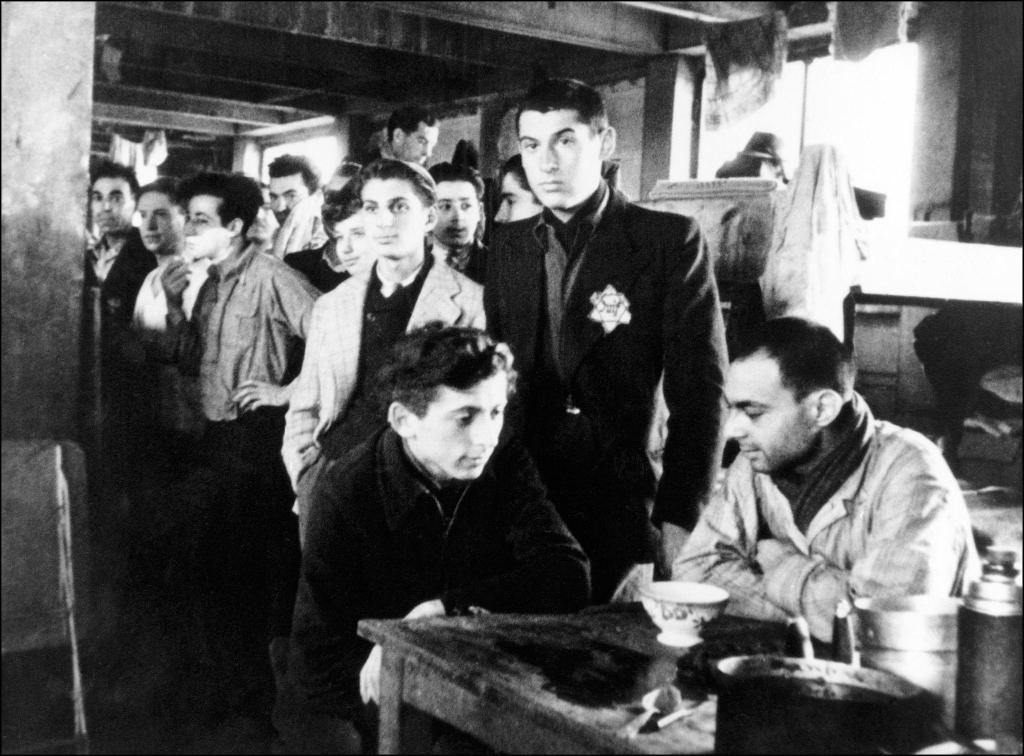
The Drancy concentration camp, located in the northeastern suburbs of Paris, stands as one of the most significant sites in the history of the Holocaust in Western Europe. Functioning primarily as a transit camp between 1941 and 1944, Drancy became the central hub for the deportation of Jews from France to extermination camps, most notably Auschwitz-Birkenau. Its history is deeply intertwined with the machinery of Nazi occupation, the complicity of the Vichy regime, and the bureaucratic efficiency that enabled genocide.
Origins and Establishment
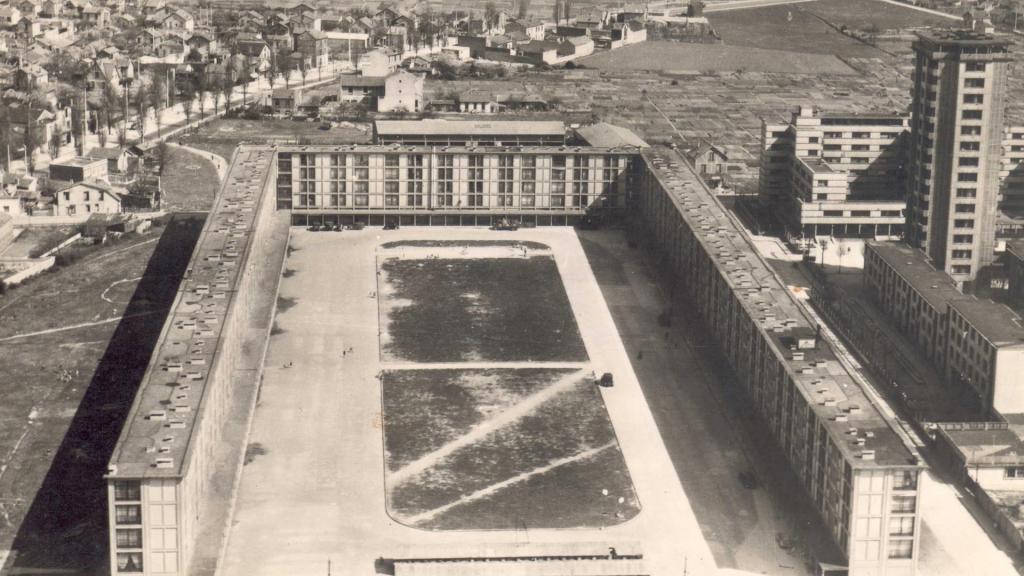
The camp was established in August 1941 in a modernist housing complex known as the Cité de la Muette. Originally designed as a social housing project, its U-shaped concrete structure proved tragically suitable for mass internment. Following the German occupation of France in 1940, and under the collaborationist government of Vichy France led by Philippe Pétain, anti-Jewish policies intensified rapidly.
The first internees at Drancy were primarily Jewish men arrested during roundups in Paris, including the mass arrest known as the “Billet Vert” operation in May 1941. Conditions in the camp were harsh from the outset: overcrowding, inadequate sanitation, and limited food supplies created an environment of deprivation and fear.
Administration and Control
Initially, Drancy was administered by French police under German supervision. This fact is critical: although Nazi Germany orchestrated the Final Solution, the day-to-day management of Drancy involved significant French participation. In 1943, control shifted more directly to the SS, notably under Alois Brunner, a close associate of Adolf Eichmann. Brunner intensified deportations and enforced brutal discipline, accelerating the camp’s role as a conduit to death camps.
The First Transports (1942)
The year 1942 marked a decisive turning point. Following the Wannsee Conference, the systematic deportation of Jews from across Europe to extermination camps began in earnest.
From Drancy, the first major convoy departed on March 27, 1942—a date of profound historical significance. This transport carried approximately 1,112 Jewish men to Auschwitz. Few survived.
Characteristics of the Early Transports
Composition: Initially, deportees were mostly adult men, often foreign Jews residing in France. Over time, transports included women, children, and entire families.
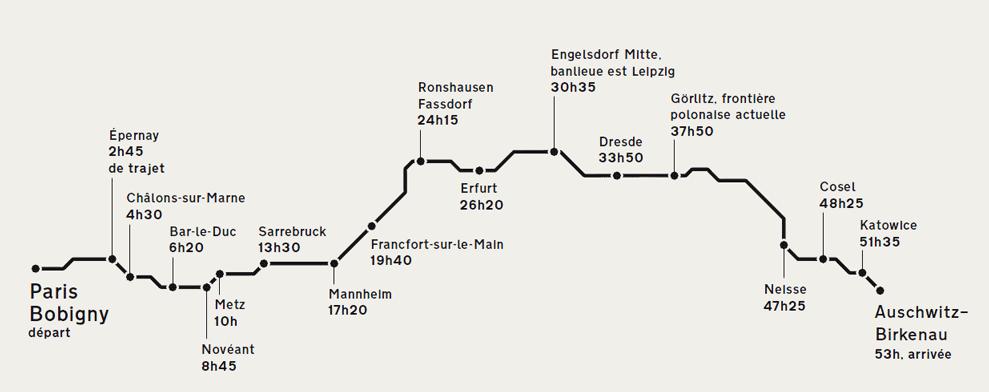
Conditions: Deportees were packed into sealed cattle cars with little food or water. Journeys lasted several days under inhumane conditions.
Deception: Many victims were told they were being sent to labor camps in the East, masking the reality of extermination.
Escalation: Summer 1942 and the Vel’ d’Hiv Roundup
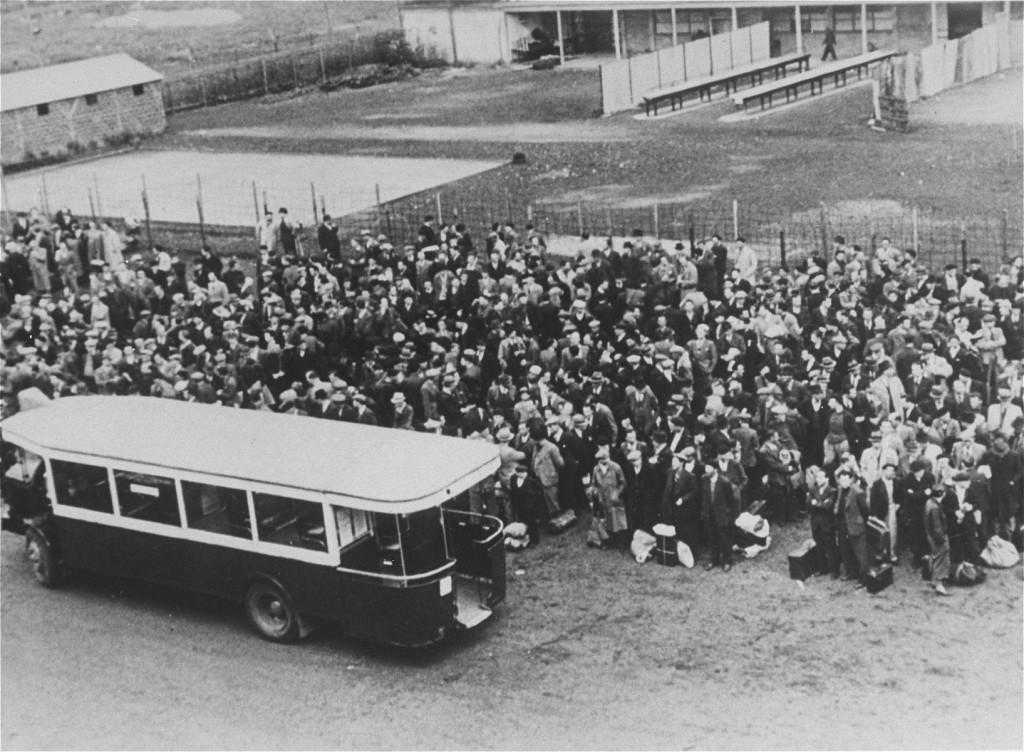
The scale of deportations increased dramatically after the Vel’ d’Hiv Roundup, during which over 13,000 Jews—including thousands of children—were arrested by French police. Many were temporarily held in the Vélodrome d’Hiver before being transferred to Drancy.
This marked a shift from targeted arrests of foreign Jewish men to the mass deportation of entire families, including French citizens. The inclusion of children underscored the genocidal intent of the Nazi policy.
Five subcamps of Drancy were established across Paris, including those at Austerlitz, Lévitan, and Bassano. Following the Vel’ d’Hiv Roundup on 16–17 July 1942, more than 4,900 of the 13,152 people arrested were transferred directly to the Drancy camp before being deported to Auschwitz.
Until 3 July 1943, Drancy was administered by the French police. On that date, control of the camp was taken over directly by German authorities. SS officer Alois Brunner was then appointed to oversee its operations.
Drancy as a Transit Hub
From 1942 onward, Drancy became the principal assembly point for deportations from France. Approximately 63,000 of the 76,000 Jews deported from France passed through Drancy. The camp functioned with chilling efficiency:
Registration and classification of prisoners
Confiscation of belongings
Organization into convoys
Coordination with railway authorities
Convoys were numbered sequentially; by the end of the occupation, nearly 80 transports had departed from Drancy, most destined for Auschwitz.
Human Experience and Resistance
Despite the oppressive conditions, acts of resistance and solidarity occurred within the camp. Prisoners organized mutual aid, shared scarce resources, and in rare cases attempted escape. Some French officials and civilians also worked covertly to save individuals, though such efforts were limited compared to the scale of deportation.
Personal testimonies from survivors describe the psychological trauma of waiting—uncertainty, rumors, and the constant fear of being placed on the next convoy.
Liberation and Aftermath
Drancy was liberated in August 1944, shortly before the liberation of Paris. By then, the vast majority of its prisoners had already been deported. Only about 1,500 internees remained.
After the war, Drancy became a symbol of both the Holocaust in France and the controversial role of French authorities in its execution. For decades, public acknowledgment of this collaboration was limited, but historical research and memorialization efforts have since brought greater clarity.
Today, the site includes the Drancy Memorial, dedicated to the victims of deportation.
The history of Drancy and the first transports in 1942 illustrates the transformation of persecution into industrialized genocide. What began as internment evolved into a systematic process of deportation and extermination, facilitated by administrative structures and collaboration.
The first convoy on March 27, 1942, represents more than a chronological milestone—it marks the moment when French Jews were irrevocably drawn into the machinery of the Final Solution. Drancy thus occupies a central place in Holocaust history: not merely as a site of suffering, but as a crucial node in the network that enabled one of the greatest crimes in human history.
French artist and poet Max Jacob died at the Drancy internment camp in 1944, shortly before he was scheduled for deportation to Auschwitz.Renée Blum, the choreographer, and Tristan Bernard, the philosopher, were also interned at the Drancy camp.
On 15–16 August 1944, as Allied forces approached Paris, the German authorities at Drancy fled, destroying all camp records. The following day, Swedish Consul-General Raoul Nordling assumed responsibility for the camp and requested that the French Red Cross care for the approximately 1,500 prisoners who remained. Fewer than 2,000 of the nearly 65,000 Jews deported from Drancy survived the Holocaust.
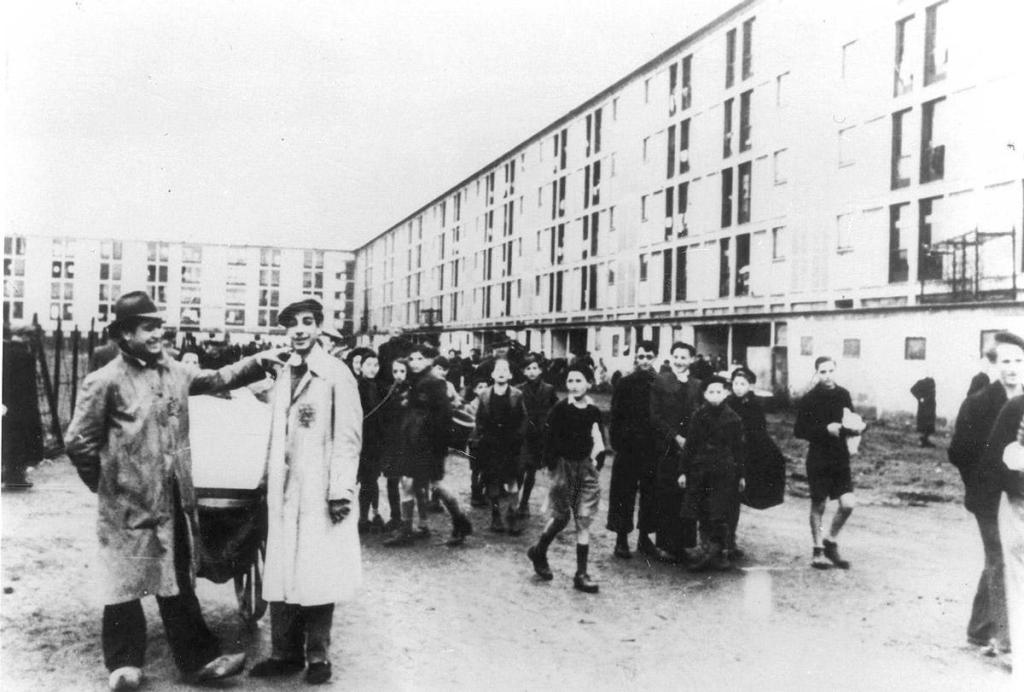
It is frequently overlooked that, during its first two years of operation, the camp was under the administration of the French police, not the German authorities.
sources
https://www.jewishgen.org/forgottencamps/camps/dranengl.html
https://www.britannica.com/place/Drancy
https://en.wikipedia.org/wiki/Drancy_internment_camp
https://encyclopedia.ushmm.org/content/en/article/drancy
Donation
Your readership is what makes my site a success, and I am truly passionate about providing you with valuable content. I have been doing this at no cost and will continue to do so. Your voluntary donation of $2 or more, if you are able, would be a significant contribution to the continuation of my work. However, I fully understand if you’re not in a position to do so. Your support, in any form, is greatly appreciated. Thank you. To donate, click on the credit/debit card icon of the card you will use. If you want to donate more than $2, just add a higher number in the box left from the PayPal link. Your generosity is greatly appreciated. Many thanks.
$2.00
 History of Sorts
Leave a comment