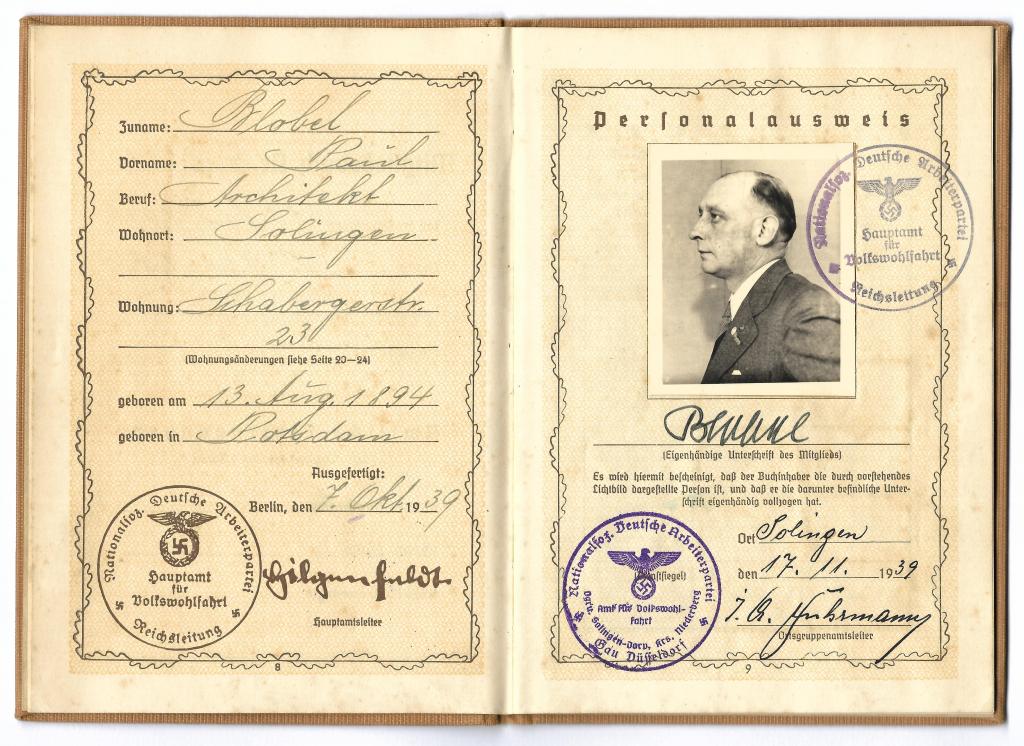
Paul Blobel was a senior officer in the SS and a key perpetrator of mass murder during the Holocaust. Born in 1894 in Germany, Blobel rose through the ranks of the Nazi security apparatus and became a commander within the Einsatzgruppen—special units tasked with carrying out mass executions, primarily in Eastern Europe following the German invasion of the Soviet Union in 1941.
Blobel is most notorious for his role in the Babi Yar massacre, where tens of thousands of Jews were murdered over two days near Kyiv. As commander of Sonderkommando 4a, a subunit of Einsatzgruppe C, he oversaw and coordinated these killings, which exemplified the systematic brutality of Nazi extermination policies.
Later, Blobel was placed in charge of Aktion 1005, an effort to destroy evidence of mass executions by exhuming and burning bodies in mass graves. This operation reflected the regime’s attempt to cover up its crimes as the war turned against Germany.
After World War II, Blobel was tried by a U.S. military tribunal in the Einsatzgruppen Trial. He was convicted of war crimes and crimes against humanity and executed in 1951. His actions remain a stark illustration of bureaucratic participation in genocide and the moral collapse within the Nazi command structure.
Paul Blobel joined the Nazi Party in 1931 and the Schutzstaffel (SS) in 1932. By 1934, he was serving in the Sicherheitsdienst (SD), rising rapidly through the ranks and attaining the rank of SS-Standartenführer in January 1941.
In June 1941, Blobel was summoned to Pretzsch, where the Einsatzgruppen were being organized for operations in German-occupied Soviet territories. He was appointed commander of Einsatzkommando 4a, deployed in Ukraine. Under his leadership, the unit carried out mass executions across the region. Following the occupation of Kyiv, Blobel’s unit perpetrated the massacre of the city’s Jewish population over two days at Babi Yar. In December 1941, his unit conducted another large-scale killing operation in Kharkiv, murdering 21,685 Jews.
In January 1942, Blobel took a leave of absence due to health issues. After recovering, he was appointed by the Reich Main Security Office (RSHA) to lead Aktion 1005, an operation aimed at eliminating evidence of mass killings in Eastern Europe by exhuming and burning victims’ remains. In late 1944, he assumed command of a unit engaged in combat against the Yugoslav Partisans.
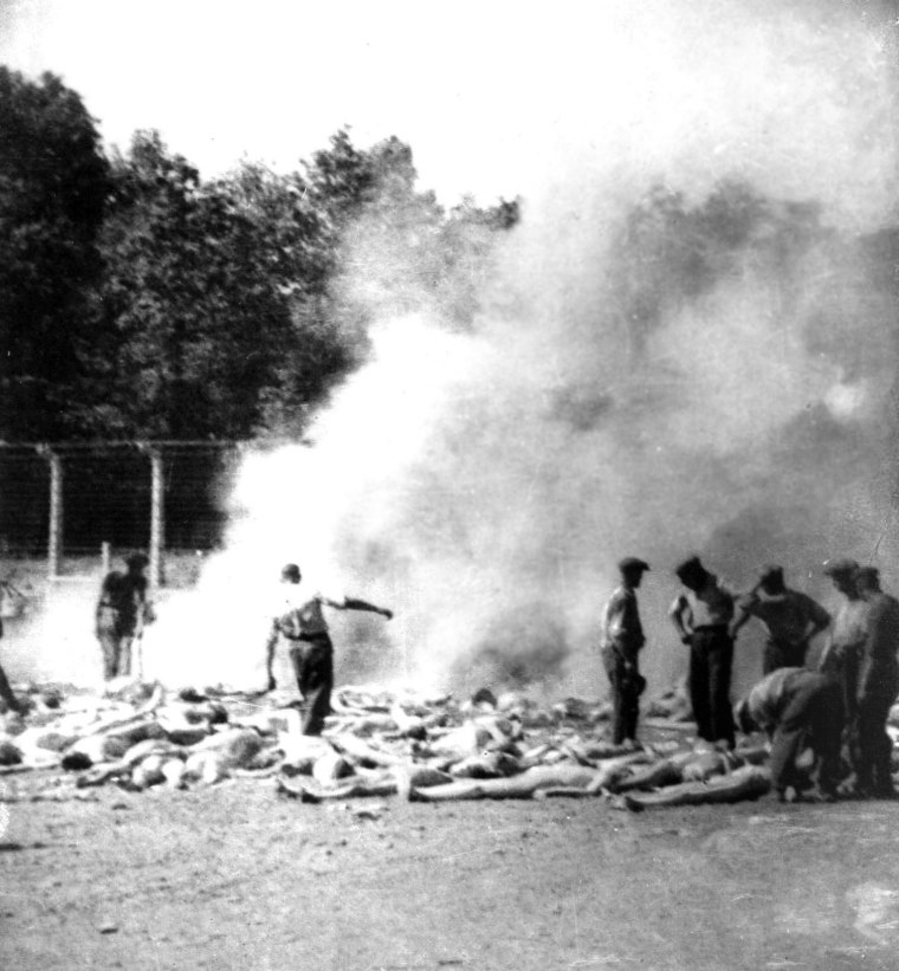
Paul Blobel was born in Potsdam into a Protestant family of small-scale artisans. In 1899, the family relocated to Remscheid, where he completed his schooling without obtaining the Abitur. Between 1908 and 1911, Blobel trained as a carpenter and bricklayer. In 1913, he began studying architecture at the Kunstgewerbeschule in Barmen, a precursor to the University of Wuppertal.
During World War I, Blobel enlisted in the Imperial German Army and served in a pioneer battalion on the Western Front. There, he gained experience with flamethrowers, Minenwerfer, and incendiary devices. By the time of his discharge in 1918, he had attained the rank of Vizefeldwebel (or Unteroffizier) and had been highly decorated, including receiving the Iron Cross First Class.
After the war, Blobel completed his architectural studies and, around 1920, secured a position as a construction manager in Solingen, working in the office of Franz Perlewitz on industrial and residential projects. He married in 1921 and, in late 1922, continued his studies at the Kunstakademie Düsseldorf. Upon graduating in 1925, he worked as a freelance architect and, in 1926, built a house for his family in Solingen’s Schaberg district.
The economic collapse of the Great Depression severely affected Blobel’s career. By the early 1930s, now a father of two sons, he struggled to secure commissions and relied on welfare while registered as unemployed between 1930 and 1933, aside from intermittent work with Solingen’s administrative office.
SS Career
Blobel joined the Sturmabteilung (SA) in May 1931. Although he later claimed to have joined the Social Democratic Party of Germany (SPD) in October 1931, historical records indicate that he joined the Nazi Party on 1 October 1931 and became a member of the Schutzstaffel (SS) by December of that year. Shortly thereafter, he established connections with the Sicherheitsdienst (SD), contributing to his rapid advancement.
In March 1932, Blobel was appointed deputy SD district leader for the Solingen–Remscheid–Wuppertal area within Gau Düsseldorf. By August 1933, he commanded the 20th SS-Standarte in western Gau Düsseldorf. Through this role, he became affiliated with the Gestapo in Düsseldorf, initially in an honorary capacity but later performing duties as an auxiliary police officer. His personnel records emphasized his ideological commitment and zeal for National Socialism, including an incident in which he sustained serious head injuries during a confrontation with perceived “enemies of the state.”
By mid-1934, Blobel had been promoted from Oberscharführer to Hauptsturmführer and placed in charge of Sector V in the Düsseldorf-West region. He was responsible for intelligence gathering on Jewish organizations, contributing to the compilation of regional registries later used in the mass arrests following the November 1938 pogroms.
Second World War and Mass Killings
In early 1941, prior to Operation Barbarossa, Blobel was appointed commander of Sonderkommando 4a of Einsatzgruppe C by the Reich Main Security Office. Operating in the Reichskommissariat Ukraine, his unit, alongside Order Police battalions, carried out systematic mass killings of Jews and other targeted groups behind Wehrmacht lines.
In August 1941, Blobel oversaw the establishment of a ghetto in Zhytomyr, where approximately 3,000 Jews were confined and subsequently murdered. Around the same time, under orders relayed by Friedrich Jeckeln on behalf of Adolf Hitler, his unit participated in the systematic extermination of Jewish populations.
On 22 August 1941, members of his unit murdered Jewish women and children in Bila Tserkva, with the consent of Walther von Reichenau. In late September 1941, Blobel played a central role in organizing the Babi Yar massacre in Kyiv, where 33,771 Jews were murdered over two days. In November 1941, his unit deployed gas vans for killings in Poltava.
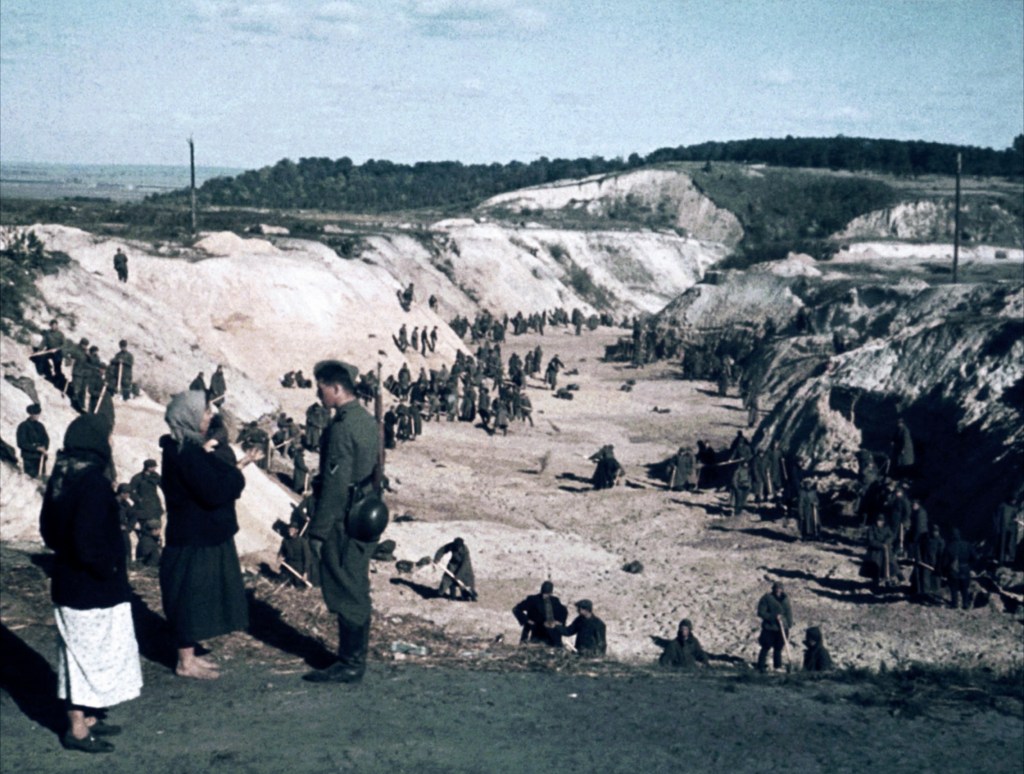
Blobel was officially relieved of command in January 1942, ostensibly for health reasons related to alcoholism. During his hospitalization, he was reportedly tasked by Reinhard Heydrich with secret assignments. Later that year, under the direction of Heinrich Müller, he was placed in charge of Aktion 1005. This operation involved exhuming mass graves and incinerating bodies across Eastern Europe, including sites such as Chełmno extermination camp, Sobibór extermination camp, and Auschwitz concentration camp. Blobel developed methods to efficiently burn corpses using layered arrangements of bodies and fuel.
In October 1944, he was assigned to operations against the Yugoslav Partisans in Slovenian Styria. He later took medical leave in December 1944 and remained hospitalized until April 1945, when he was ordered to report to Ernst Kaltenbrunner in Berlin. Shortly thereafter, he was captured by Allied forces in Rastatt in May 1945.
Trial and Execution
Blobel was held responsible for at least 59,018 killings, although he personally claimed a lower figure of 10,000–15,000 victims. He was tried before the U.S. military tribunal in the Einsatzgruppen trial and sentenced to death. He was executed by hanging at Landsberg Prison on 7 June 1951.
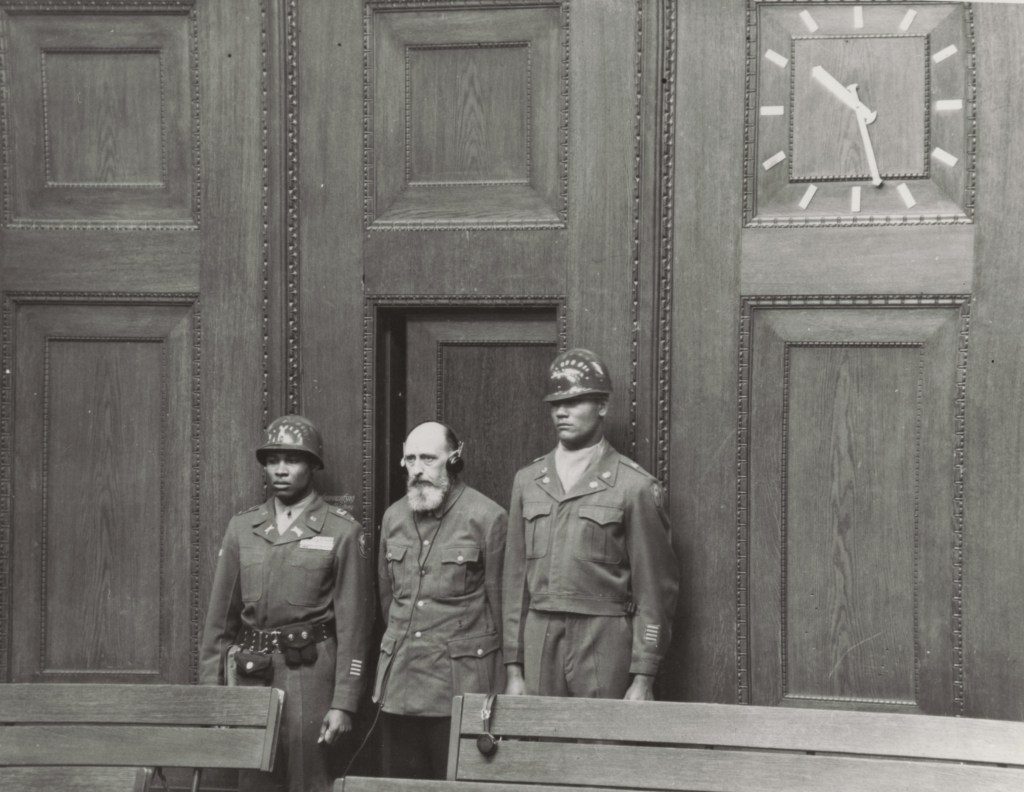
Paul Blobel Affidavit
“I, Paul Blobel, swear, declare and state in evidence:
- I was born in Potsdam on August 13, 1894. From June 1941 to January 1942, I was the Commander of Sonderkommando 4 A.
- After I had been released from this command, I was to report in Berlin to SS Obergruppenfuehrer Heydrich and Gruppenfuehrer Mueller, and in June 1942 I was entrusted by Gruppenfuehrer Mueller with the task of obliterating the traces of executions carried out by the Einsatzgruppen in the East. My orders were that I should report in person to the commanders of the Security Police and SD, pass on Mueller’s orders verbally, and supervise their implementation. This order was top secret and Gruppenfuehrer Mueller had given orders that owing to the need for strictest secrecy there was to be no correspondence in connection with this task. In September 1942 I reported to Dr. Thomas in Kiev and passed the order on to him. The order could not be carried out immediately, partly because Dr. Thomas was disinclined to carry it out, and also because the materials required for the burning of the bodies were not available. In May and June 1943 I made additional trips to Kiev in this matter and then, after conversations with Dr. Thomas and with SS and Police Leader Hennecke, the order was carried out.
- During my visit in August I myself observed the burning of bodies in a mass grave near Kiev. This grave was about 55 m. long, 3 m. wide and 2½ m. deep. After the top had been removed the bodies were covered with inflammable material and ignited. It took about two days until the grave burned down to the bottom. I myself observed that the fire had glowed down to the bottom. After that the grave was filled in and the traces were now practically obliterated.
- Owing to the moving up of the front-line it was not possible to destroy the mass graves further south and east which had resulted from executions by the Einsatzgruppen. I traveled to Berlin in this connection to report, and was then sent to Estonia by Gruppenfuehrer Mueller. I passed on the same orders to Oberfuehrer Achammer-Pierader in Riga, and also to Obergruppenfuehrer Jeckeln. I returned to Berlin in order to obtain fuel. The burning of the bodies began only in May or June 1944. I remember that incinerations took place in the area of Riga and Reval. I was present at such incinerations near Reval, but the graves were smaller here and contained only about 20 to 30 bodies. The graves in the area of Reval were about 20 or 30 kms. east of the city in a marshy district and I think that 4 or 5 such graves were opened and the bodies burned.
- According to my orders I should have extended my duties over the entire area occupied by the Einsatzgruppen, but owing to the retreat from Russia I could not carry out my orders completely….
I have made this disposition of my own free will, without any kind of promise of reward, and I was not subjected to any form of compulsion or threat.
Nuremberg, June 18, 1947
signed Paul Blobel”
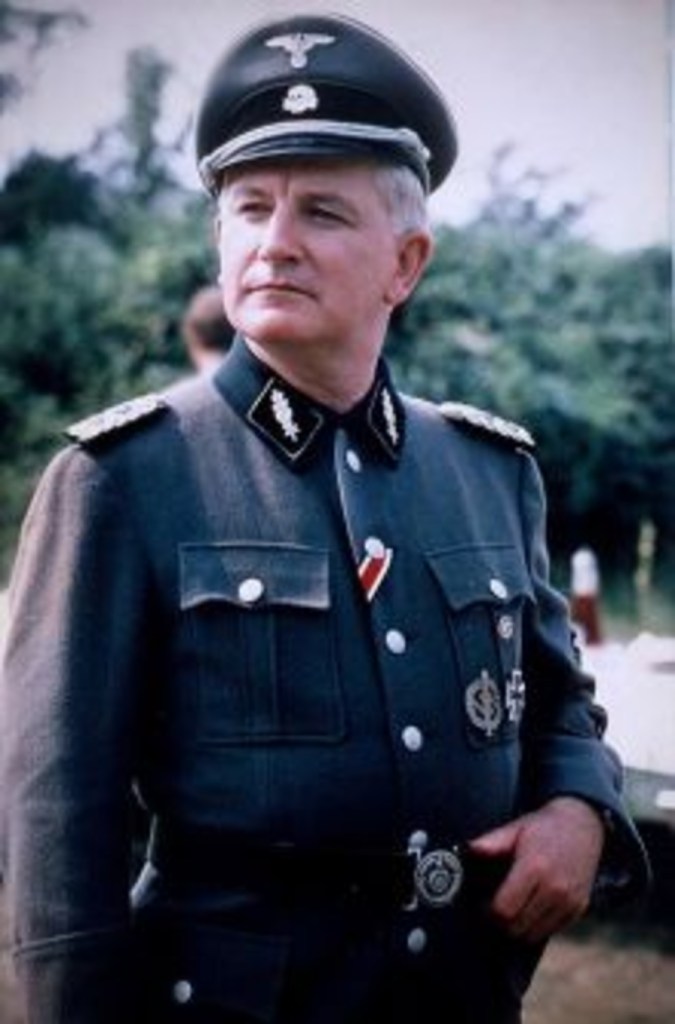
Blobel was portrayed by Irish actor T. P. McKenna in the 1978 miniseries Holocaust.
sources
https://en.wikipedia.org/wiki/Paul_Blobel
https://www.holocausthistoricalsociety.org.uk/contents/einsatzgruppen/paulblobelaffidavit.html
https://portal.ehri-project.eu/authorities/ehri_pers-000043
https://www.tracesofwar.com/articles/4583/Paul-Blobel.htm
Donation
Your readership is what makes my site a success, and I am truly passionate about providing you with valuable content. I have been doing this at no cost and will continue to do so. Your voluntary donation of $2 or more, if you are able, would be a significant contribution to the continuation of my work. However, I fully understand if you’re not in a position to do so. Your support, in any form, is greatly appreciated. Thank you. To donate, click on the credit/debit card icon of the card you will use. If you want to donate more than $2, just add a higher number in the box left from the PayPal link. Your generosity is greatly appreciated. Many thanks.
$2.00


Leave a comment