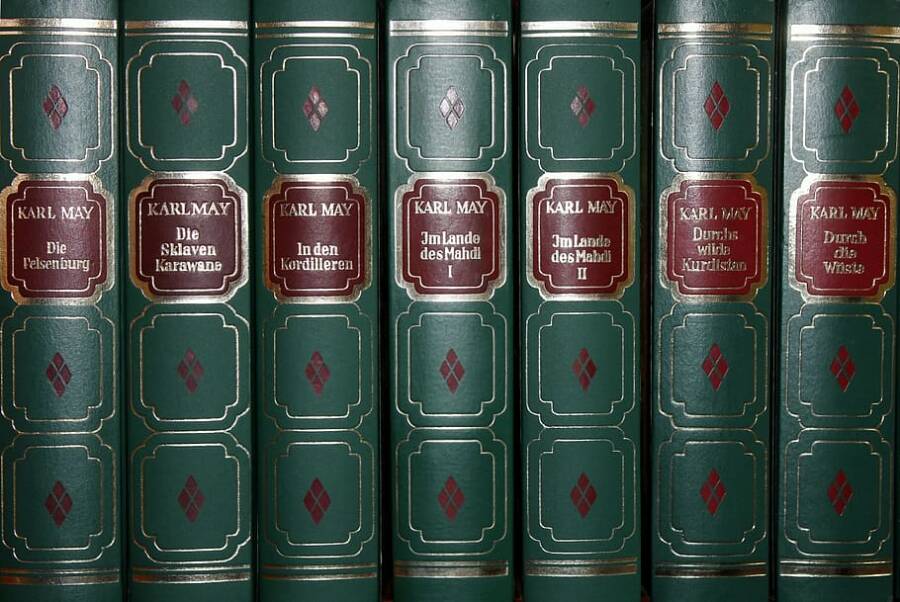
The connection between Adolf Hitler and Karl May is an unusual but revealing example of how literature can shape ideology, identity, and even political imagination. Although the two men never met—May died in 1912, years before Hitler rose to prominence—May’s adventure novels played a significant role in influencing Hitler’s worldview, particularly in his youth and early adulthood.
Karl May was one of the most popular German writers of the late 19th and early 20th centuries, best known for his adventure stories set in the American Old West and the Middle East. His most famous characters, such as Winnetou (a noble Apache chief) and Old Shatterhand (a German frontiersman), embodied ideals of heroism, moral clarity, and cultural superiority.
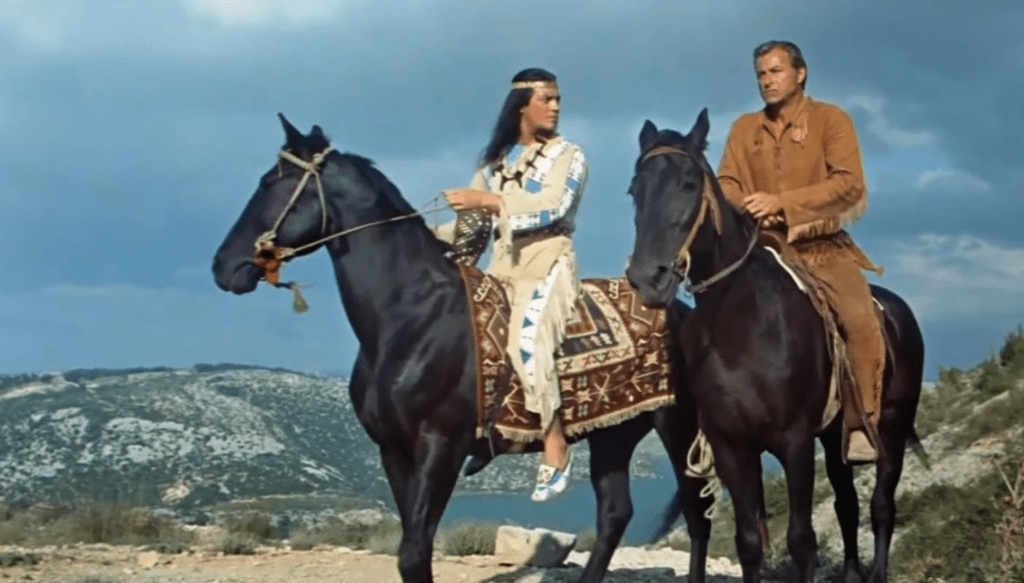
May’s works were deeply imaginative; he wrote many of his early novels without ever visiting the places he described. Nevertheless, his stories captivated generations of readers in German-speaking countries, including a young Adolf Hitler.
Hitler reportedly read Karl May’s novels extensively during his formative years and continued to admire them into adulthood. The appeal lay not only in their adventure but also in their underlying themes. May’s stories often portrayed a clear dichotomy between “civilized” and “uncivilized” peoples, with German or European protagonists depicted as morally and intellectually superior. These narratives, while fictional, resonated with emerging nationalist and racial ideologies in Germany at the time. For Hitler, who was already inclined toward extreme nationalism, such themes reinforced his belief in German superiority and destiny.
Moreover, May’s protagonists frequently acted as lone heroes navigating foreign lands, imposing order and justice according to their own moral codes. This archetype of the strong, decisive individual may have contributed to Hitler’s self-image as a leader destined to guide and redeem his nation. Some historians argue that Hitler’s fascination with frontier conquest and expansion—central elements in May’s stories—paralleled his later pursuit of Lebensraum (living space) for Germany, particularly in Eastern Europe.
However, the connection should not be overstated or simplified. Karl May himself was not an advocate of Nazi ideology; in fact, his later works emphasized pacifism, cross-cultural understanding, and spiritual reflection. The interpretation and appropriation of his stories by Hitler were selective and distorted. Hitler focused on elements that aligned with his own ideological framework, ignoring the more humanistic aspects of May’s writing.
Scholars of the Third Reich have observed that Hitler’s establishment of Polish ghettos during Germany’s invasion bore disturbing parallels to the forced relocation of Native peoples in both Karl May’s novels and historical reality. Hitler is also reported to have admired what he described as the way white Americans had “gunned down” Indigenous communities, reducing populations from millions to only a few hundred thousand.
Following the crash of a Nazi aircraft carrying battle plans in Belgium in 1939, Hitler dismissed several officers for negligence. He reportedly argued that such an error would not have occurred had they been more familiar with May’s works. He even distributed copies of May’s novels to German troops during campaigns in Russia, believing that the character Winnetou exemplified tactical skill and prudence.
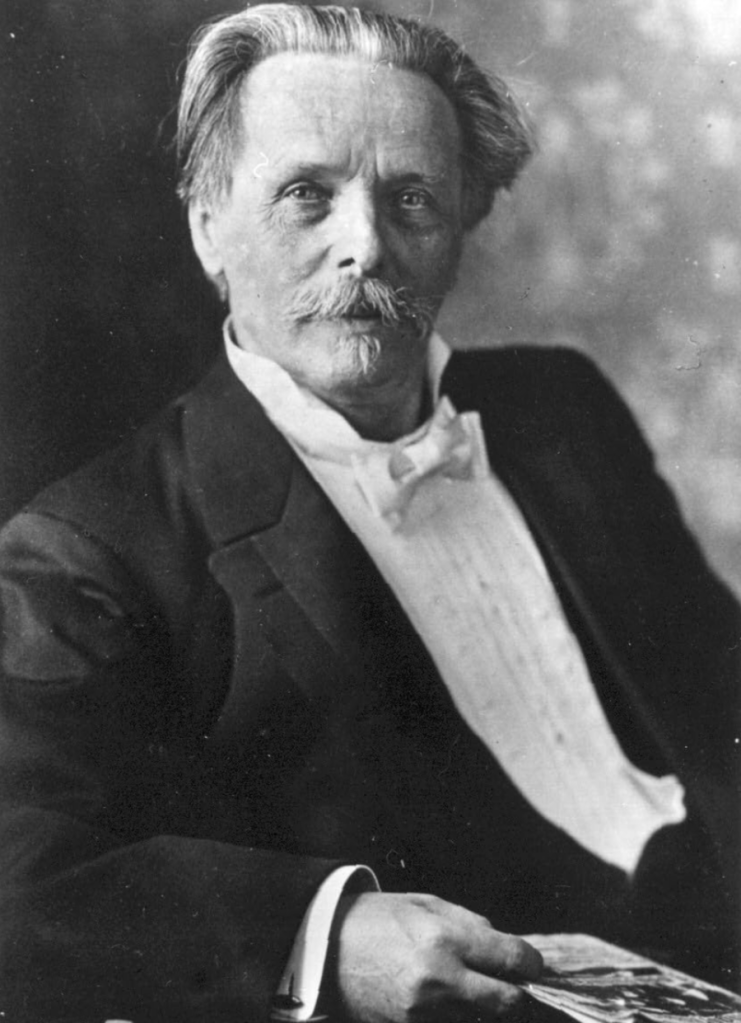
Some historians have further suggested that Hitler’s emphasis on technologically advanced weaponry may have been influenced by May’s character Old Shatterhand, who wields a superior firearm against adversaries depicted as less advanced.
According to Albert Speer, one of Hitler’s closest associates, Hitler often turned to May’s novels for comfort during periods of despair.
Despite their popularity, May’s Wild West stories were deeply rooted in racial stereotypes and power imbalances. Indigenous characters such as Winnetou are portrayed as subordinate and dependent on white intervention. Notably, Winnetou converts to Christianity prior to his death in the final novel, reinforcing this dynamic.
In May’s narratives, Winnetou and Old Shatterhand encounter only Germans during their travels. Hitler may have interpreted this as symbolic validation of German dominance, reinforcing his belief that global stability depended on German control. Accounts from those close to him suggest that he frequently spoke about Karl May and expressed a profound sense of indebtedness to the author.
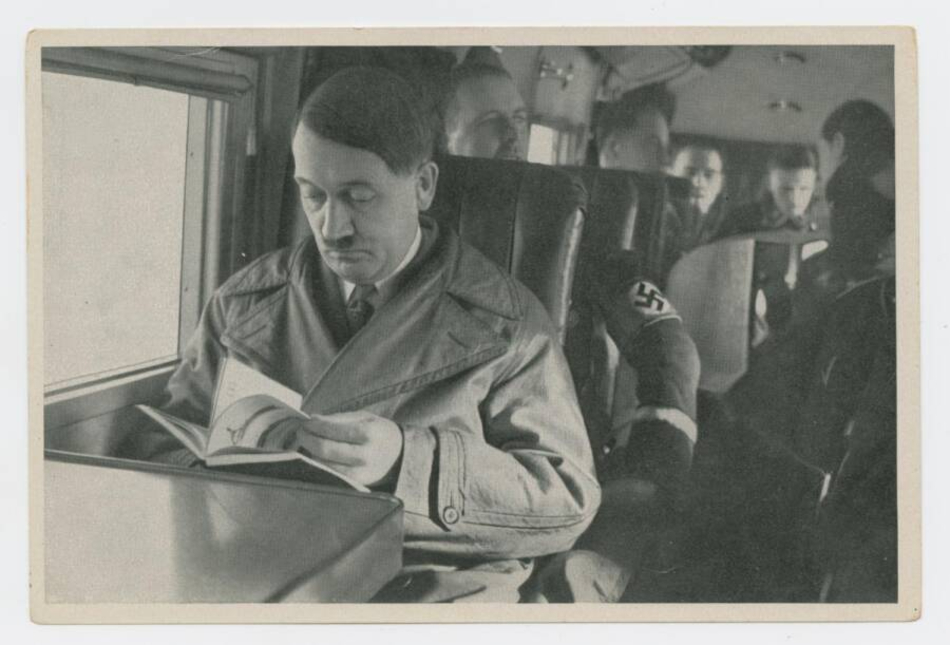
At the height of his career, May was one of the best-regarded popular fiction writers of his time. With the fortune he made from his stories, he built Villa Shatterhand in which to live out the rest of his life. In 1899, his earliest works were published without his permission, many of which skewed toward erotica. Worried his fans would no longer read his works, he sued for defamation of character. But the case proved to be his demise, and his early life was soon discovered. He had told elaborate lies about being a frontiersman during the years he was really in jail for theft. In 1910, he wrote an autobiography to try to clear his name, and died two years later. Though May’s reputation was tarnished, his stories remain popular. In the 1960s, Winnetou and Old Shatterhand made their way to the big screen as May’s books were turned into films. Now, his works and life are celebrated at countless festivals throughout Germany. Though attendees recognize there are problems with May’s depictions of the West and of Native people and culture, the stories have become cult classics throughout Germany and across generations. Still, it’s hard to forget the effect May had on the leader of Germany’s darkest hour.
I am unsure how aware Hitler was of Sascha Schneider’s homosexuality. Schneider was the cover illustrator for several of May’s books, including Winnetou, Old Surehand, and Am Rio de la Plata.
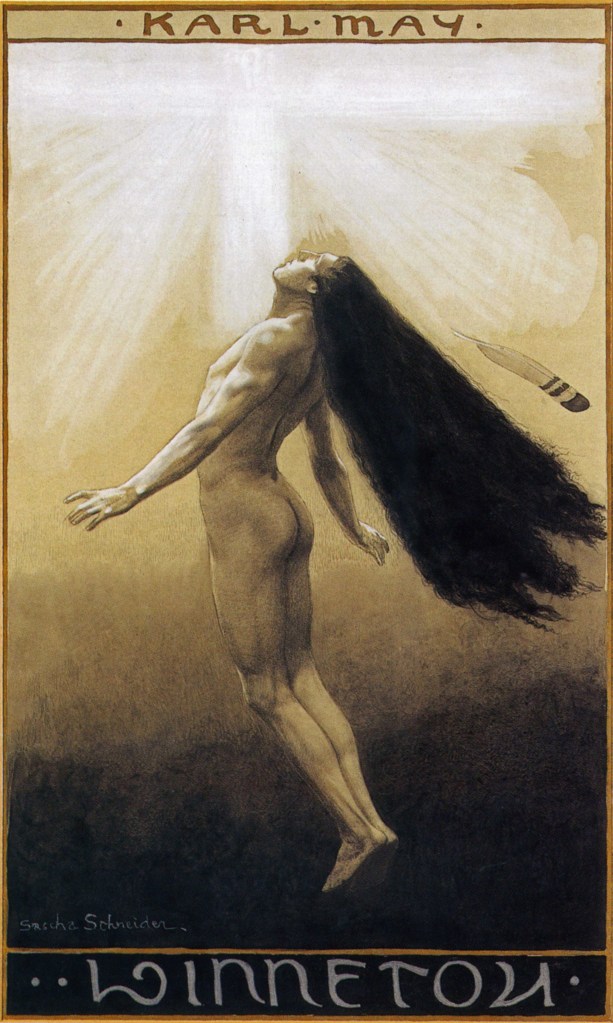
I am certain that it would have been these editions of Karl May’s books that Hitler read—and the irony is not lost on me.
sources
https://www.karl-may-vereinigung.de/forschung/en/biography.html
https://www.britannica.com/biography/Karl-May
 History of Sorts
Leave a comment