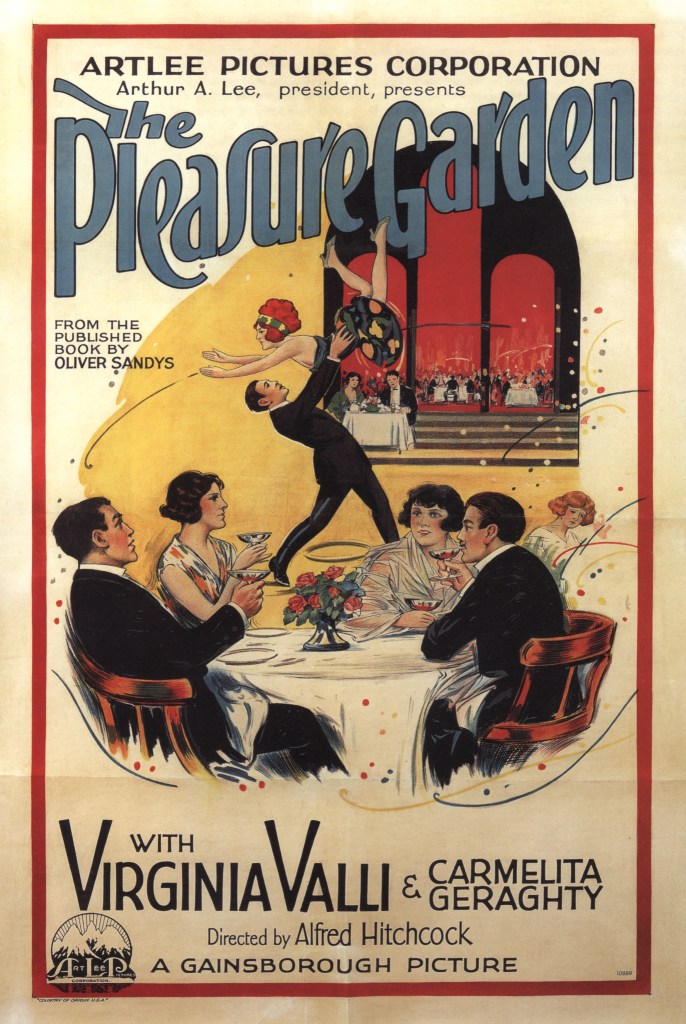
Alfred Hitchcock’s directorial debut, made at age 25, traces the intertwined love lives of two dancers at a London nightclub.
At just 25, Alfred Hitchcock had already worked in nearly every role on the studio floor before being offered his first directing assignment by Gainsborough studio head Michael Balcon. He had designed title cards, written scripts, served as art director, and worked as assistant director to the studio’s most successful filmmaker, Graham Cutts. His debut project was an adaptation of the bestselling 1923 novel by Oliver Sandys—the pseudonym of Marguerite Florence Barclay. The story contrasts the fates of two chorus girls: Jill, an ambitious schemer who rises to success, and Patsy, a kind-hearted woman betrayed by her unscrupulous husband.
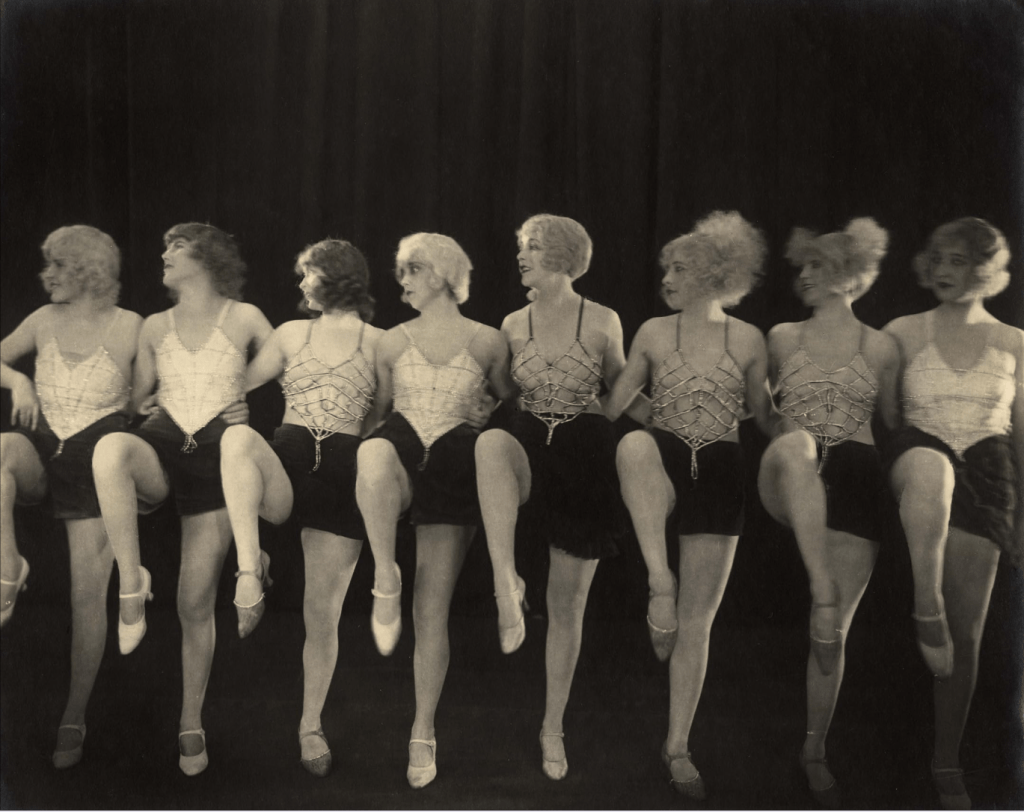
Hitchcock’s assured style is evident from the opening frame, where a cascade of chorus girls’ legs descends a spiral staircase. Yet more striking is his ability to compress the narrative while layering it with additional meaning.
The Pleasure Garden follows a largely conventional melodramatic arc—something Hitchcock himself acknowledged, describing it as “melodramatic, but with several interesting scenes.” If the material did not fully engage him, his direction nonetheless elevates it. The film becomes a subtle exploration of voyeurism, sexual politics, and the tension between romantic idealism and lived reality.
Hitchcock also deploys minor characters with precision, using them to reflect on the central figures and to contrast moral dispositions through parallel action. A telling example is the image of a casually discarded apple, bitten once and abandoned, which encapsulates Patsy’s husband’s indifference on their wedding night and foreshadows his future behavior. This image forms part of a broader visual motif—natural elements such as fruit and flowers—that Hitchcock uses to express and deepen Patsy’s characterization.
The Plot
Jill, a young dancer, arrives in London with a letter of introduction to Mr. Hamilton, proprietor of the Pleasure Garden Theatre. While waiting to see him, her handbag—containing the letter and all her money—is stolen. Patsy, a chorus girl at the theatre, takes pity on her, offering both lodging and help in securing work. The following day, Jill successfully joins the show.
Soon after, her fiancé Hugh arrives with a colleague, Levet. While Jill attracts the attention of wealthy admirers and eventually leaves Hugh to pursue a relationship with Prince Ivan, Hugh and Patsy grow close. Hugh is later sent to Africa for work.
As Jill’s career flourishes, she moves out and becomes increasingly absorbed in high society, distancing herself from Patsy and ultimately rejecting her altogether. Meanwhile, Patsy, heartbroken, is comforted by Levet, who persuades her to marry him. After a honeymoon in Italy, Levet departs for Africa. When Patsy later receives a letter claiming he is seriously ill, she resolves to join him. Denied financial help by Jill, she borrows the fare and travels abroad, only to discover that Levet is involved with another woman. In a violent confrontation, he drowns his mistress.
Elsewhere, Patsy finds that Hugh is genuinely ill with fever and nurses him back to health. Learning of Jill’s impending marriage to Prince Ivan, Hugh and Patsy come to recognize their feelings for one another. When Levet discovers them together, he accuses Hugh of impropriety. Patsy agrees to return with her husband to protect Hugh.
Consumed by guilt and paranoia over his crime, Levet begins to experience visions of his dead mistress. Convinced he must kill Patsy to end his torment, he corners her with a sword, but is shot dead before he can act. In the aftermath, Hugh and Patsy find solace in each other and return to London.
Release dates
8 January 1926 (Berlin)
12 April 1926 (UK)
sources
https://en.wikipedia.org/wiki/The_Pleasure_Garden_(1925_film)
 History of Sorts
Leave a comment